Hatch Restore 3 Smart Sunrise Alarm Clock
Sunrise routine review
Hatch+ and phone-down controls
Availability check
Affiliate link availableUse the current affiliate listing to verify model, seller, and availability before checkout.Check current availabilityModel check
Sunrise 1, not 1+Retail names can blur the two models. Confirm whether you want app-free controls or connected routines.Read model notesBackup alarm
Test before trusting itHeavy sleepers should use sound plus light and keep a backup alarm for the first week.Read limitsRelated Products
Sunrise routine review
Hatch+ and phone-down controls
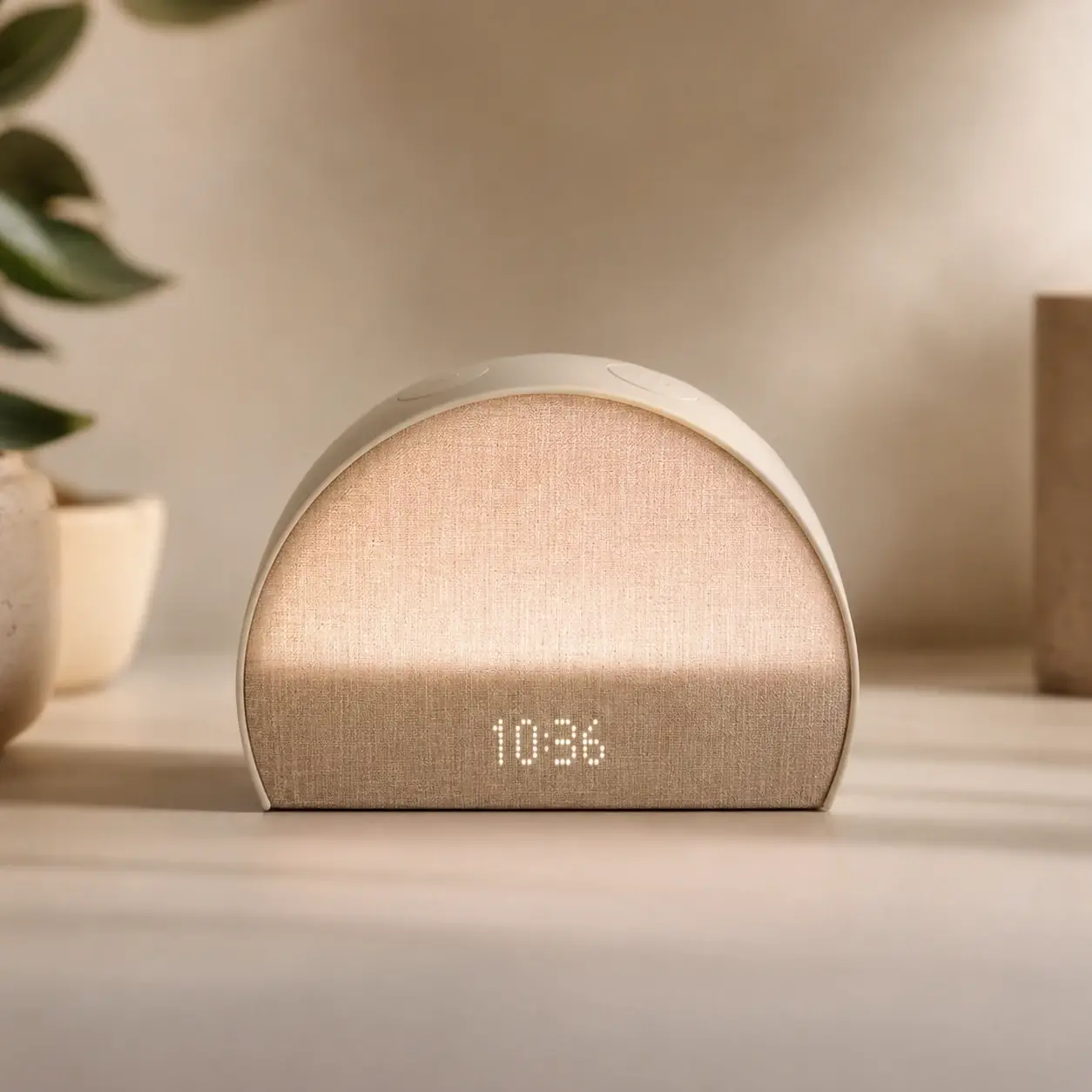
Full review
Discounted adult routines
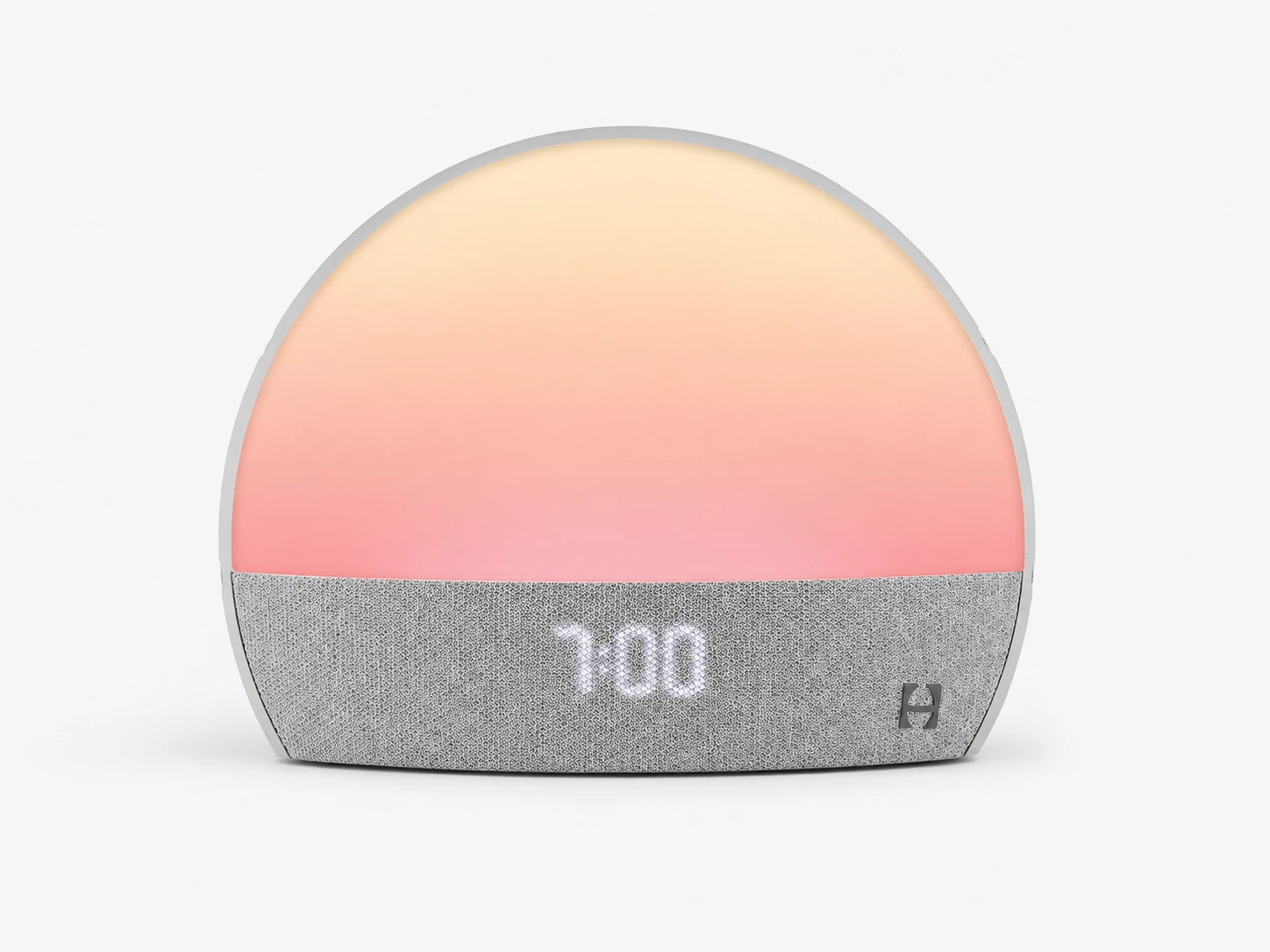
Full review
Original Restore buyers
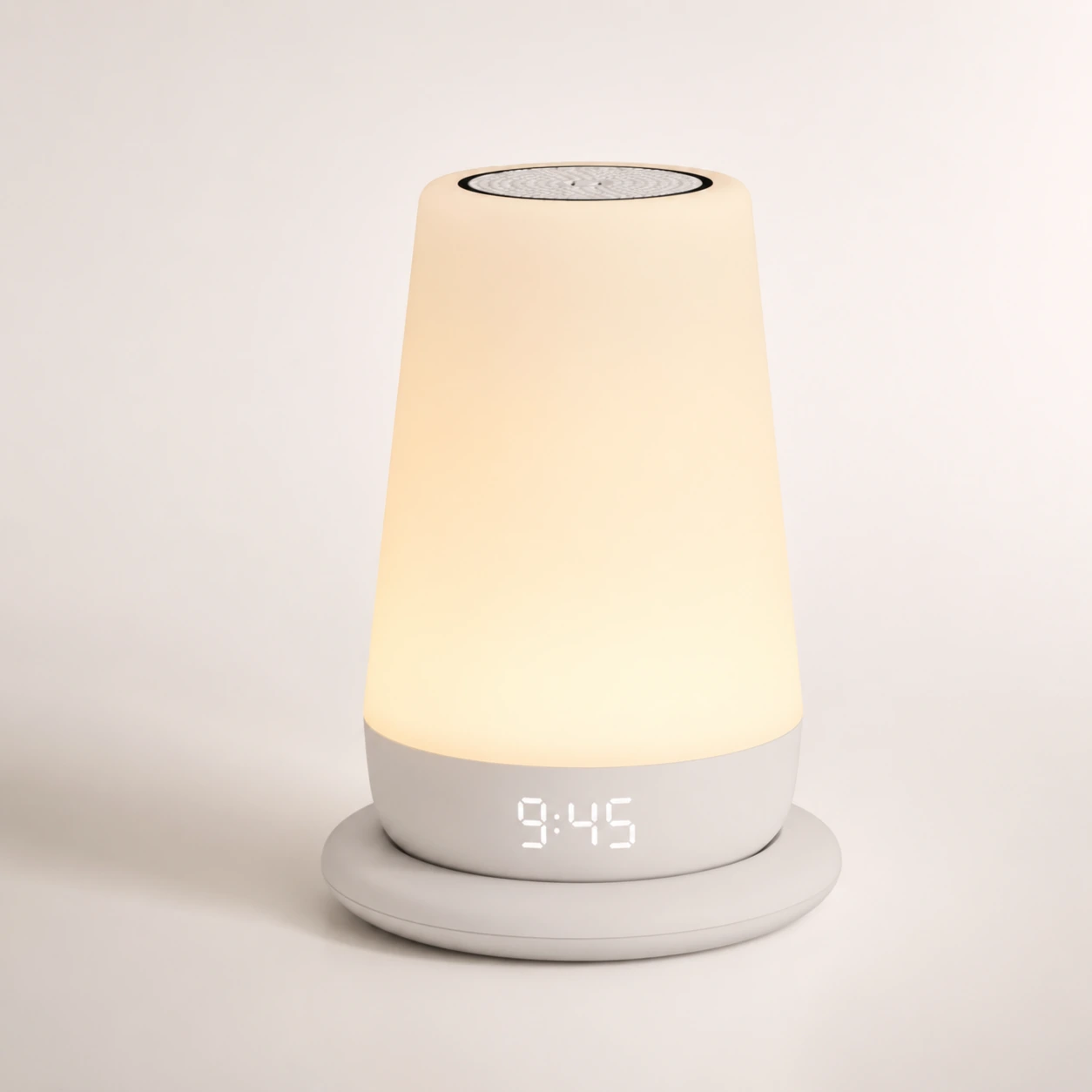
Full review
Family sleep routines
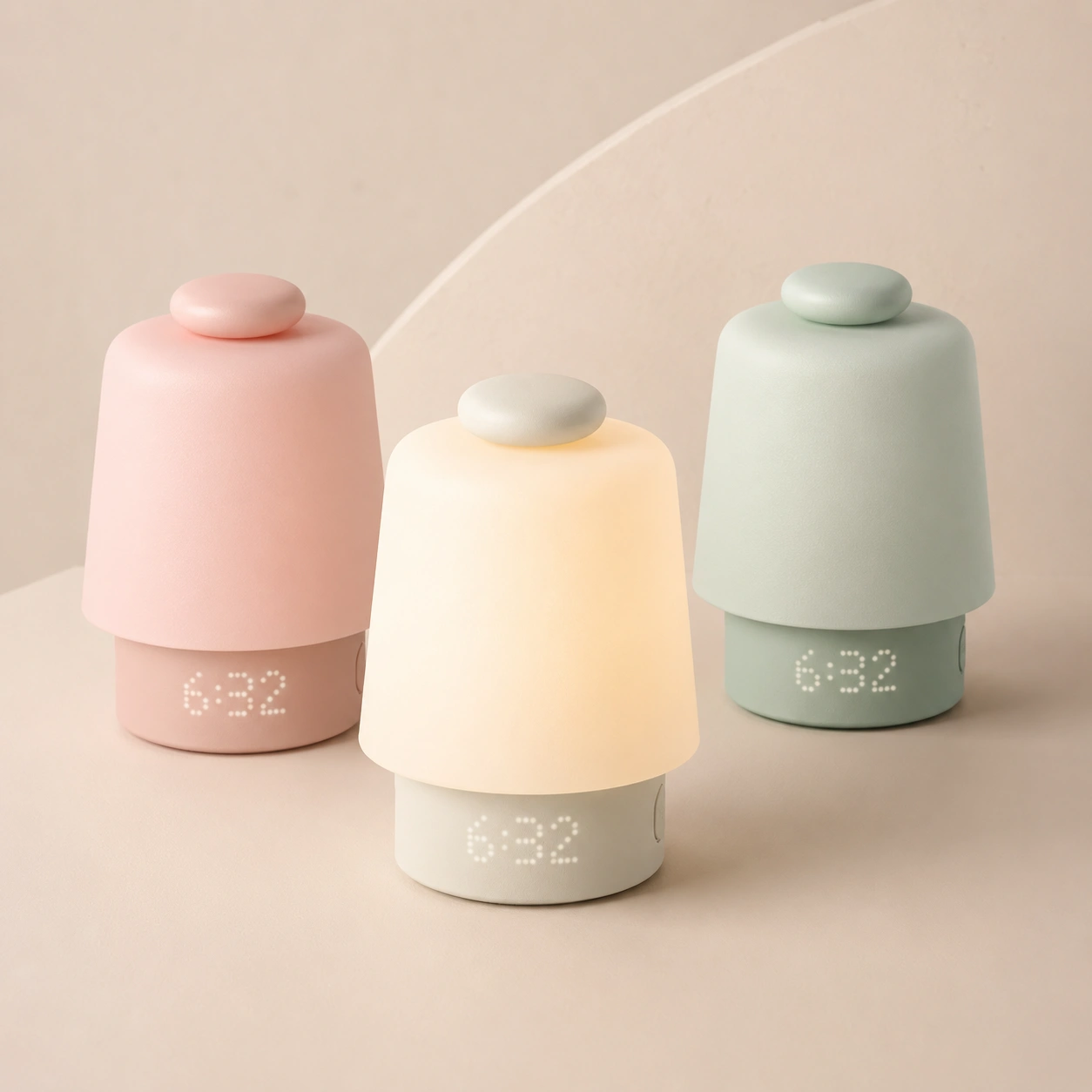
Full review
Baby-room routine device
Product Overview
Sunrise alarm clock, sound machine, and night light
Physical on-device controls, with no required app setup
Phone-free bedrooms, guest rooms, kids' rooms, and stable wake times
One simple routine structure, no Bluetooth, and no true full sunset routine
June 4, 2026
The Dreamegg Sunrise 1 is worth considering if you want a simple sunrise alarm clock that does not need an app, a subscription, or a phone on your nightstand.
It is not a full Hatch replacement. It is not a Philips-style premium wake-up light. It is not a medical light therapy box. It is a compact bedside clock that combines a sunrise-style alarm, sleep sounds, night-light colors, and physical controls.
That makes it useful for the right buyer and easy to overbuy for the wrong one.
Buy the Dreamegg Sunrise 1 if you want a lower-cost, phone-free wake-up light for a bedroom, guest room, kids' room, or simple sleep routine. Skip it if you need multiple alarms, app scheduling, Bluetooth, your own audio, a true sunset routine, or a stronger sunrise simulation.
The main question is not "Is Dreamegg Sunrise 1 good?" The better question is: are its limits the kind you can live with?
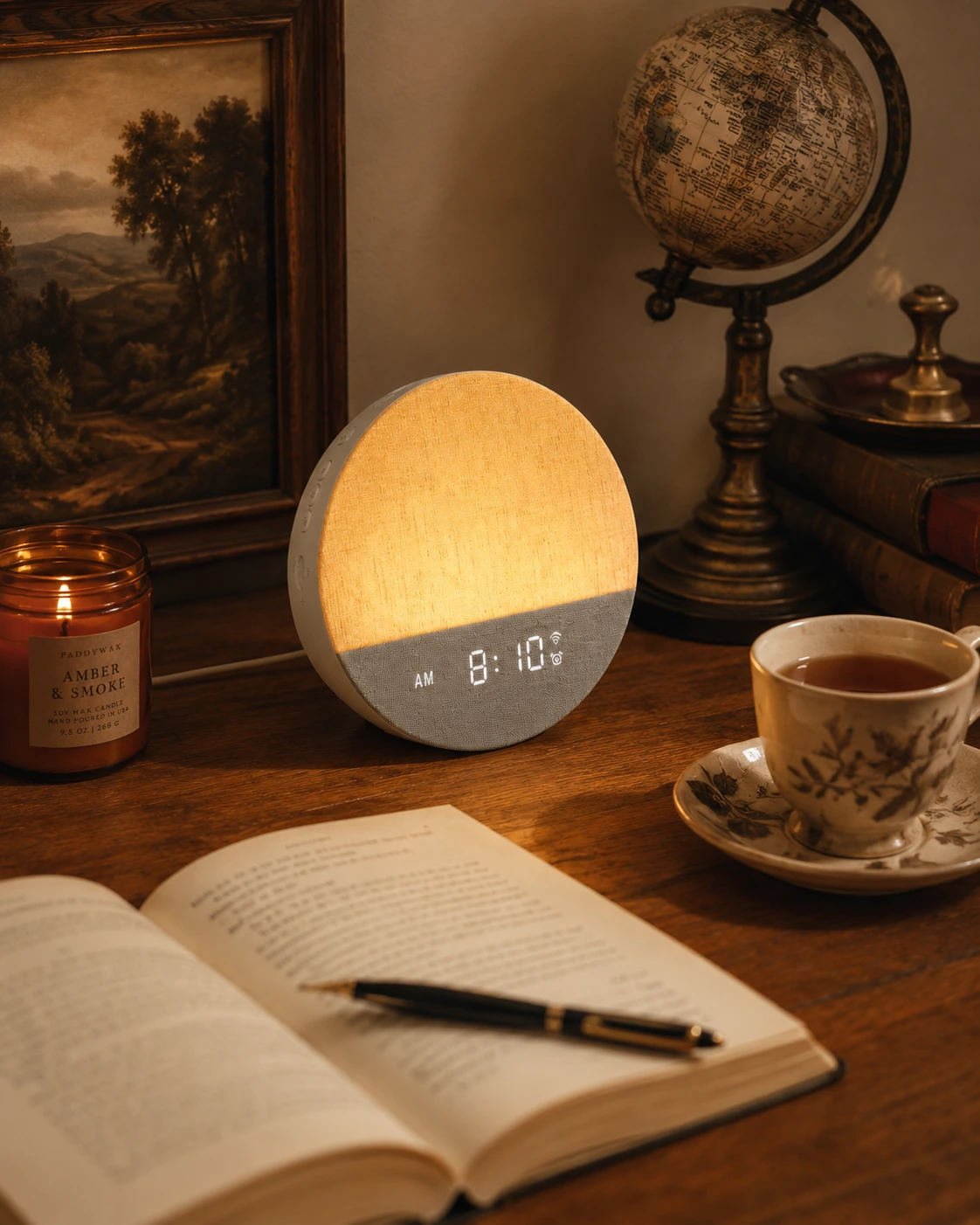
The Dreamegg Sunrise 1 makes the most sense for people who want less technology near the bed.
It gives you a light-based alarm, built-in sleep sounds, a dimmable clock, and physical controls. Dreamegg's current product information positions Sunrise 1 as an app-free bedside device with soothing audio, nature-inspired light, 29 soundscapes, warm ambient light, and no required app connection.
That is the appeal. You can set it from the clock itself and keep your phone out of reach.
The trade-off is that Sunrise 1 is intentionally limited. Current comparative review data lists the Dreamegg Sunrise 1 with an auto-off timer, no full fading sunset, 6 alarm tones, 29 white-noise-style sounds, one daily alarm, dimmable colors, and a dimmable clock.
That means it is better treated as a simple wake-up light and sound machine, not a full sleep-routine system.
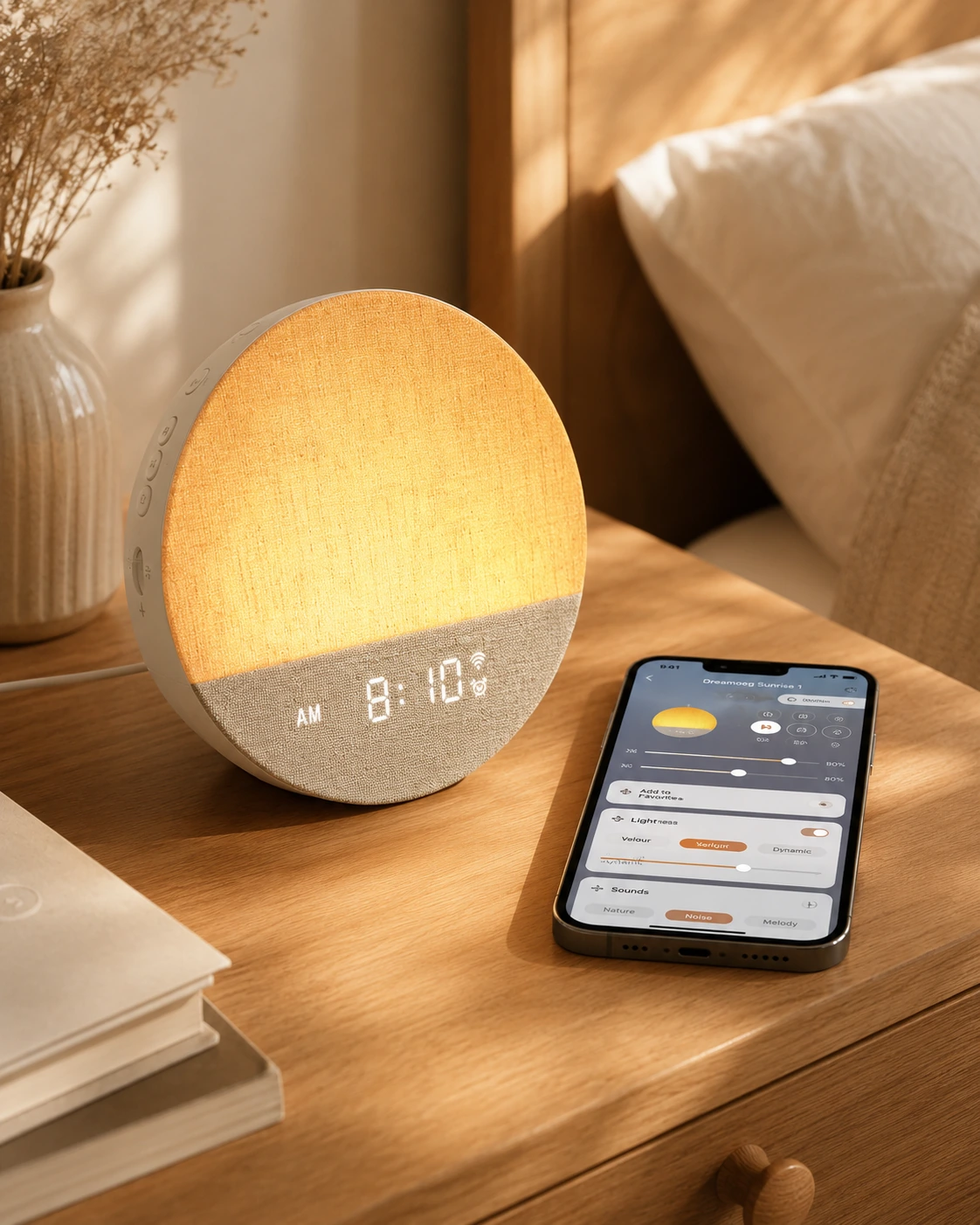
This is the first thing to check before ordering.
Dreamegg Sunrise 1 is the simpler model. It focuses on app-free controls, a sunrise-style alarm, sleep sounds, night-light use, and a small bedside footprint.
Dreamegg Sunrise 1+ is the connected model. Dreamegg's current Sunrise 1+ product information describes app control, expanded routine features, and sunset-style wind-down positioning.
If you want no app, choose Sunrise 1. If you want app routines, more control, and sunset-style behavior, check Sunrise 1+ before buying.
Retail listings and reviews often use similar Dreamegg naming. A buyer can easily read a feature from one model and expect it on the other.
The simple rule: do not assume that every "Dreamegg Sunrise" feature belongs to the exact Sunrise 1 model.
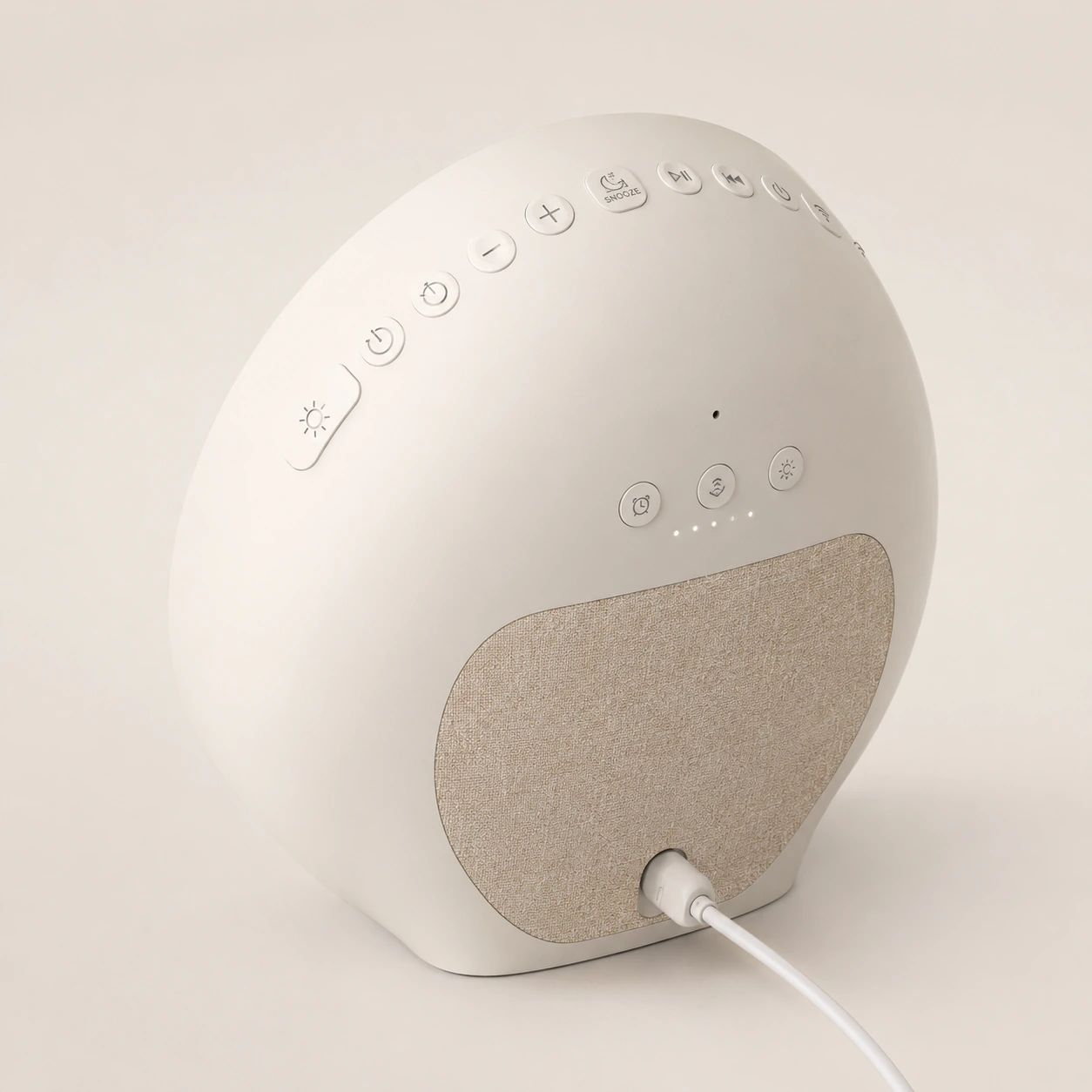
| Feature | Dreamegg Sunrise 1 |
|---|---|
| Device type | Sunrise alarm clock + sound machine + night light |
| Controls | Physical on-device controls |
| App required | No |
| Sounds | 29 soundscapes / white-noise-style options |
| Light colors | 9 dimmable colors |
| Alarm structure | One daily alarm, per current comparative review data |
| Sunset | Auto-off timer, not a true fading sunset |
| Best use | Simple bedroom alarm, kids' room, guest room, phone-free setup |
| Weak fit | Heavy sleepers, smart routines, multiple schedules, personal audio |
The key point: the spec list is not long because this clock is not trying to be a full smart device. The Dreamegg Sunrise 1 has enough for many bedrooms, but it is feature-limited compared with smart sleep devices. That difference is the buying decision.
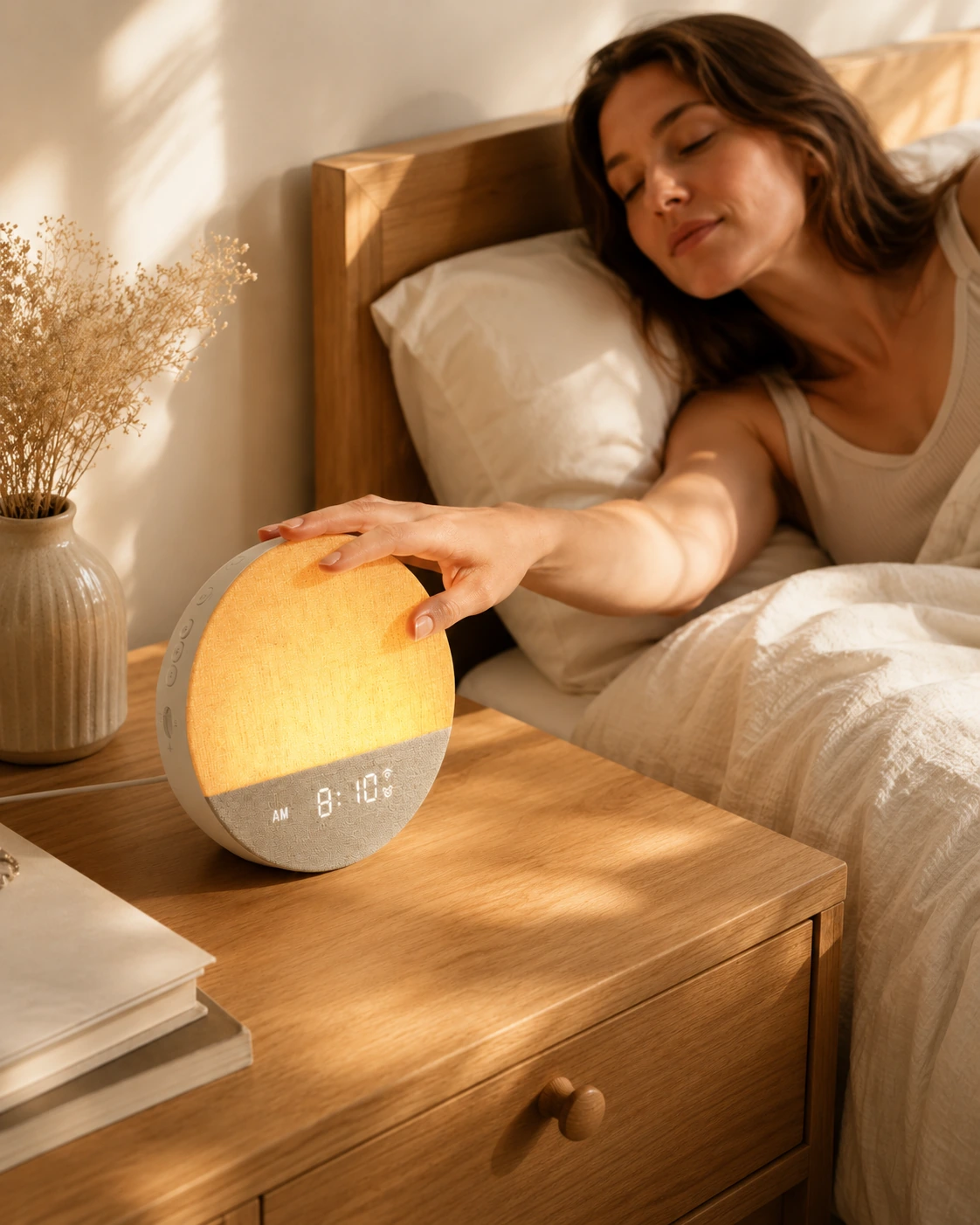
The strongest reason to buy Sunrise 1 is not the sunrise effect by itself. It is the combination of light, alarm, clock, and sound machine in one object that can replace your phone alarm.
A phone alarm usually brings other habits with it: checking messages, scrolling, setting another alarm, or looking at the screen after waking at night. Dreamegg does not fix those habits automatically, but it removes one reason to keep the phone on the nightstand.
This is also where the physical controls help. The model works without Bluetooth or a mobile app, with controls on the device itself. For buyers who want fewer screens at bedtime, that is a real advantage.
The 29 built-in sounds are not just a bonus. They are one of the main reasons the Sunrise 1 makes sense.
A basic sunrise clock wakes you with light. Dreamegg also works as a white-noise-style sound machine. That makes it useful before sleep, during night wakings, and for kids' rooms where a steady background sound can be more useful than another alarm tone.
The limitation is control. You are using the built-in sound set. If you want podcasts, Spotify, audiobooks, your own brown-noise track, or guided sleep audio, this is the wrong device.
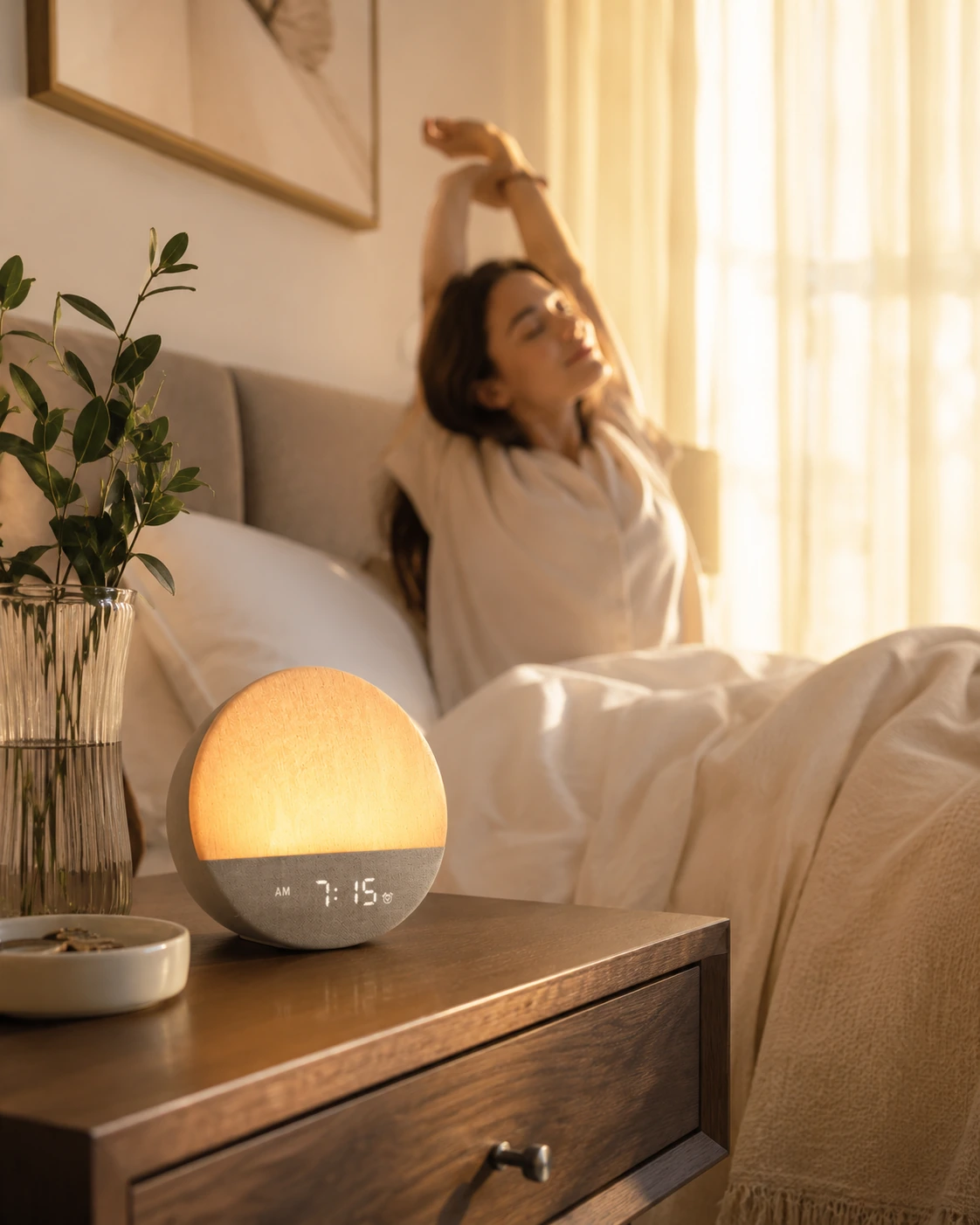
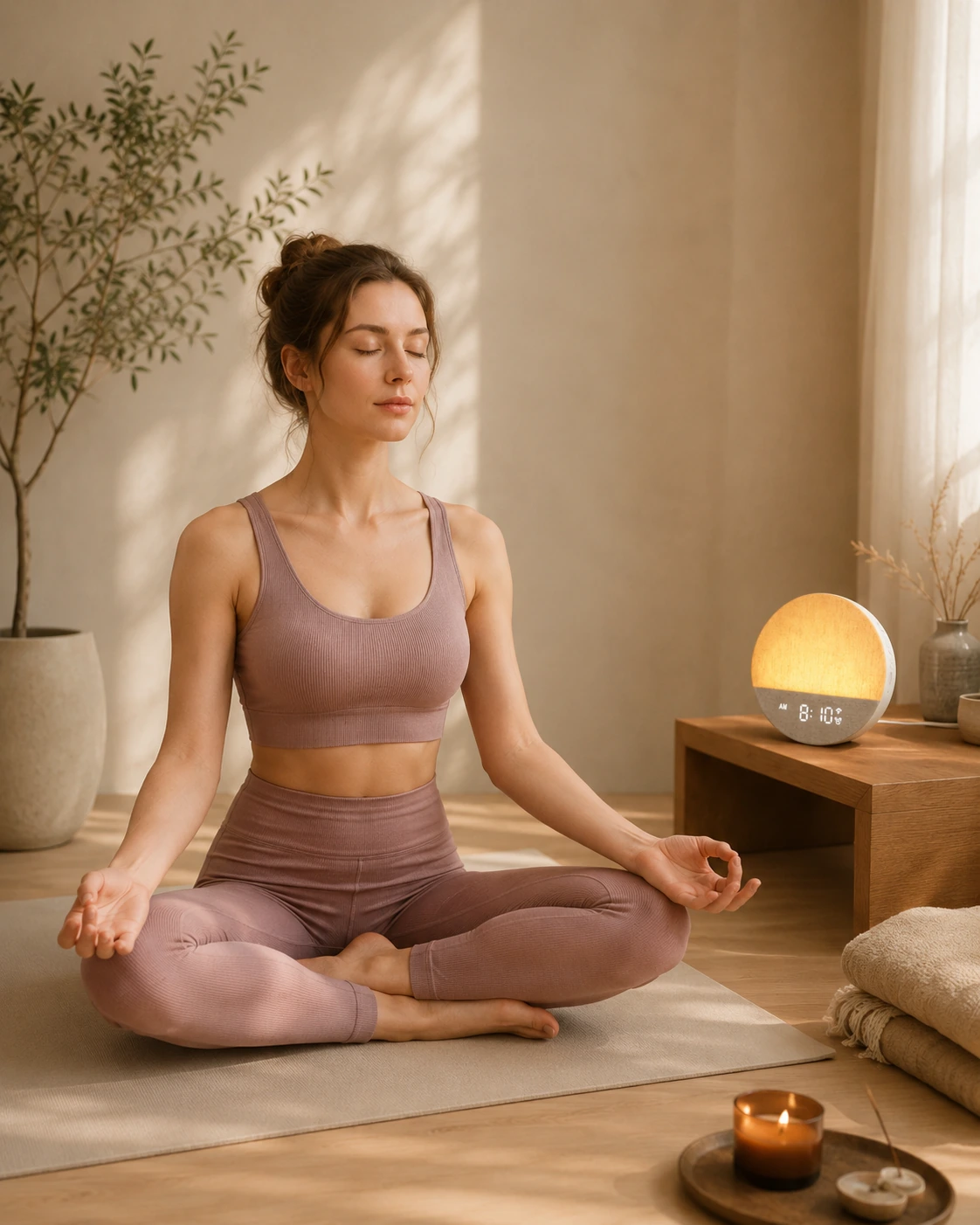
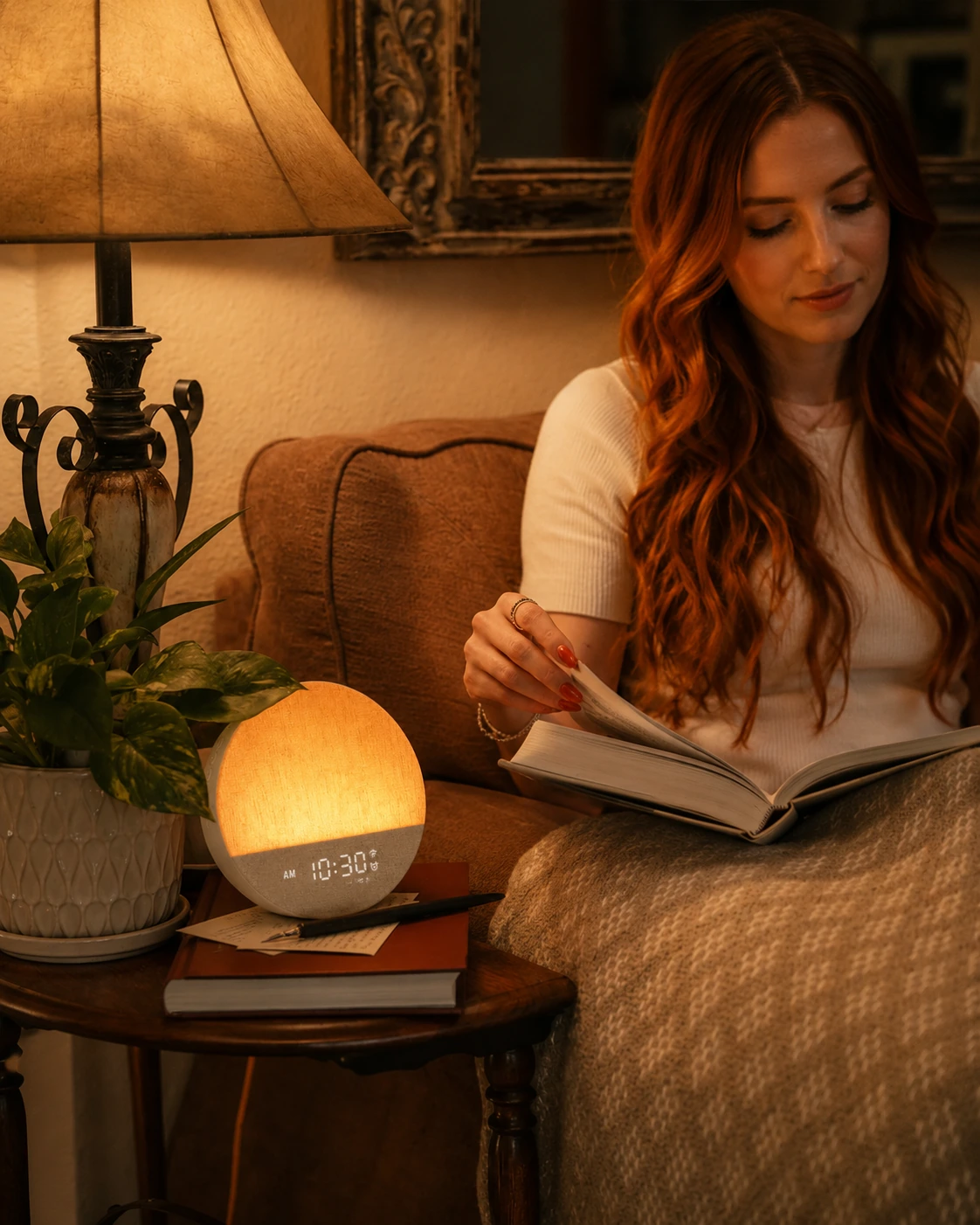
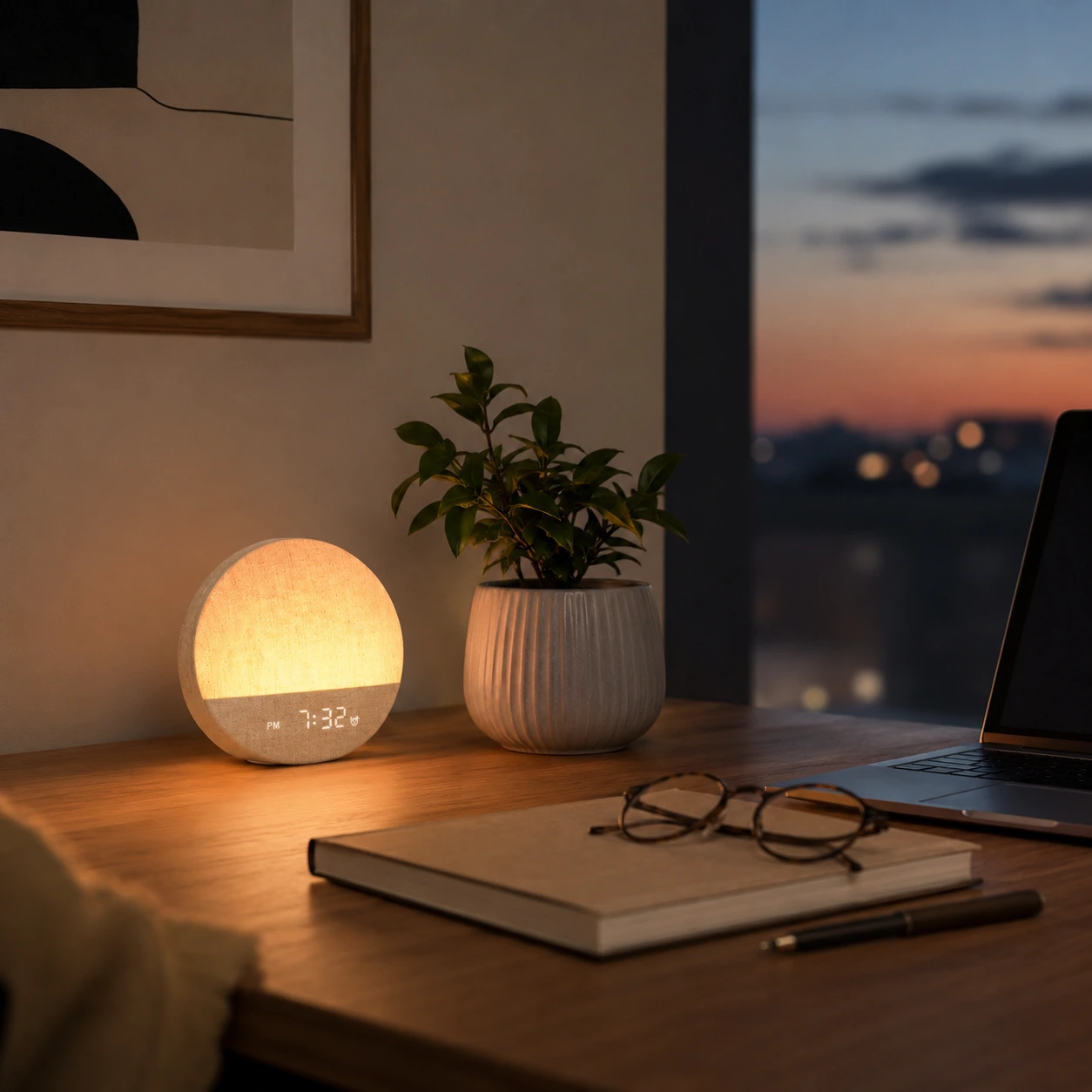
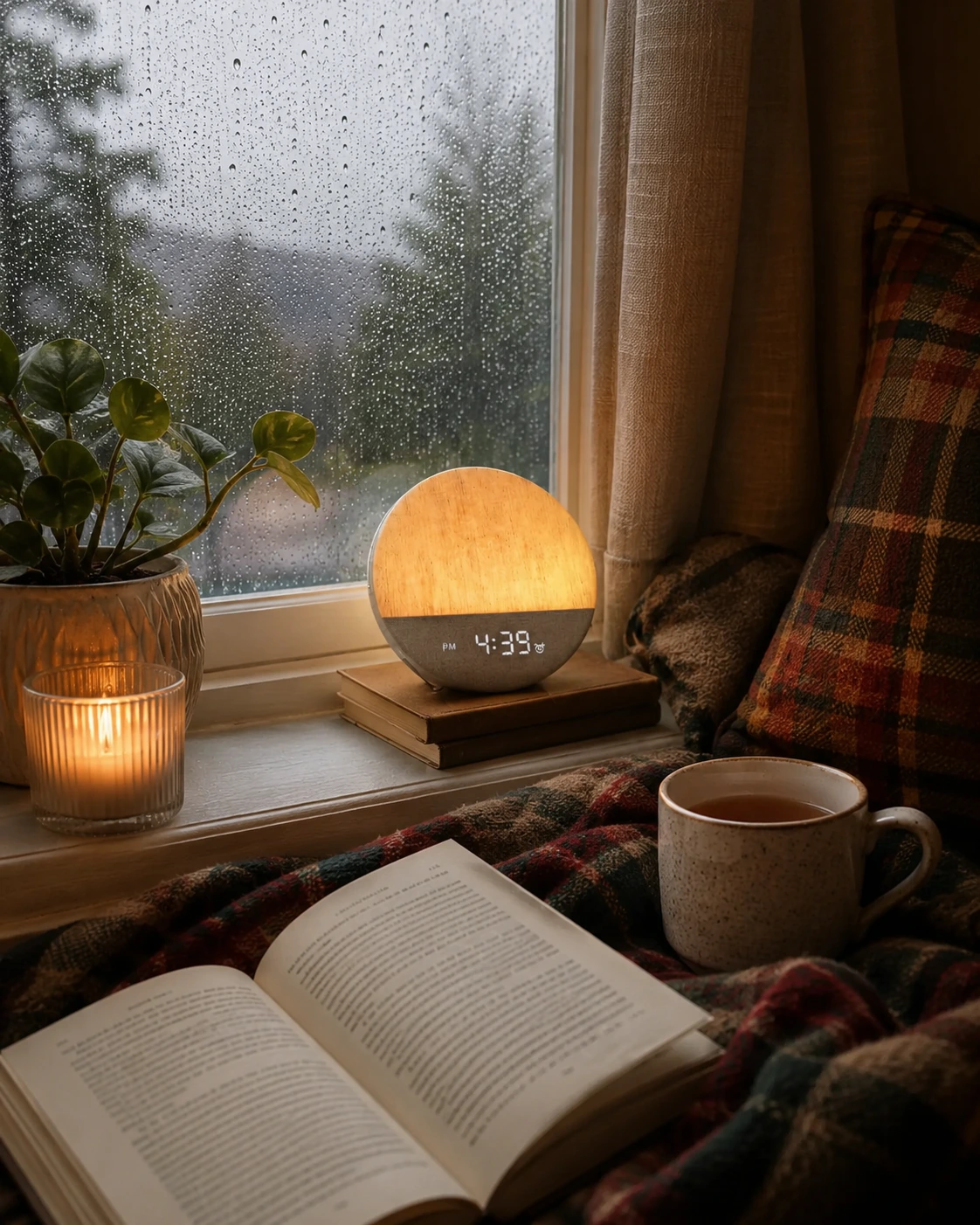
Many low-cost sunrise alarms look like plastic gadgets. Dreamegg uses a softer fabric-style design and a small circular shape.
That does not make it better at waking you up. It does make it easier to keep on a visible nightstand, use in a guest room, or place in a child's bedroom without it feeling like a bright control panel.
The Sunrise 1 is a good match for someone who does not want to open an app to change a sleep routine.
That includes older users, kids, guest-room setups, and people who already manage enough connected devices. If the goal is "set an alarm and leave the phone outside the room," Sunrise 1 fits better than a more complicated smart clock.
The cost of that simplicity is less scheduling flexibility.
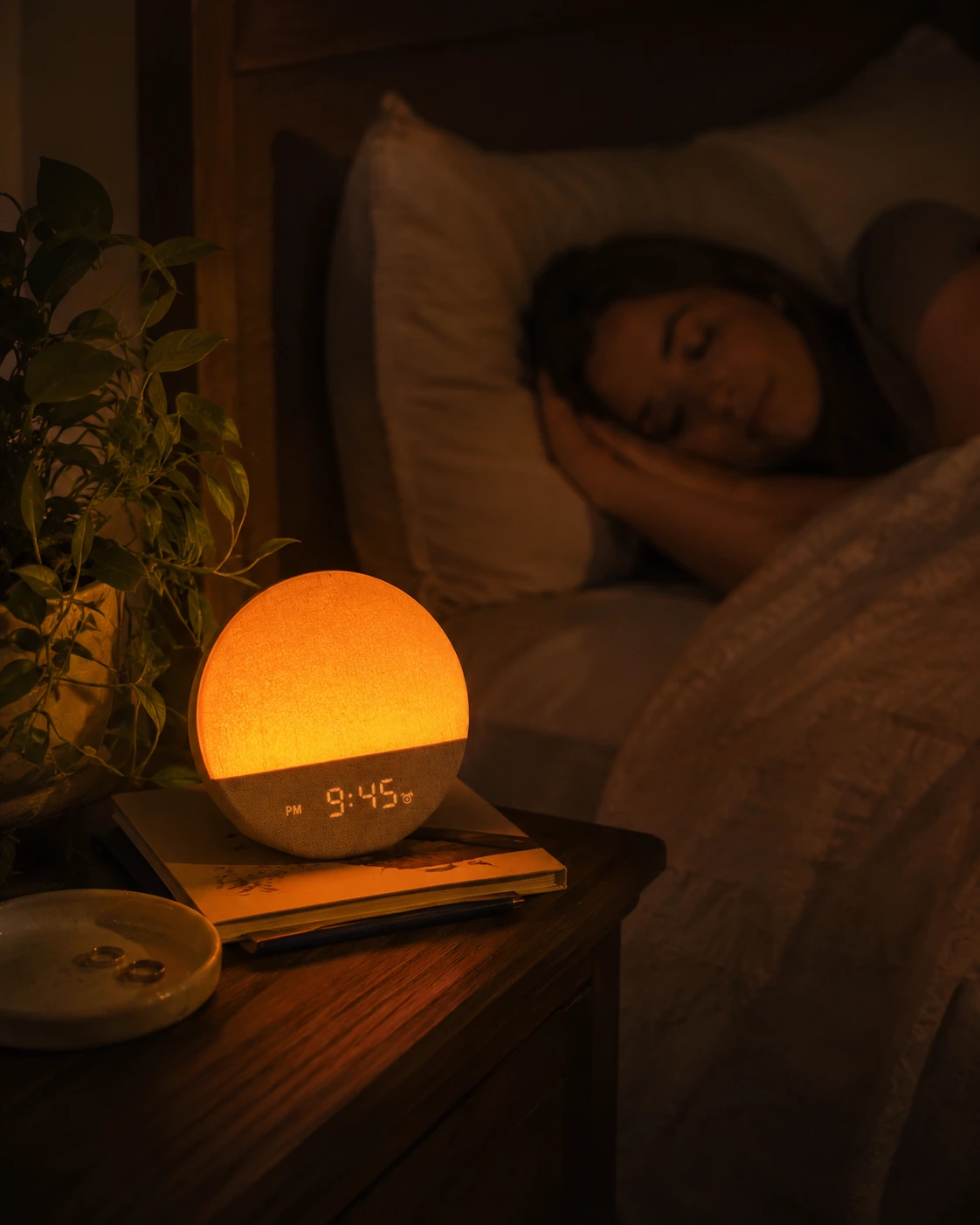
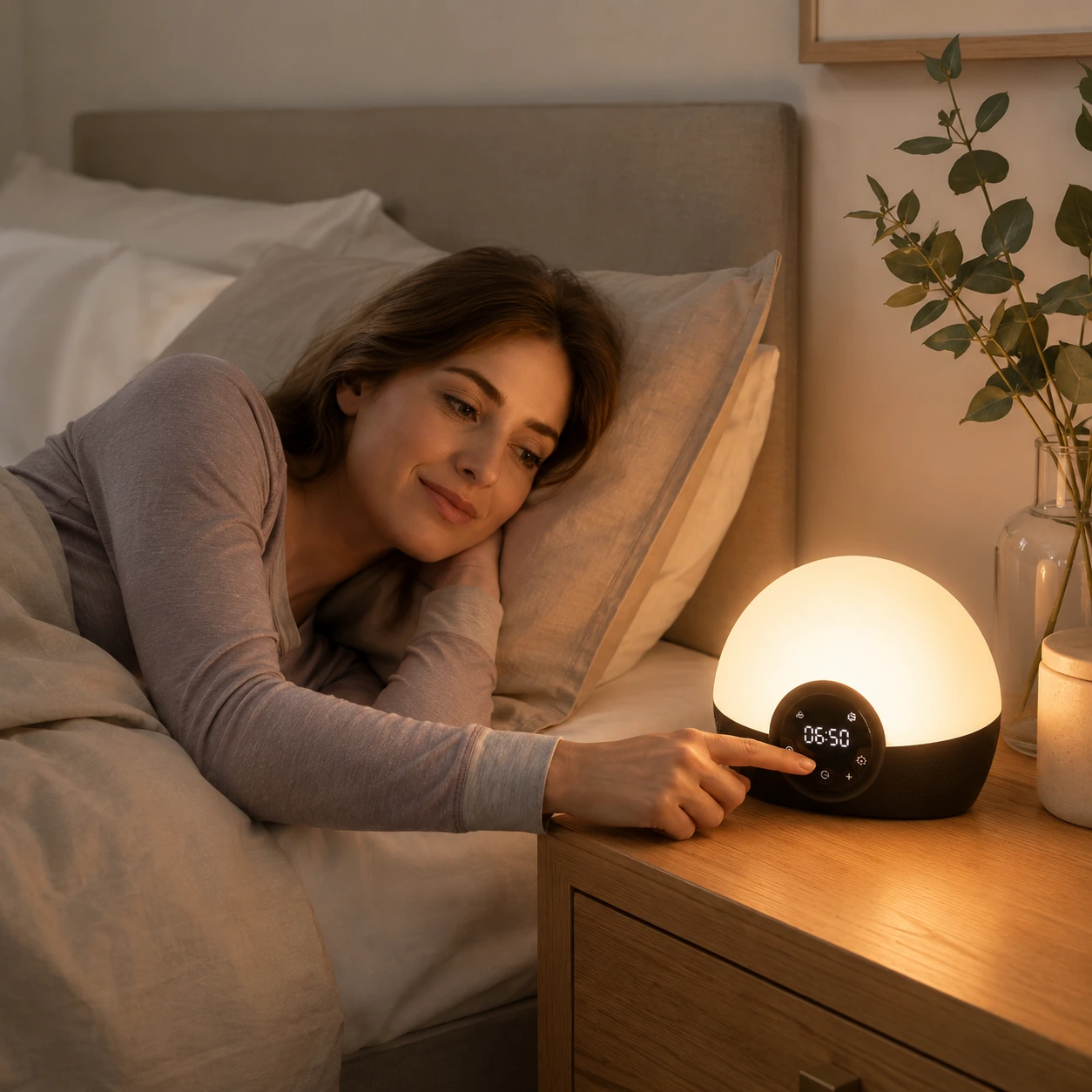
| Model | Better choice when... | Main trade-off |
|---|---|---|
| Dreamegg Sunrise 1 | You want app-free control, built-in sounds, and a lower price | Limited alarms, no Bluetooth, no true sunset |
| Dreamegg Sunrise 1+ | You want Dreamegg design with app control and more routines | Less phone-free than Sunrise 1 |
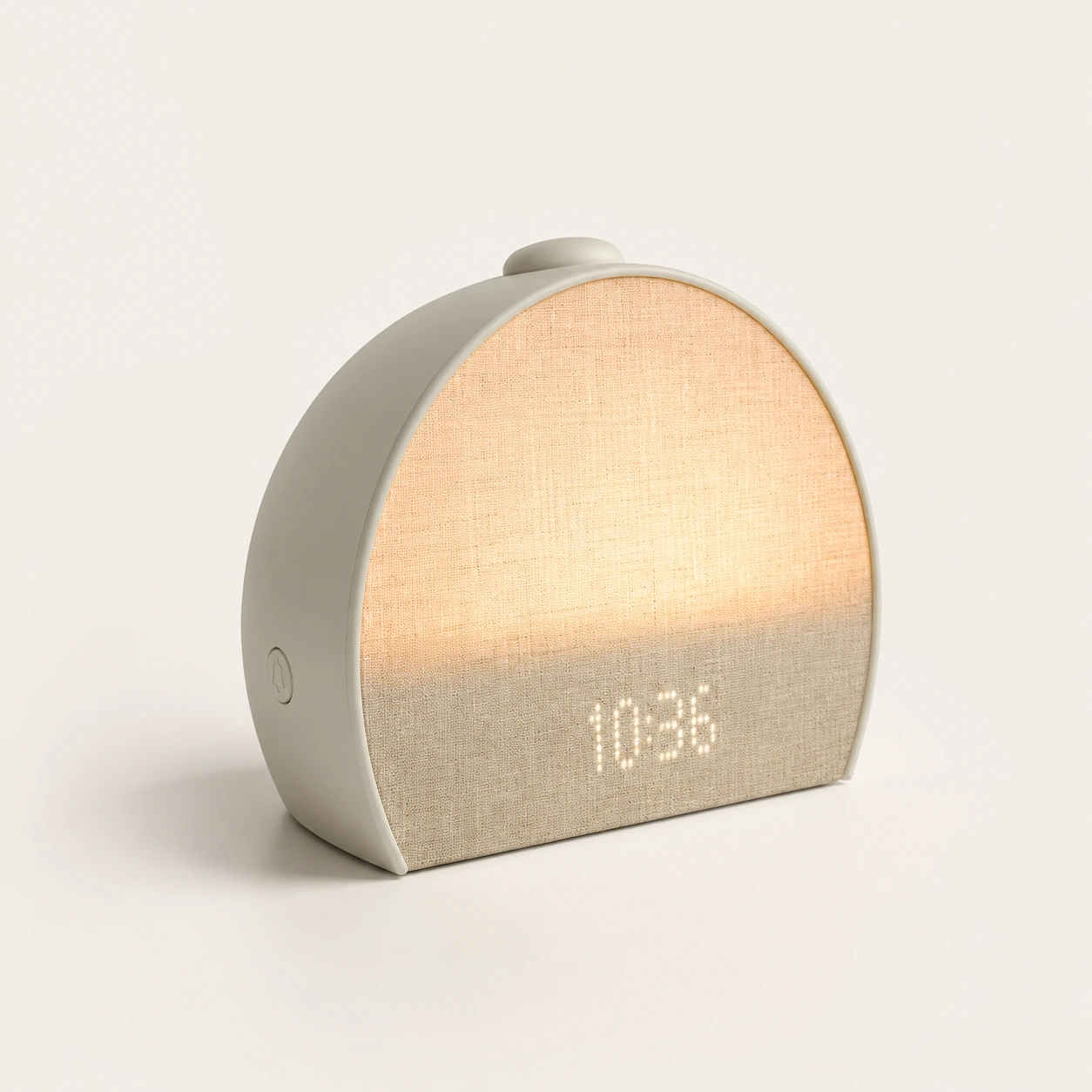
| Hatch Restore 3 | You want deeper smart routines and richer sleep content | Higher cost and app ecosystem |
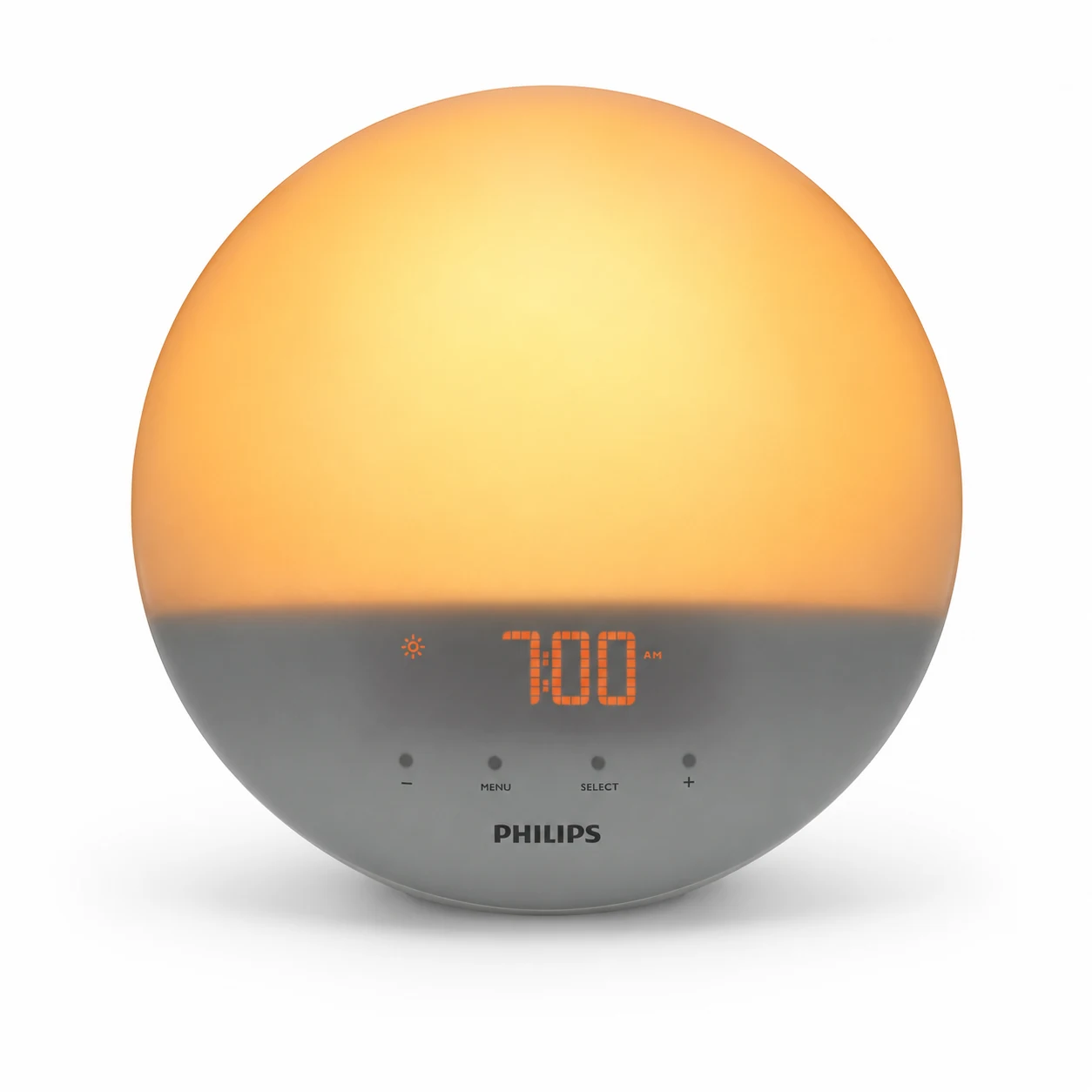
| Philips SmartSleep | You care most about stronger light performance | Higher price, less sound-machine value |
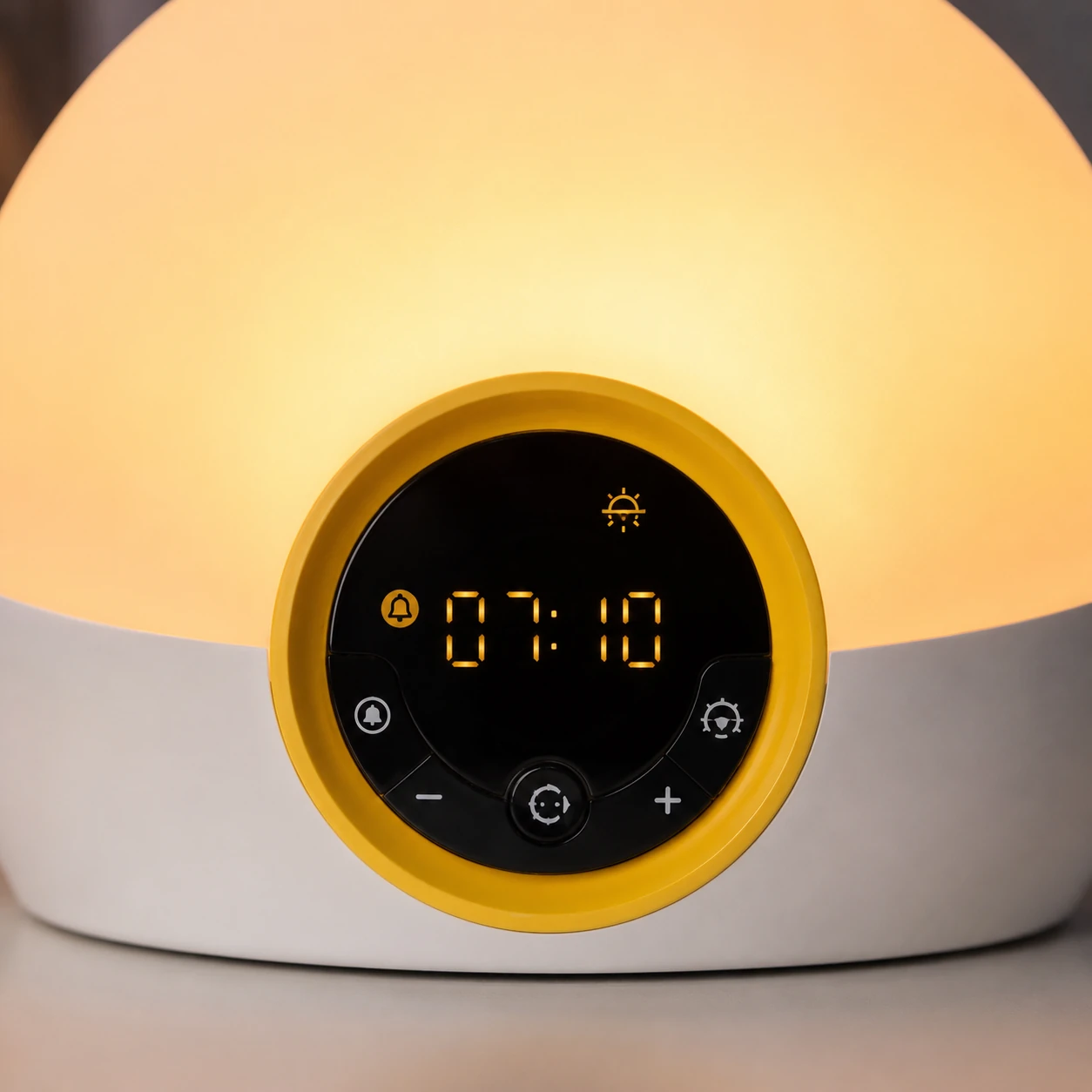
| Lumie Bodyclock | You want better sunrise/sunset light behavior | Usually fewer built-in sound options than sound-machine-first devices |
| JALL / basic budget clocks | You want the cheapest sunrise-style alarm | Less polished design and weaker overall sleep-machine feel |
The Dreamegg Sunrise 1 belongs between cheap Amazon sunrise clocks and premium routine devices.
It is not the cheapest. It is not the most capable. Its value is that it feels more polished than many budget clocks while staying simpler and less expensive than the premium category.
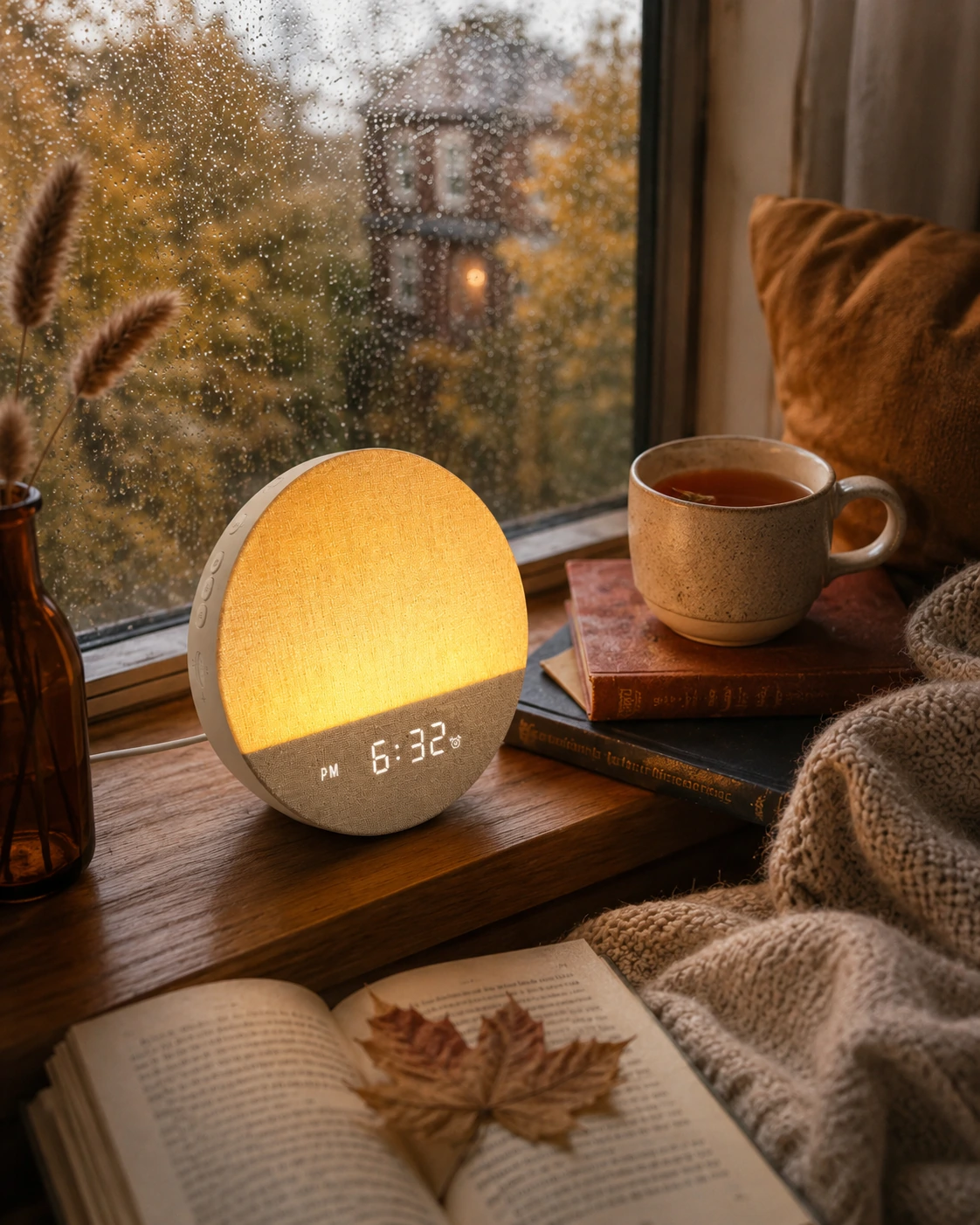
The Sunrise 1 can replace a phone alarm. It should not be treated as a full Hatch Restore replacement.
Hatch is a broader smart sleep-routine platform. Dreamegg Sunrise 1 is a simpler clock and sound machine.
Sunrise 1+ has app-based and expanded routine features that the simpler Sunrise 1 does not offer in the same way. Check the exact model name before buying.
There is no Bluetooth personal audio. If built-in sounds are not enough, choose another device.
The Sunrise 1 has an auto-off timer, not a full fading sunset routine.
Sunrise 1 is a consumer wake-up light, not a medical light therapy box.
Medical light therapy devices for seasonal affective disorder are a separate category. They have different brightness, placement, timing, and safety considerations. Do not buy the Dreamegg Sunrise 1 expecting it to replace a therapy light.
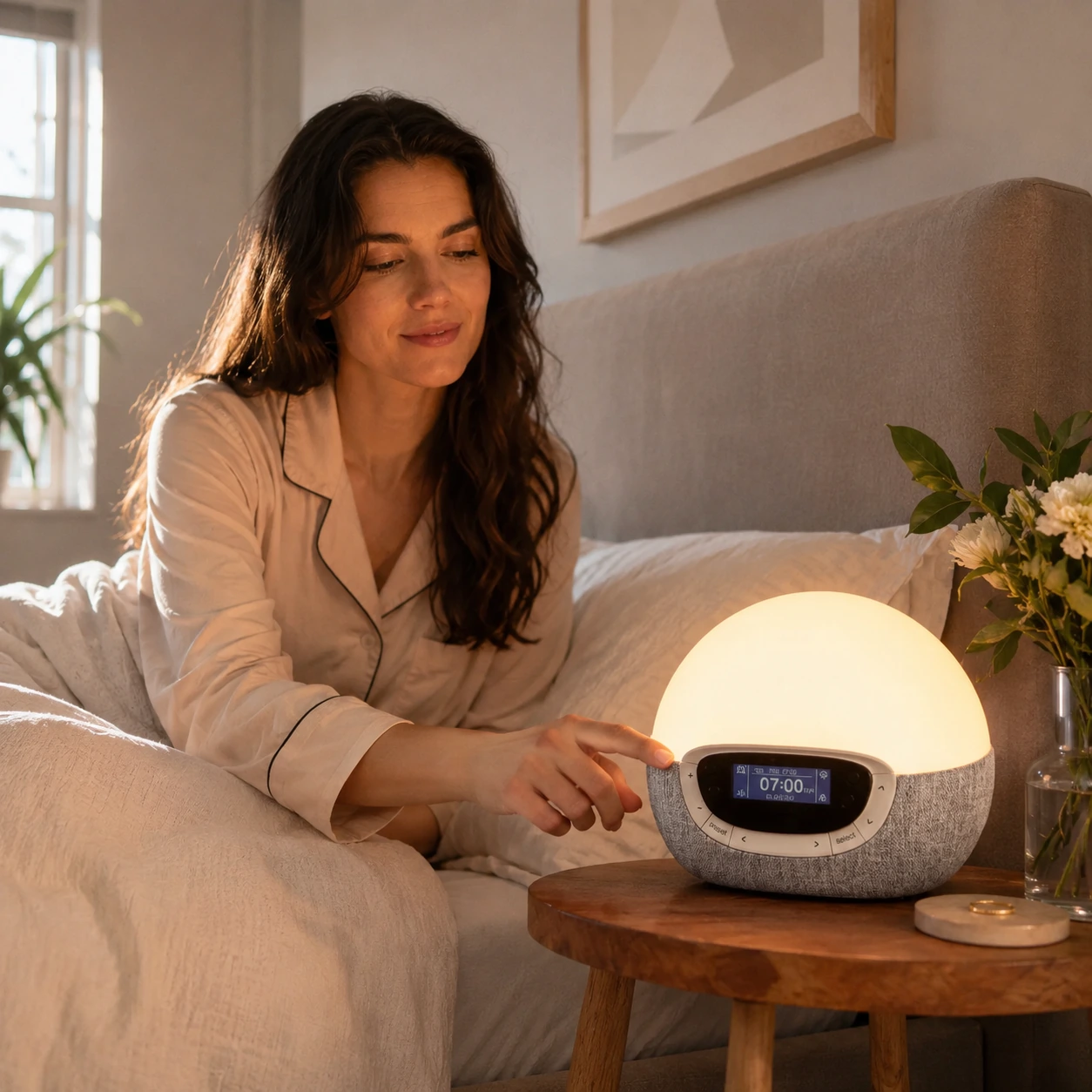
| Sleeper type | Setup note |
|---|---|
| If you wake easily | Start with a lower brightness setting. Do not use the brightest setup just because it is available. If the light wakes you too early, shorten the ramp if your unit allows it or reduce brightness. |
| If you are a heavy sleeper | Use both light and sound from the first night. Do not rely on light alone. Keep a backup alarm until the clock has worked for several real mornings. |
| If you share a bedroom | Start dimmer than you think. The goal is to wake one person without irritating the other. Test it on a weekend morning before using it for a workday alarm. |
| If it is for a child's room | Use the sound and night light first, then introduce the wake-up alarm. That makes the device part of the room's routine instead of a sudden morning gadget. |
| If you want to stop using your phone alarm | Put the phone outside the room. If the phone stays beside the bed as a backup, the behavior change will not happen. |
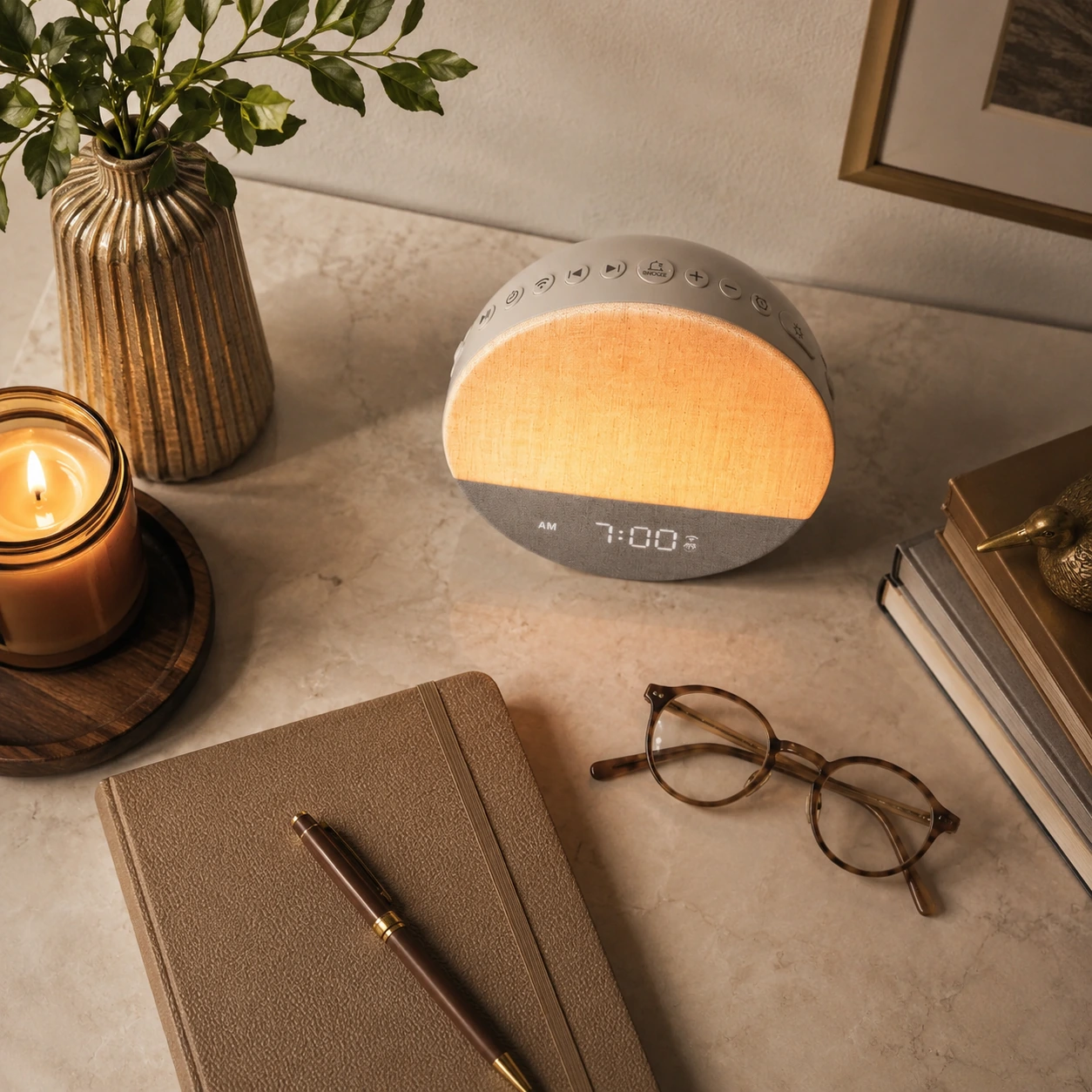
Dreamegg Sunrise 1 is a good buy if you want a simple, app-free sunrise alarm clock that also works as a sound machine and night light.
Its best use is practical, not premium: replace the phone alarm, add a softer light-based wake-up, and give the bedroom a small library of built-in sleep sounds.
Do not buy it for advanced routines, Bluetooth, multiple alarms, true sunset, or medical-grade light therapy. For those needs, look at Dreamegg Sunrise 1+, Hatch Restore 3, Philips SmartSleep, or Lumie.
Clean verdict: Dreamegg Sunrise 1 is a practical budget buy when simplicity is the point. It is not the right buy when you need smart routines, stronger light performance, or personal audio.
Reviews
People who want a dedicated clock, built-in sounds, and no app are the clearest match.
The one-alarm structure and no-Bluetooth design are the trade-offs that matter most before buying.
Check whether the listing is Sunrise 1 or Sunrise 1+. The names are close, but the control style is different.
FAQ
No. The Sunrise 1 is designed for app-free use with physical controls.
No. It does not work as a Bluetooth speaker for personal audio playback.
No. It has an auto-off timer, not a full fading sunset routine.
It can help, but heavy sleepers should use sound plus light and keep a backup alarm while testing it. It is not the strongest choice if you often sleep through alarms.
No. It is a wake-up light, not a medical light therapy box.
Sunrise 1 is the simpler app-free model. Sunrise 1+ is the more connected version with app/routine-style features and sunset positioning.