Hatch Restore 3 Smart Sunrise Alarm Clock
Sunrise routine review
Hatch+ and phone-down controls
Amazon model check
Verify HF3520/60Affiliate listings can mix Philips models. Confirm HF3520/60 before comparing features.Check current priceHatch comparison
Routine vs lightPhilips is the cleaner no-app choice. Hatch is better when routines and app content matter.Read comparisonHeavy sleeper note
Use a backup firstRun a one-week backup alarm test before trusting a gentle wake-up light alone.Placement guideRelated Products
Sunrise routine review
Hatch+ and phone-down controls
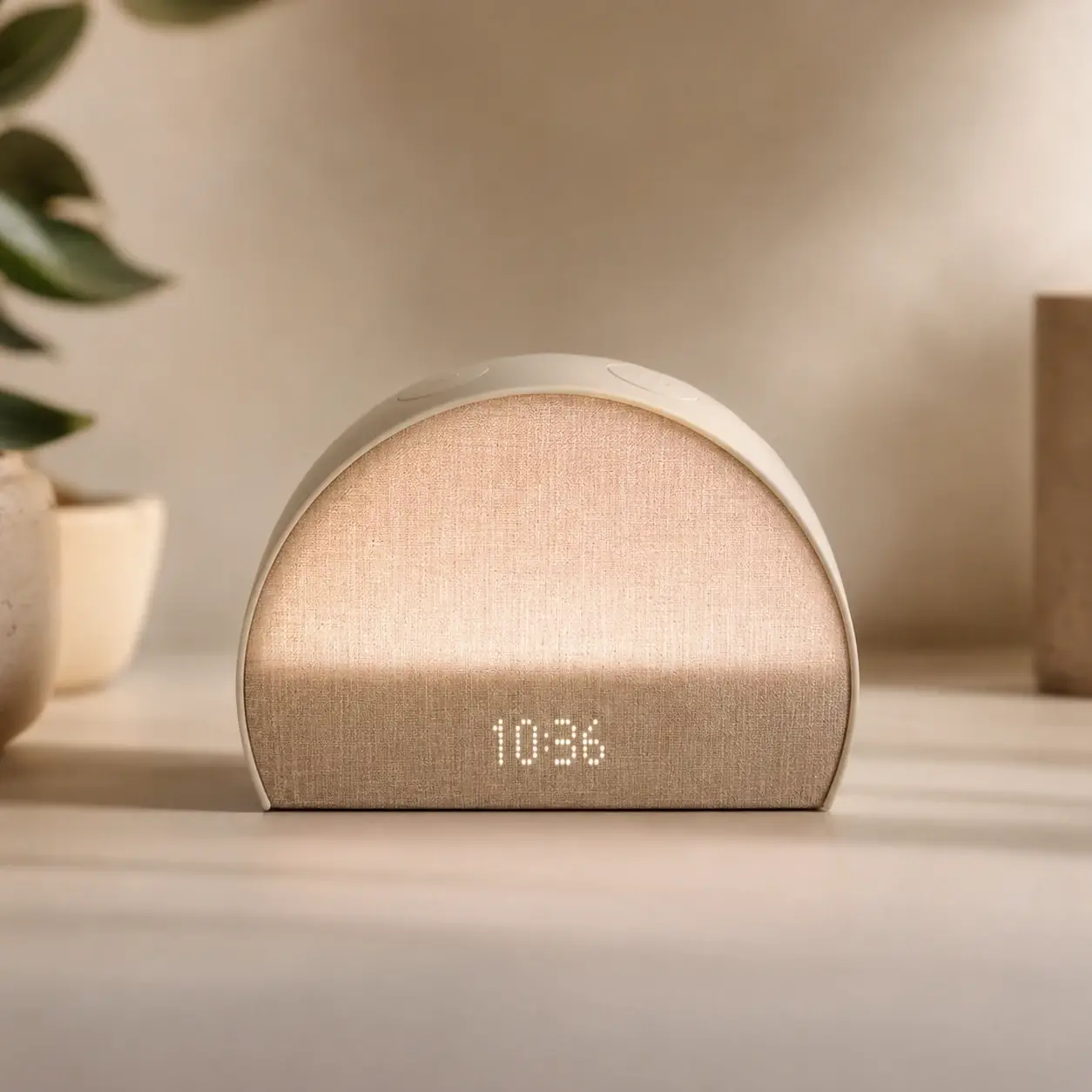
Full review
Discounted adult routines
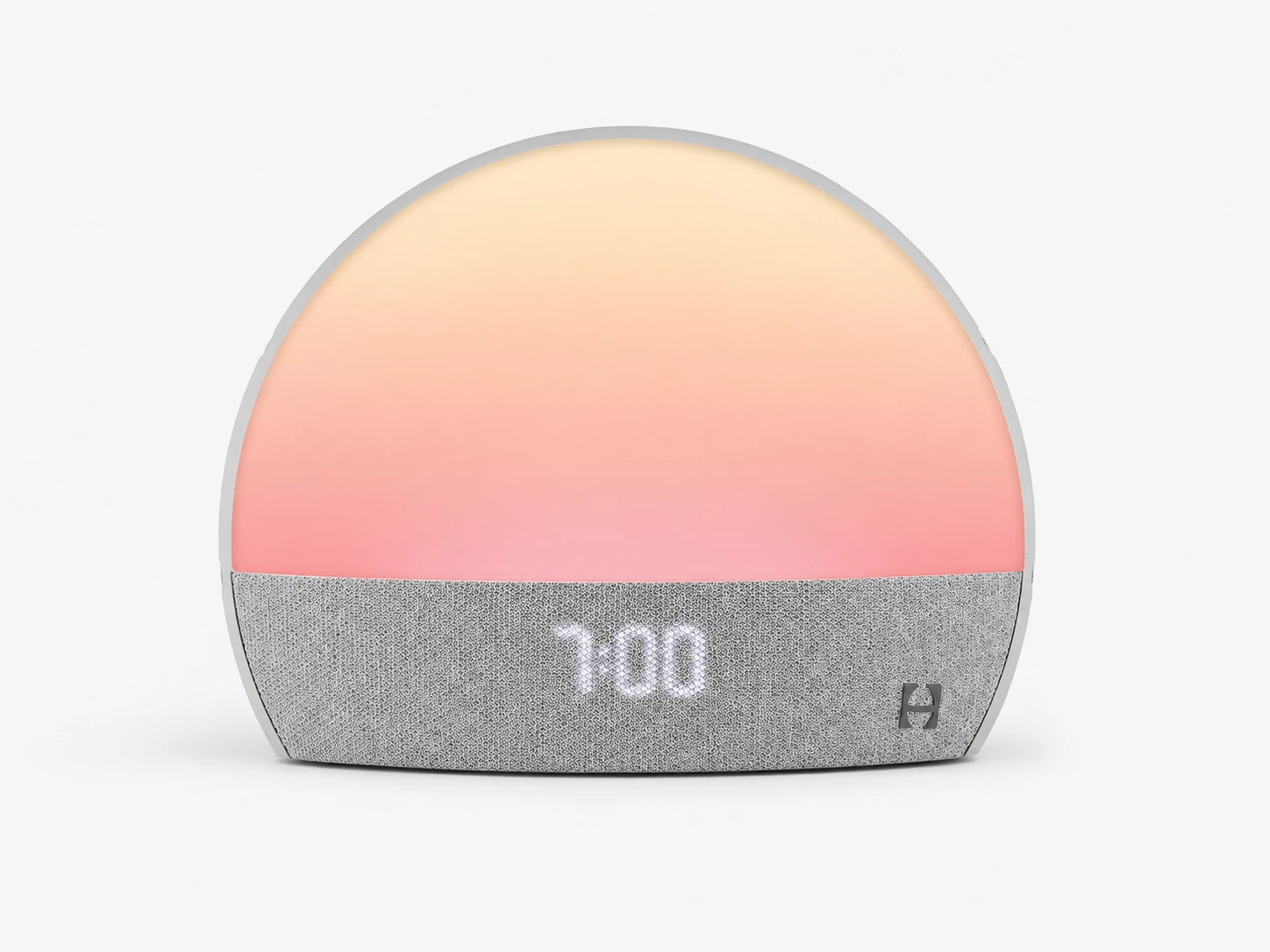
Full review
Original Restore buyers
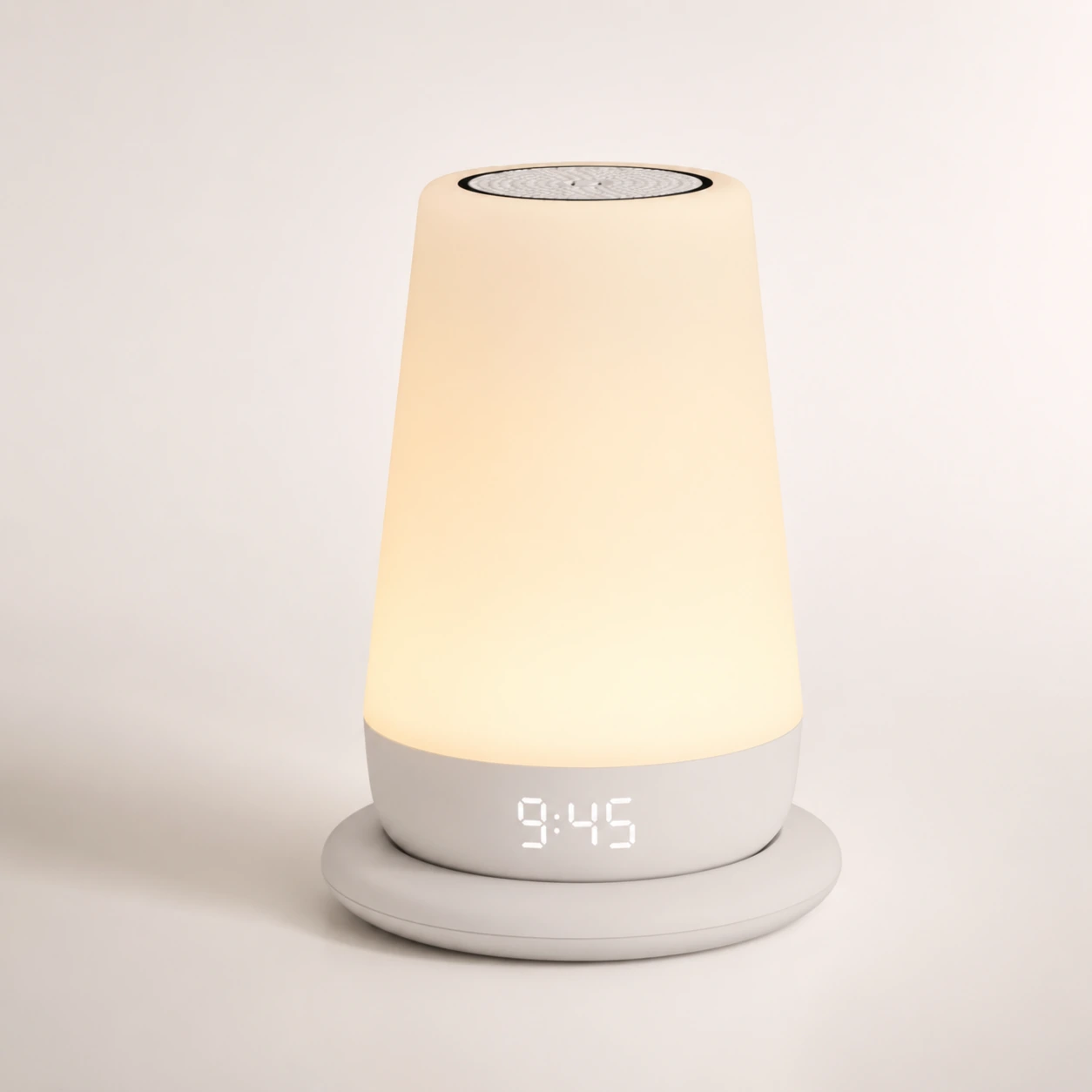
Full review
Family sleep routines
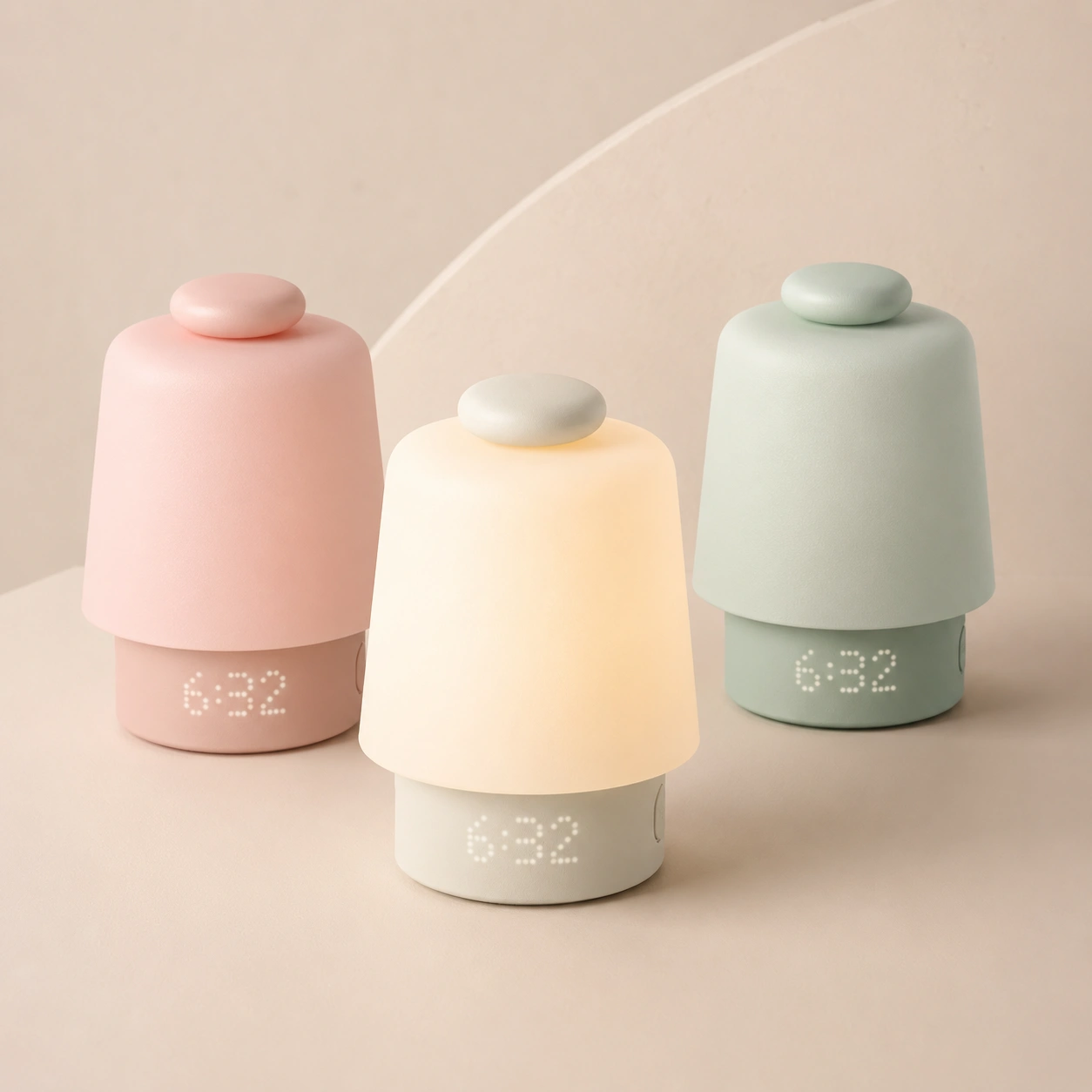
Full review
Baby-room routine device
Product Overview
Fit-based product review for no-app sunrise-light buyers
Adults who want gradual light without app setup, Wi-Fi, or subscription content
Gentle by design, not a heavy-sleeper force alarm or SAD therapy lamp
8.4/10 for the right no-app buyer
June 3, 2026
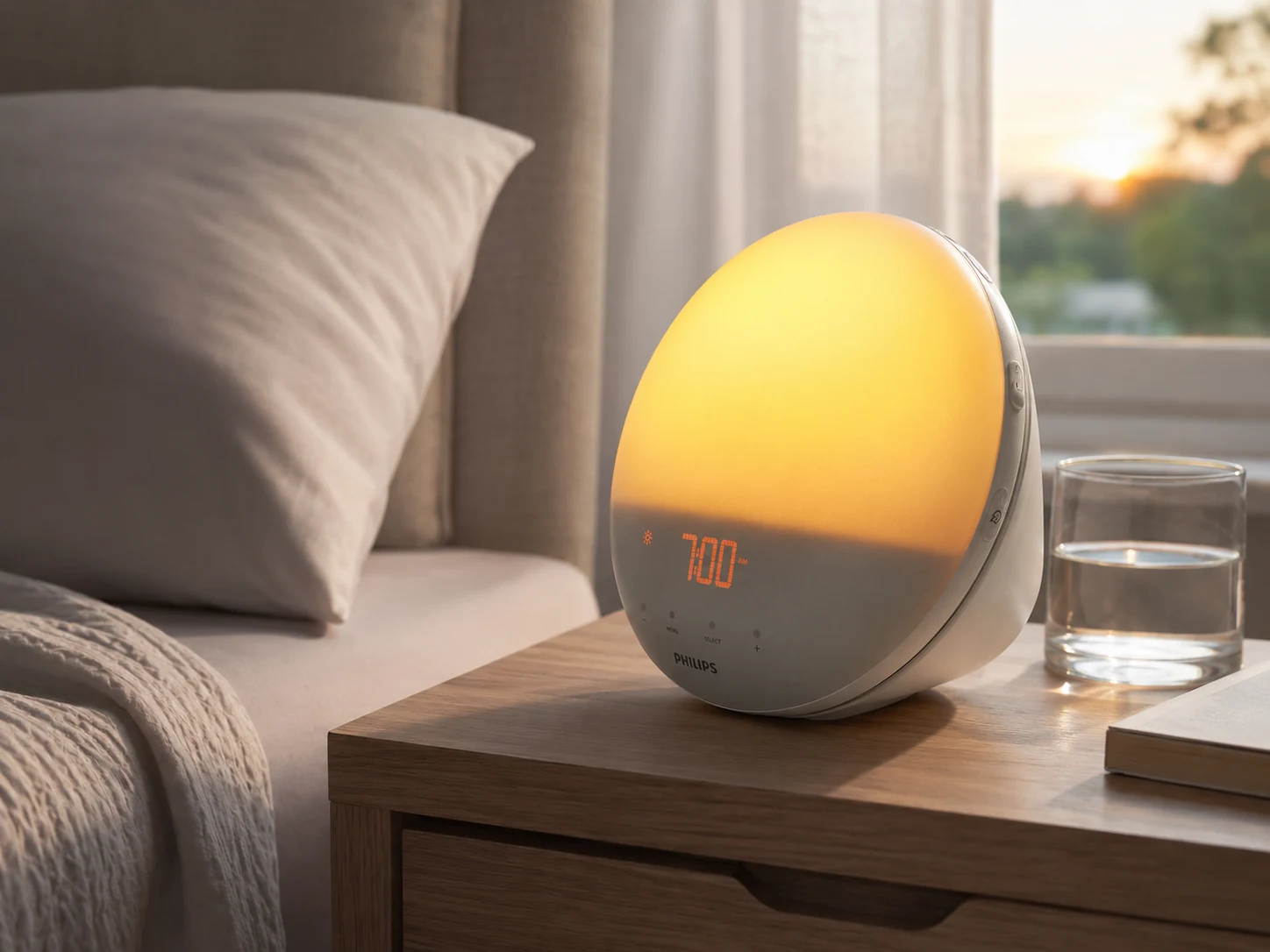
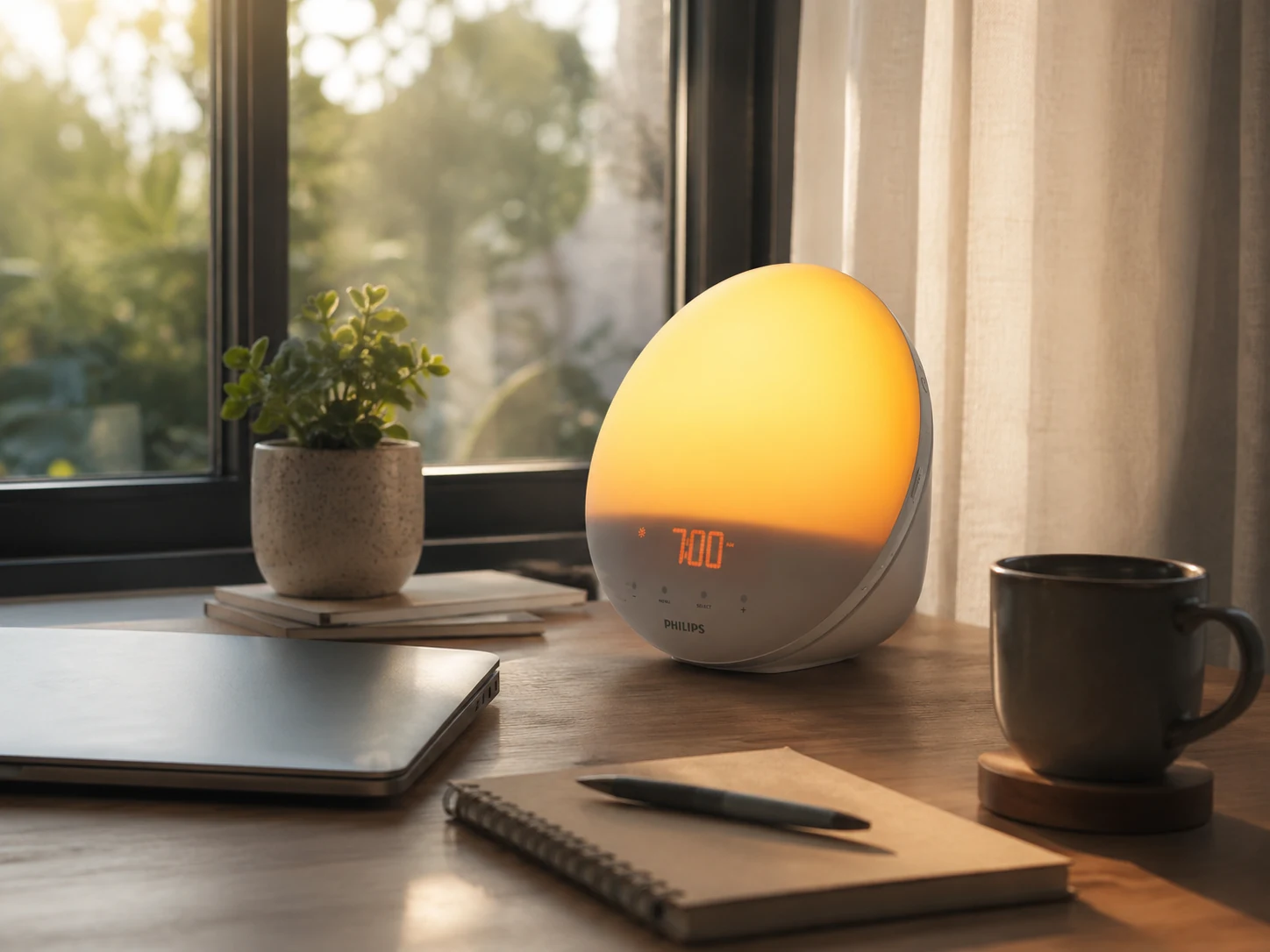
The Philips SmartSleep Wake-Up Light HF3520/60 is best understood as a polished no-app sunrise alarm, not as a full smart sleep system. It is for buyers who want gradual light, physical controls, FM radio, a sunset mode, and two alarms without adding another app to the bedroom.
The buying decision depends on fit. Philips makes sense when the light is the product. Hatch makes more sense when the routine, app content, and broader sound system are the product.
Because Philips model names are easy to mix up, check HF3520/60 before comparing specs, reviews, or prices.
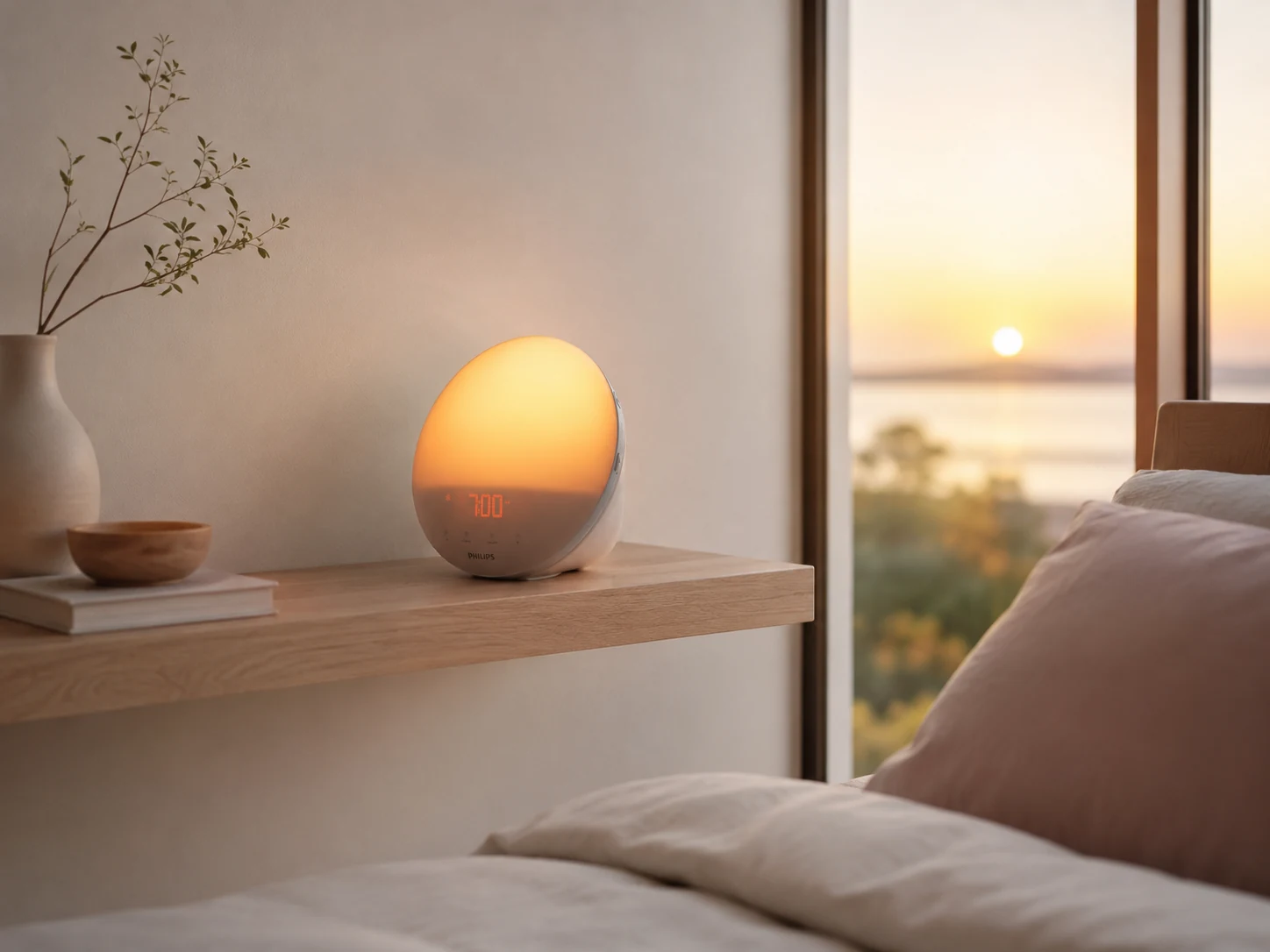
| Philips SmartSleep Wake-Up Light HF3520/60 | Quick details |
|---|---|
| Product category | Sunrise alarm clock, sunset light, FM radio, reading lamp |
| Best fit | Adults who want a no-app wake-up light with gradual sunrise and simple bedside controls |
| Weakest fit | Heavy sleepers, app-first users, small-nightstand buyers, and anyone expecting a SAD therapy lamp |
| Wake-up light | Colored sunrise simulation from red to orange to yellow |
| Sunset mode | Yes |
| Brightness | 20 levels, up to 300 lux |
| Sounds | 5 natural wake-up sounds plus FM radio |
| Alarms | 2 alarm profiles |
| App required? | No |
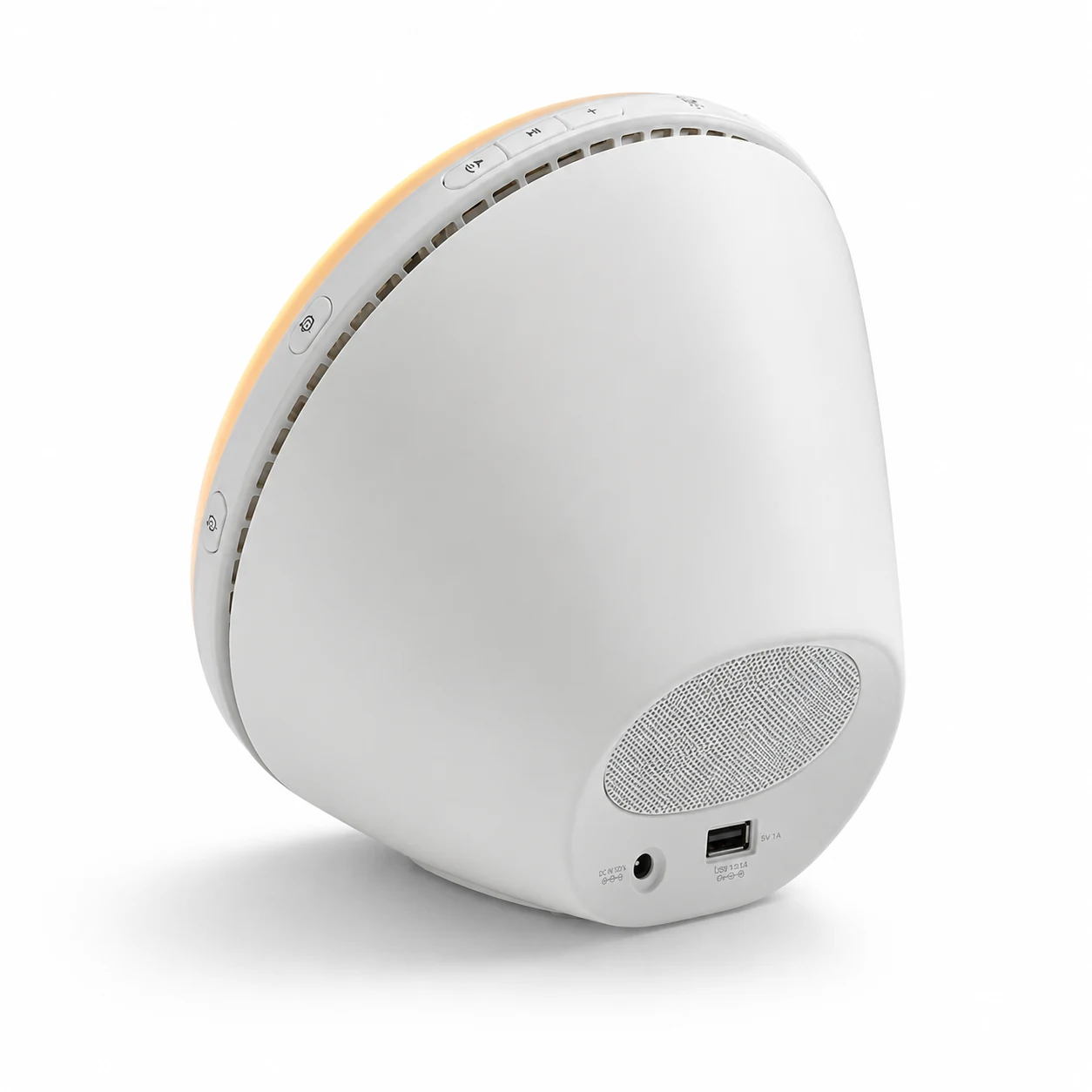
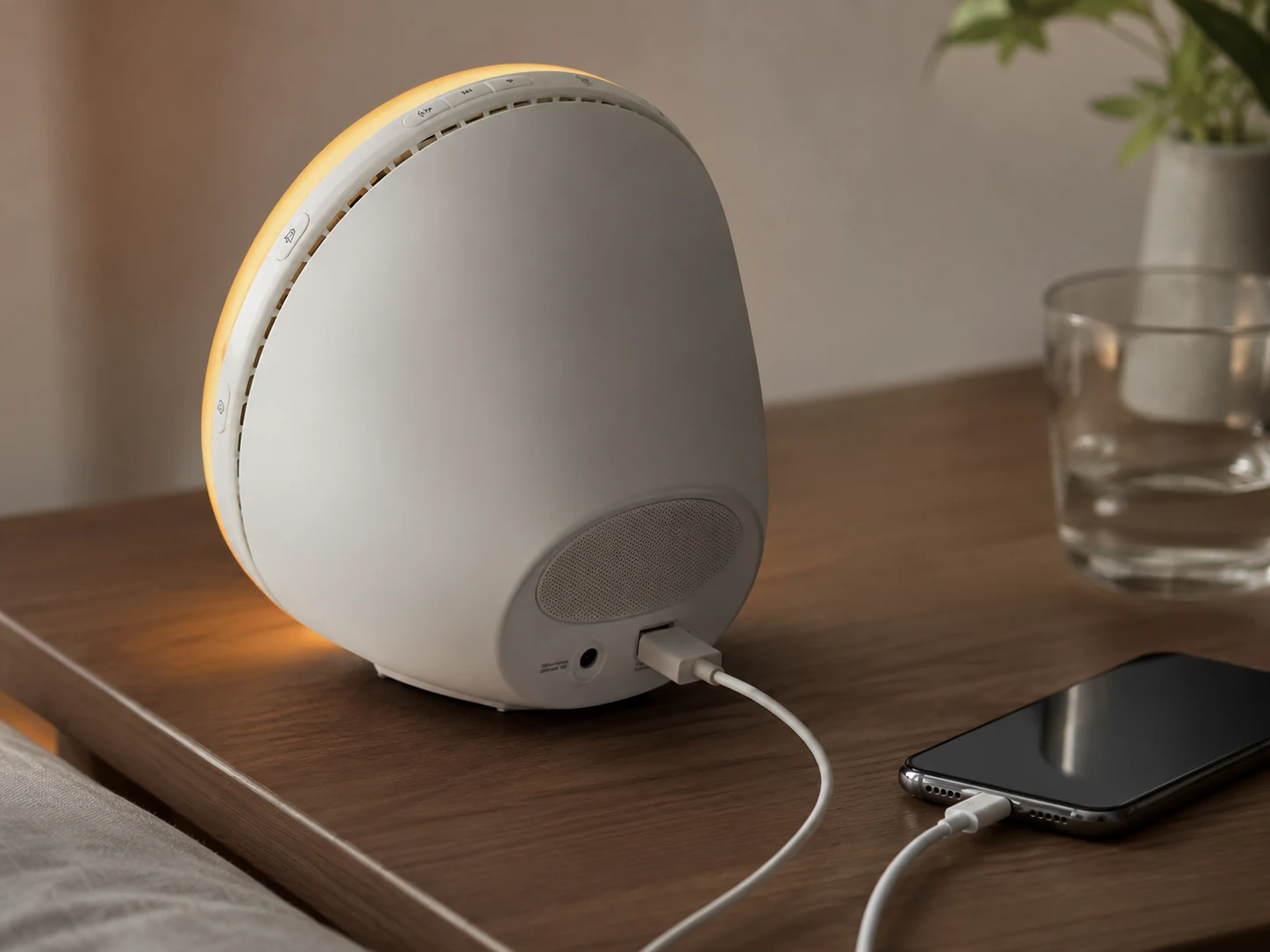
| Phone charging? | No |
| Snooze | Tap snooze, 9 minutes |
| Main warning | Do not confuse HF3520/60 with the higher-end HF3650/HF3651 Sleep and Wake-Up Light models |
| TopClocks score | 8.4/10 for no-app sunrise-light buyers; lower for heavy sleepers or routine-first buyers |
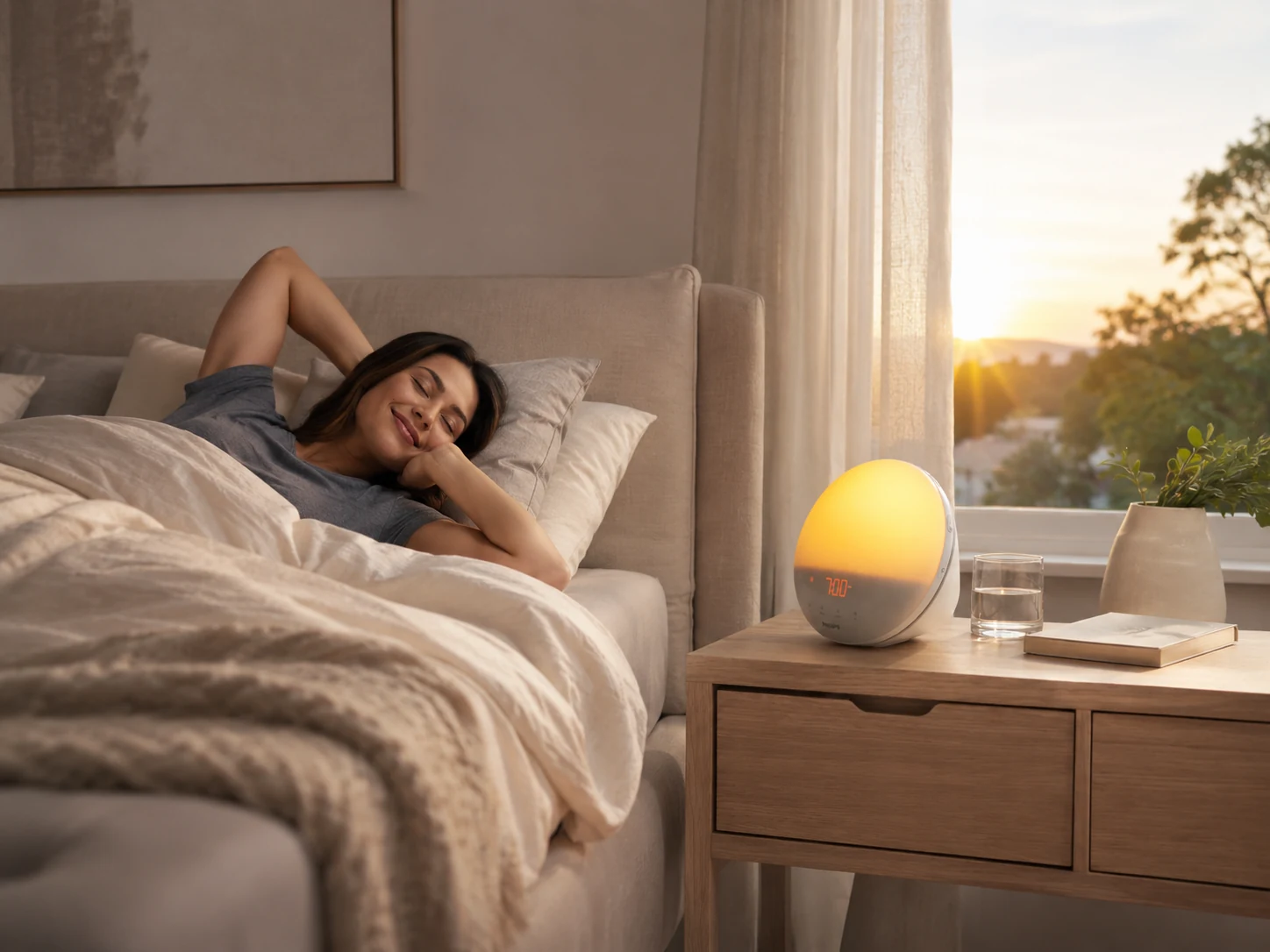
The Philips SmartSleep Wake-Up Light HF3520/60 is worth buying if you want a polished sunrise alarm without an app, Wi-Fi setup, subscription, or bedtime content system. It does not try to be Hatch Restore. That is its best quality and its main limit.
I would buy it for one clear job: waking with gradual light instead of a sharp phone alarm. The colored sunrise feels more deliberate than most budget sunrise clocks, and the extra bedside functions - FM radio, sunset dimming, display dimming, reading light, and two alarms - make it easier to justify than a one-feature device.
I would not buy it for heavy-sleeper reliability, guided wind-down routines, large sound libraries, phone charging, or app-based scheduling. If those matter, Philips HF3520/60 will feel too basic.
Clean decision: Philips SmartSleep HF3520/60 is a good no-app sunrise alarm. It is not a smart sleep system or a heavy-sleeper alarm.
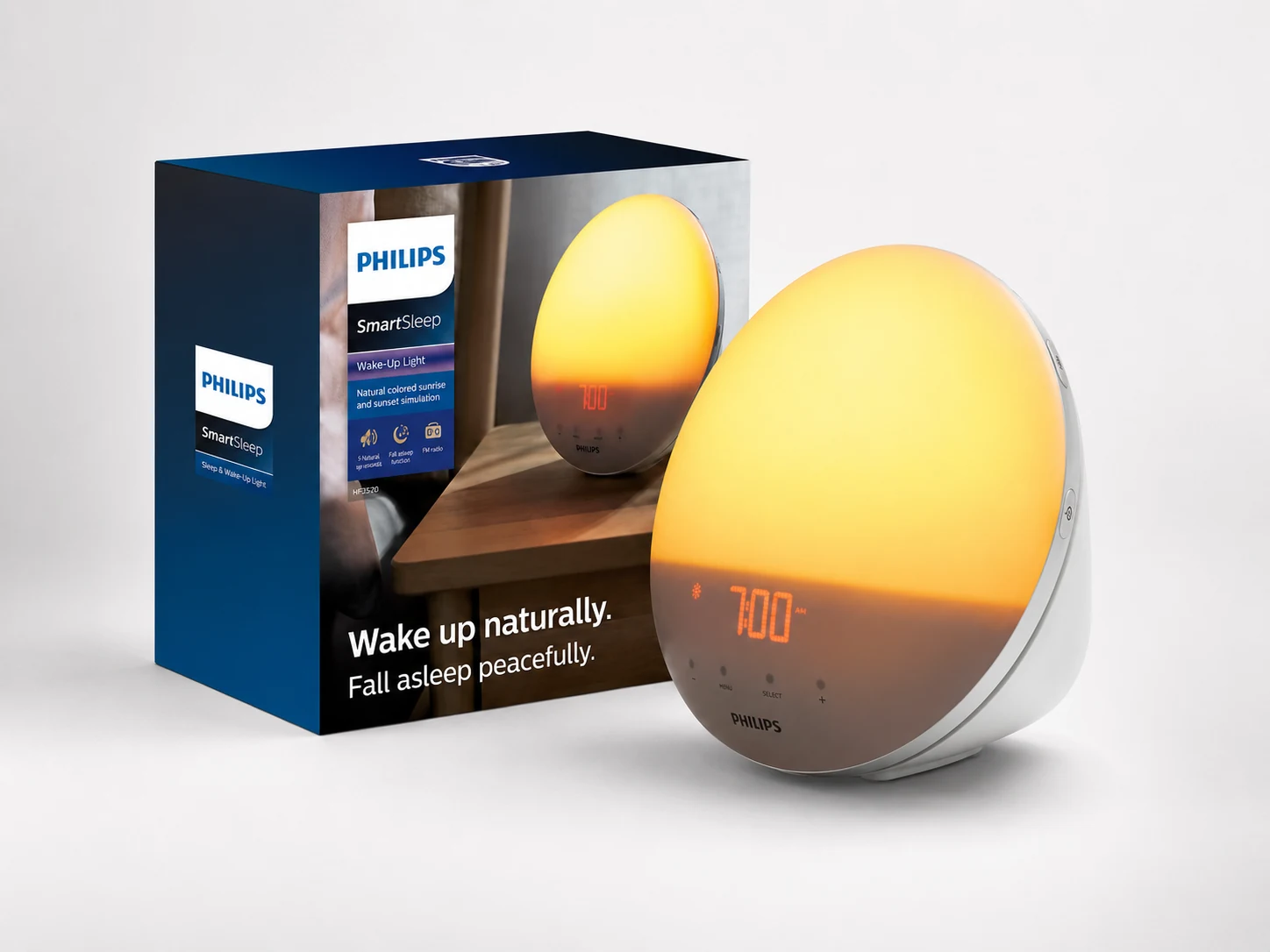
Philips makes this category easy to confuse. Search results often mix Philips SmartSleep Wake-Up Light HF3520/60 with higher-end Philips SmartSleep Sleep and Wake-Up Light models.
This is the no-app model in this review. It gives colored sunrise simulation, 20 brightness levels, five natural sounds, FM radio, two alarms, sunset mode, and physical controls.
Higher-end Sleep and Wake-Up Light models may include a broader feature set such as RelaxBreathe, more sounds, more brightness control, or phone charging depending on model and market.
If a review mentions USB charging, RelaxBreathe, AUX audio, or a larger sound set, check the model before using that review to judge HF3520/60.
Confirm the model number on the listing, not just the Philips SmartSleep name. The brand name alone is not specific enough.
The simple rule: this review is about HF3520/60, not the whole Philips SmartSleep lineup.
| Question | Short answer |
|---|---|
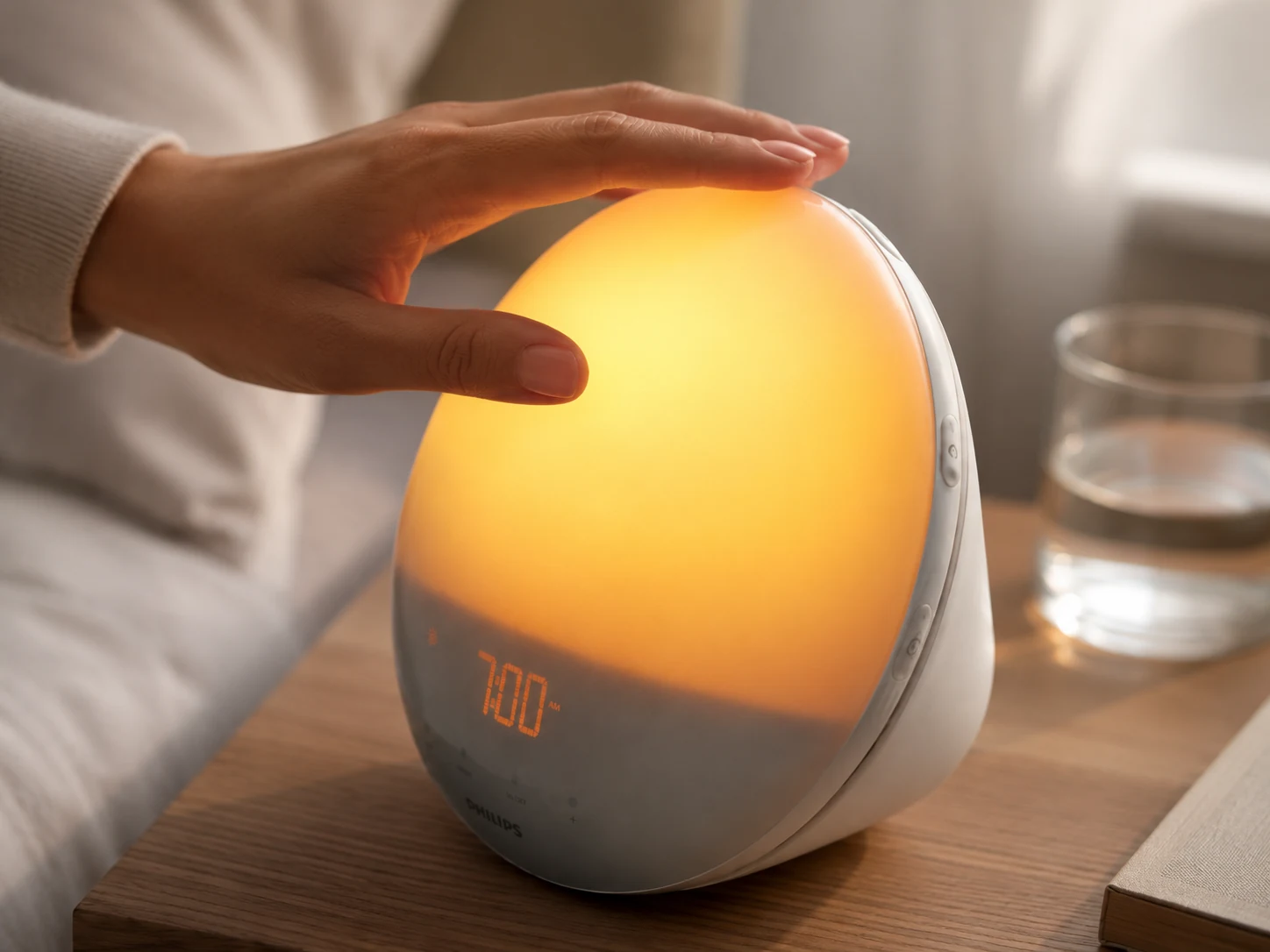
| Is it app-free? | Yes. HF3520/60 is controlled from the device. |
| Is it bright enough? | Usually for light and average sleepers, but placement matters. |
| Is it for heavy sleepers? | Only with a backup alarm during the test period. |
| Is it a SAD lamp? | No. It is a wake-up light, not a medical-grade light therapy box. |
| Does it replace Hatch Restore? | Only if you want sunrise light without app routines. |
| Is it worth paying more than a budget sunrise clock? | Yes if you care about smoother light, FM radio, display dimming, two alarms, and build quality. |
This is a fit-based product. If you only need a lamp that gets brighter before the alarm, a cheaper sunrise clock may be enough. If you want a simple, more polished bedside wake-up light, Philips makes more sense.
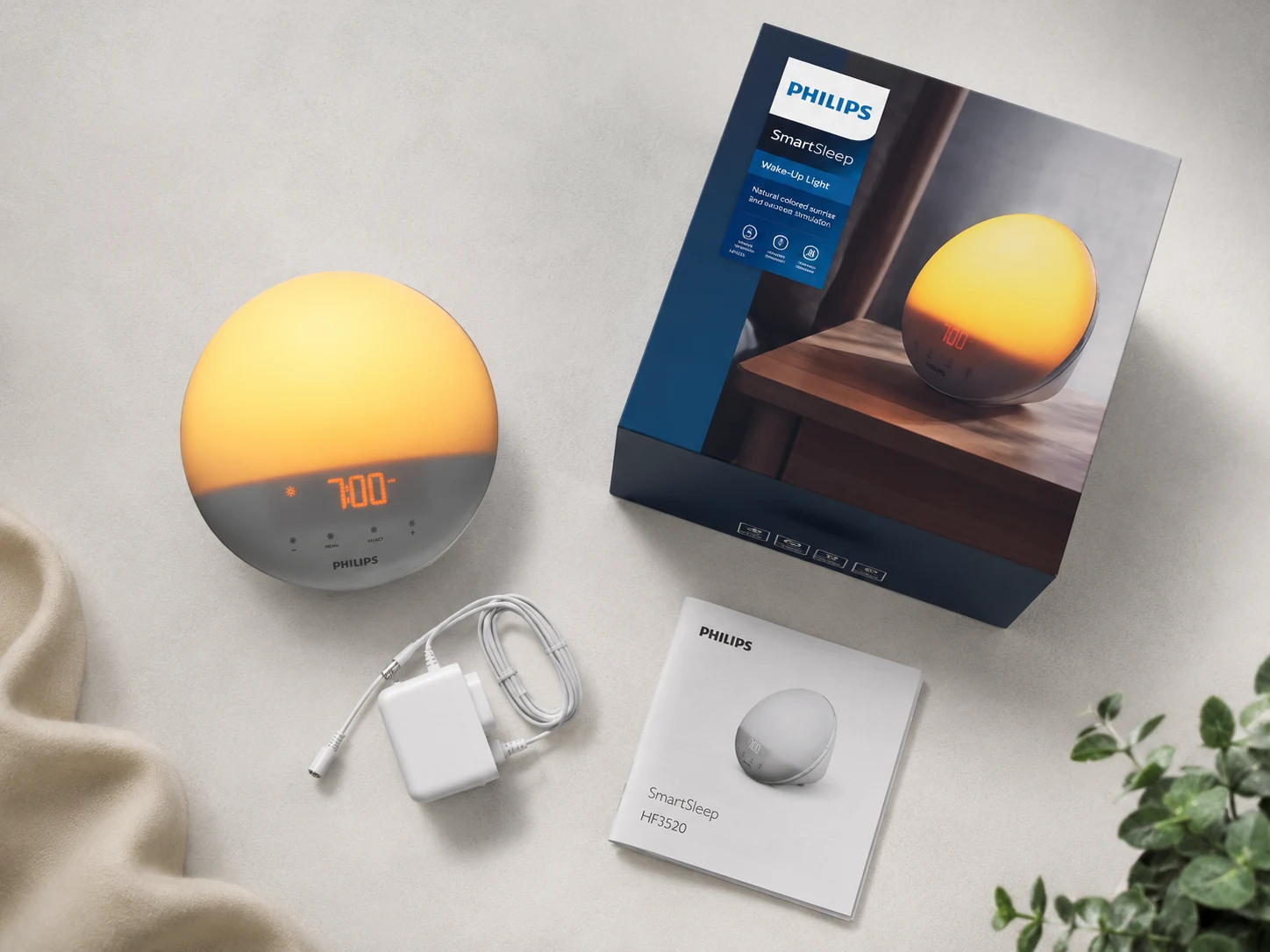
The best daily change is not dramatic. You stop relying on a sudden phone alarm as the first event of the morning.
With the right brightness and sound level, the light starts doing part of the wake-up work before the audio begins. On good mornings, you may wake during the light ramp or just before the sound becomes noticeable. On harder mornings, the sound still finishes the job.
Because HF3520/60 does not need an app, you can leave your phone farther from the bed and still manage the alarm from the device. That makes it a better fit for people who want fewer screen checks at night.
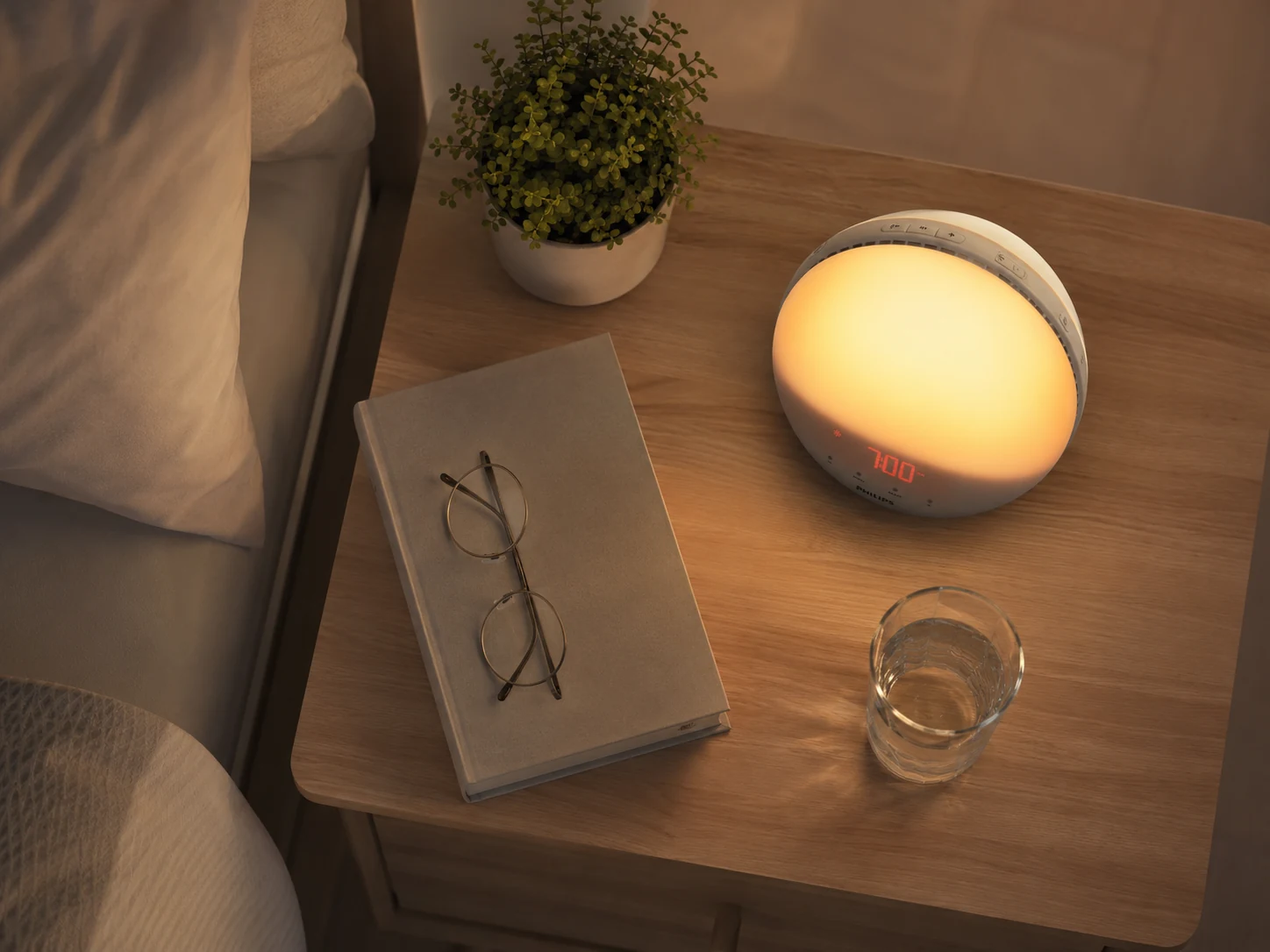
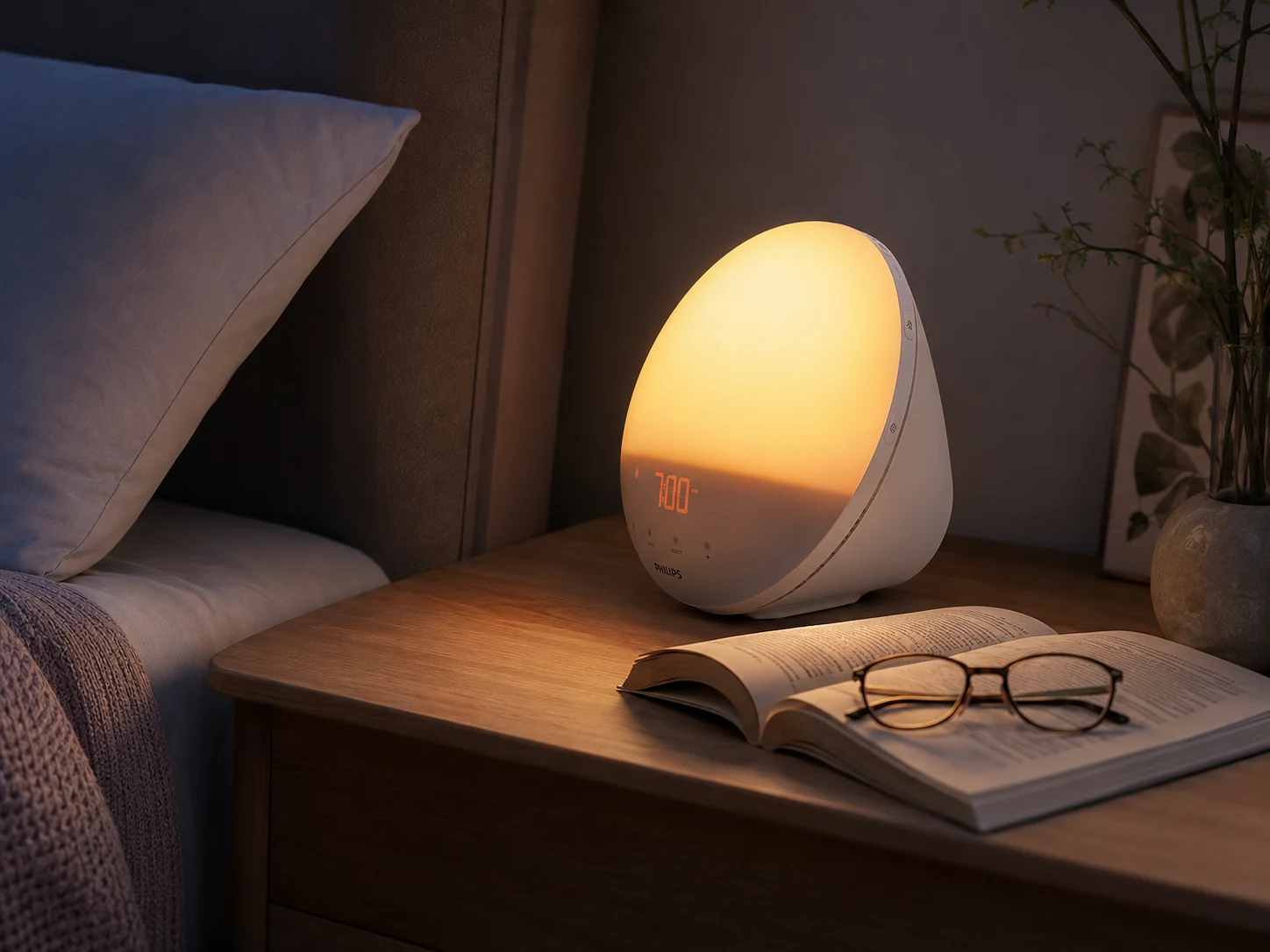
It can act as an alarm clock, reading lamp, FM radio, sunset light, and morning light. That does not make it small, but it does make the size easier to accept.
If your wake time changes often, using buttons and menus can feel slower than editing an alarm on a phone. If you mostly use the same weekday/weekend schedule, the two alarm profiles help.
The product works best when your schedule is stable and the light is close enough to reach your face.
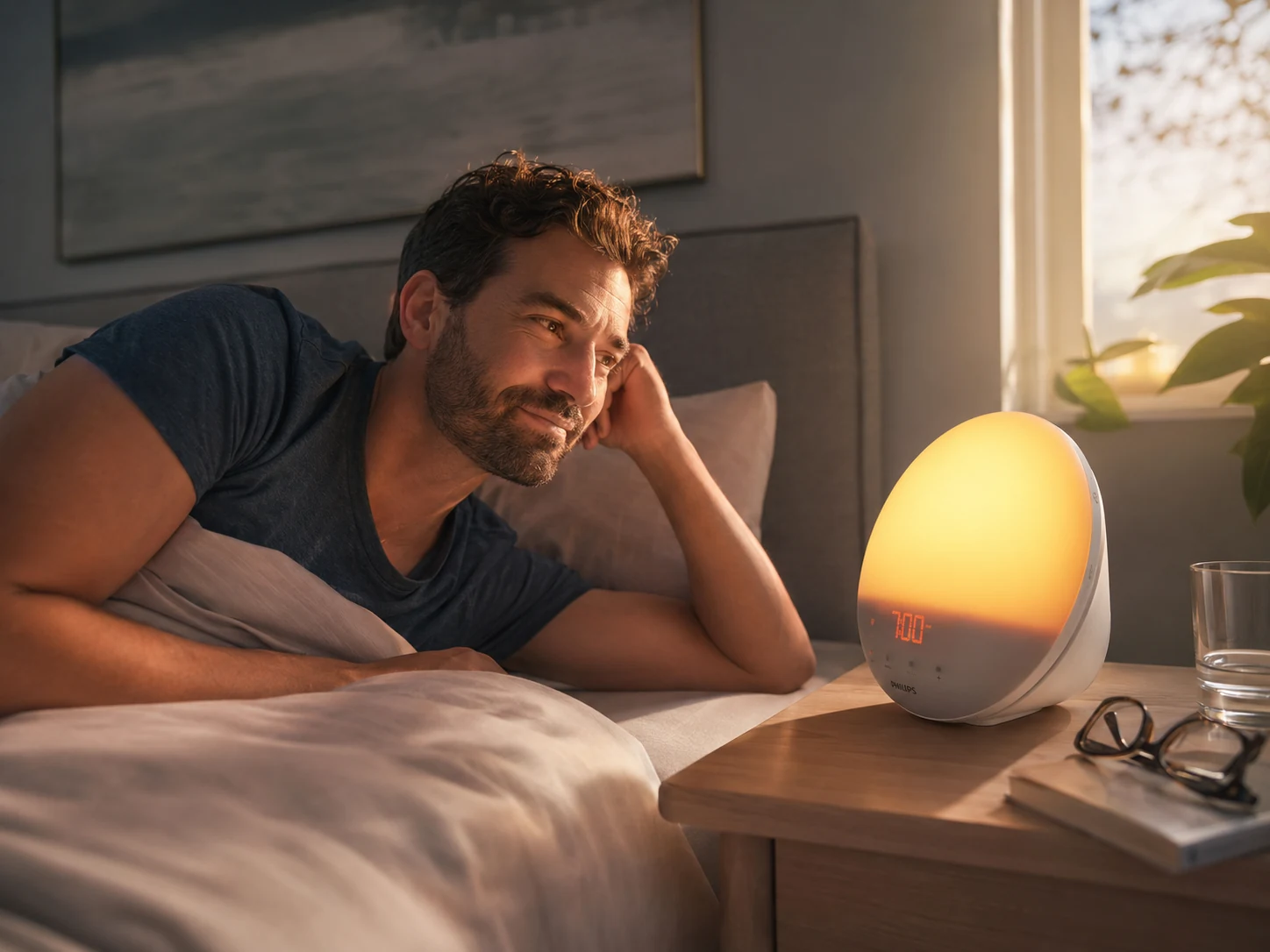
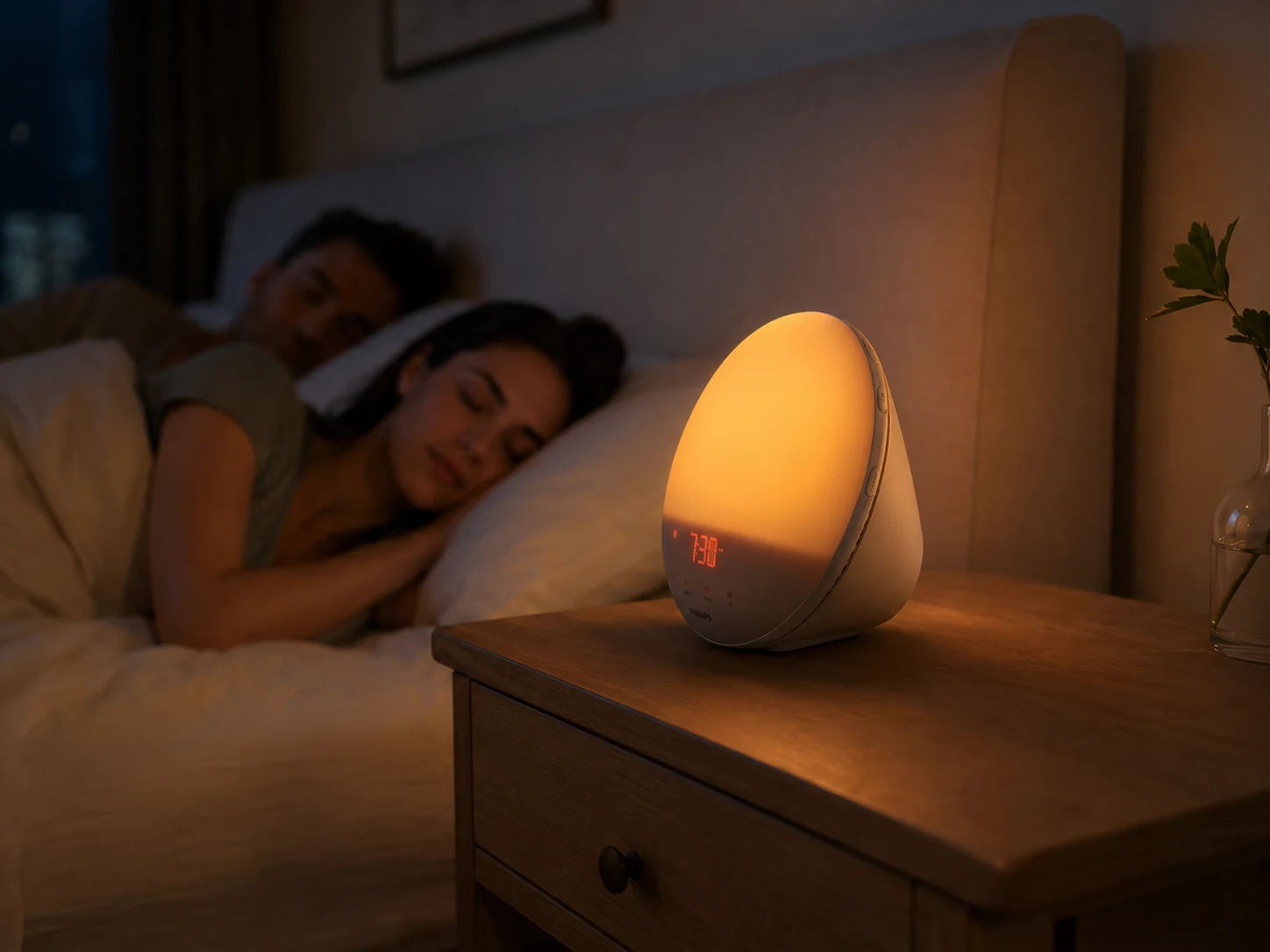
The sunrise feature depends on placement as much as specs. Keep the device near your side of the bed, close enough that the light reaches your face, and high enough that the light is not blocked by a pillow, duvet, headboard, or stack of books. If it sits too low or too far away, the sunrise effect weakens.
| Sleeper type | Best setup |
|---|---|
| Light sleeper | Medium brightness, gentle sound, no backup after trust is built |
| Average sleeper | Higher brightness, clear sound, one-week backup test |
| Heavy sleeper | Highest tolerable sound, backup phone or physical alarm |
| Eye-mask user | Treat sound as the real alarm; light becomes secondary |
| Shared bedroom | Start lower and test partner disturbance first |
| Blackout-curtain room | Philips can help because the room starts darker |
| Bright room | The light may feel less noticeable, so sound matters more |
Do not judge it after one morning. Run a backup alarm for a week. If you begin waking before the sound or with less alarm shock, the device is doing useful work. If you sleep through the light and only wake to sound, it may still be better than your phone alarm, but it is not enough to trust alone.
Before final publication, verify live owner feedback from the retailer you are linking to. The patterns to check are predictable:
Do not overuse review snippets. The useful editorial job is to translate patterns into buying advice. If recent buyers keep mentioning setup friction, move that into the warning about changing schedules often. If recent reviews praise the sunrise but criticize audio, keep the page focused on light-first buyers.
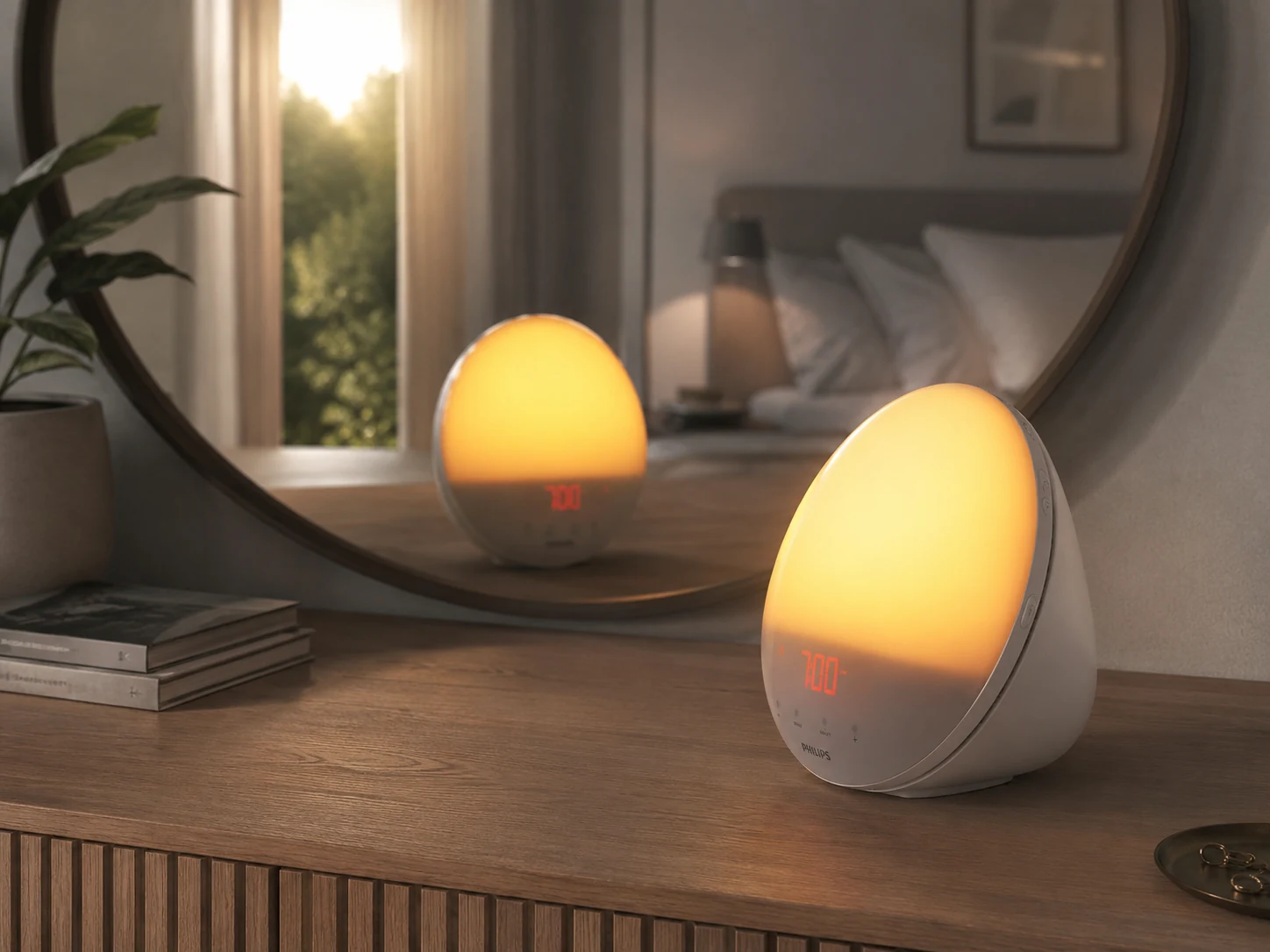
Philips and Hatch do not solve the same problem. Philips is the cleaner choice if you want a no-app sunrise alarm clock. Hatch is better if you want a full bedtime and wake-up routine with app controls, sound content, and routine steps.
| Buying question | Choose Philips SmartSleep HF3520/60 | Choose Hatch Restore |
|---|---|---|
| Do you want no app? | Yes | No |
| Do you want sleep routines? | No | Yes |
| Do you want FM radio? | Yes | No |
| Do you want more sound variety? | No | Yes |
| Do you want guided wind-down content? | No | Yes |
| Do you want fewer settings? | Yes | No |
| Do you want a richer bedtime system? | No | Yes |
| Do you want lower long-term complexity? | Usually yes | Depends on Hatch+ use |
Use this split: buy Philips if the light is the product. Buy Hatch if the routine is the product.
Before buying, check five things.
| Your priority | Better direction |
|---|---|
| Full bedtime routine | Hatch Restore 3 |
| Hatch routine at a lower price | Hatch Restore 2 if discounted |
| Audio-first alarm | Loftie |
| Child room sound/light routine | Hatch Rest+ 2nd Gen |
| Lowest price | Dreamegg Sunrise 1 Wake Up Alarm Clock |
| Heavy sleeper reliability | Sonic Bomb, bed shaker, or vibrating alarm |
| SAD light therapy | Dedicated 10,000-lux light therapy box, with clinical guidance |
| Philips with more wind-down features | Higher-end Philips Sleep and Wake-Up Light model |
The wrong alternative depends on the job. Do not buy Hatch only for sunrise light. Do not buy Philips if you want guided routines. Do not buy a budget sunrise clock if build quality, smoother light color, and display dimming matter.
The Philips SmartSleep Wake-Up Light HF3520/60 is still worth buying for adults who want a simple, polished sunrise alarm without app friction.
It is strongest in dark bedrooms, with stable wake times, for light or average sleepers who want a calmer start than a phone alarm. It is weakest for heavy sleepers, app-first users, small-nightstand setups, and anyone expecting medical-grade light therapy.
I would buy it over a budget sunrise clock if the smoother sunrise, FM radio, two alarms, display dimming, and bedside-lamp role matter. I would choose Hatch instead if I wanted a full routine system. I would choose a vibrating or extra-loud alarm if wake-up reliability matters more than comfort.
Clean verdict: buy Philips SmartSleep HF3520/60 if you want a no-app sunrise alarm that keeps the morning simple. Skip it if you need smart routines, clinical light therapy, or heavy-sleeper force.
Reviews
Adults who wake better with light and want a no-app bedside device are the strongest fit.
It is gentle, so heavy sleepers should keep a backup alarm until the light and sound prove reliable.
HF3520/60 is not the same product as HF3650/HF3651. Check the model before comparing features.
Placement warning: the light must be close enough, high enough, and not blocked.
Value note: it is easiest to justify when it replaces a clock, lamp, FM radio, sunset light, and wake-up light.
FAQ
No. HF3520/60 is controlled from the device. That is one of the main reasons to choose it over Hatch if you want fewer phone-based bedtime controls.
No. HF3520/60 is the no-app Wake-Up Light model. HF3650 and HF3651 belong to the higher-end Sleep and Wake-Up Light line and may include extra wind-down features.
Not reliably by itself. Heavy sleepers should use a backup alarm until the light plus sound proves it can wake them consistently.
No. Treat it as a wake-up light, not a medical-grade light therapy box.
It is better if you want a no-app sunrise alarm. Hatch is better if you want app-based routines, richer sound content, and a fuller bedtime system.