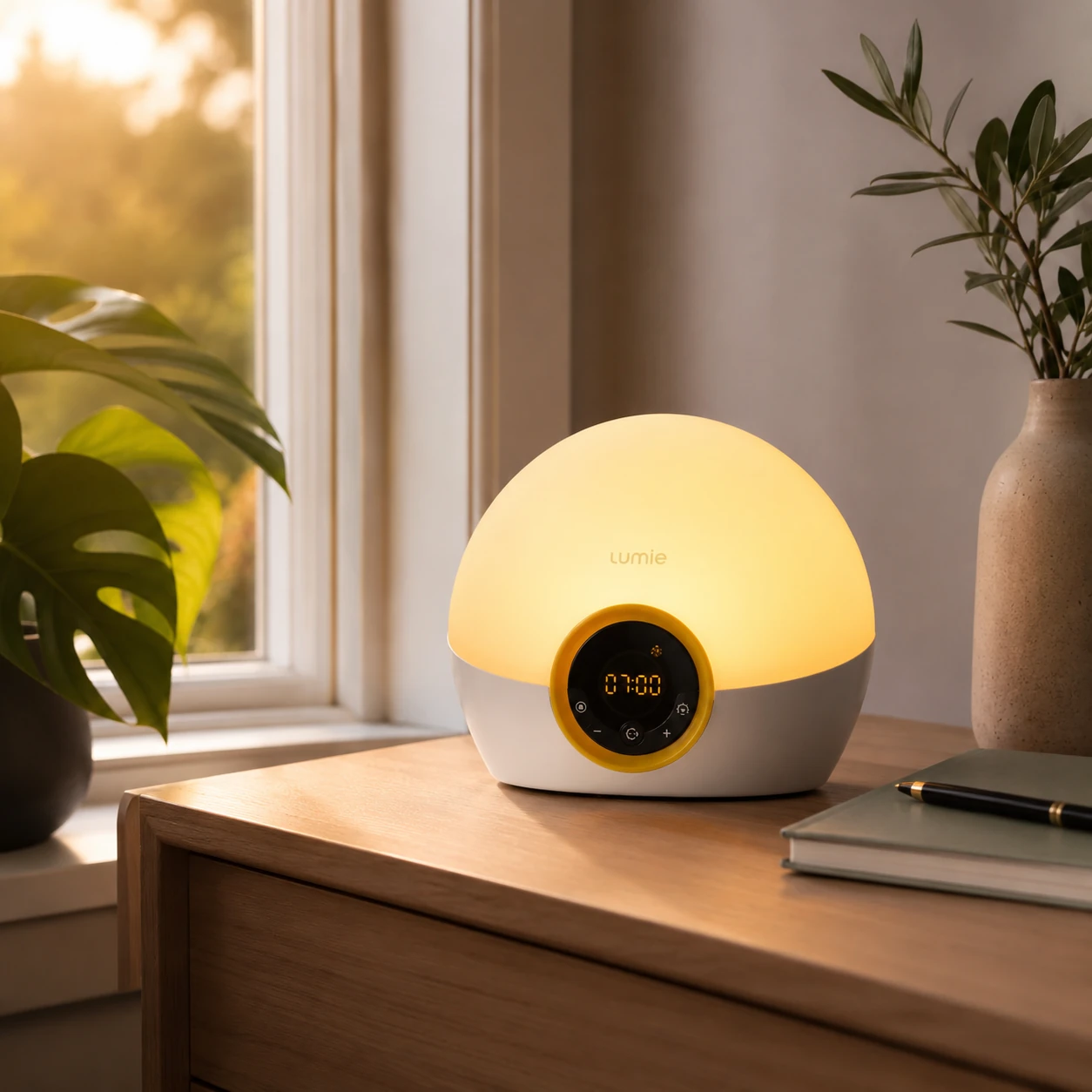
Lumie Wake-up Light Sunrise Alarm Clock Review: Check the Model Before You Buy

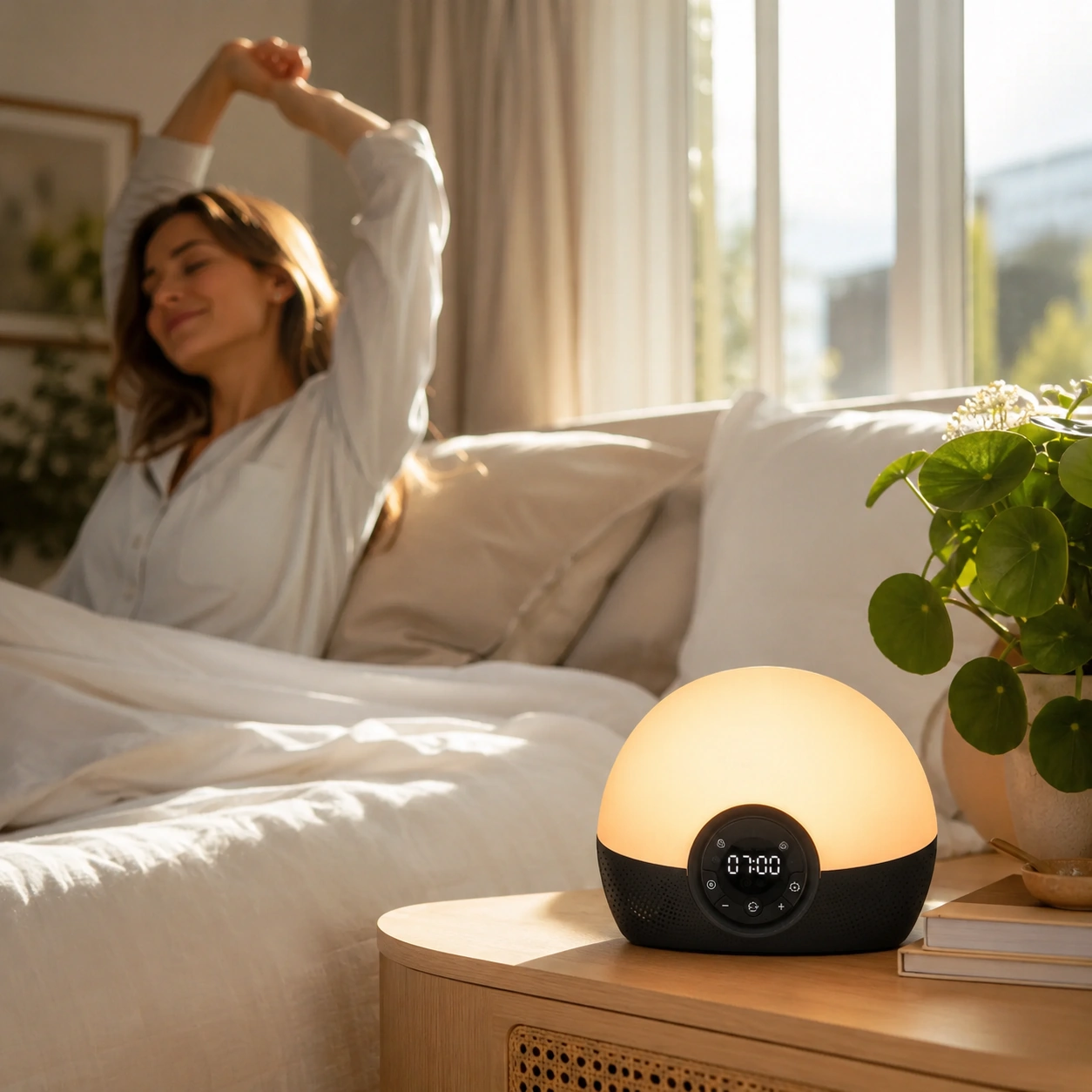
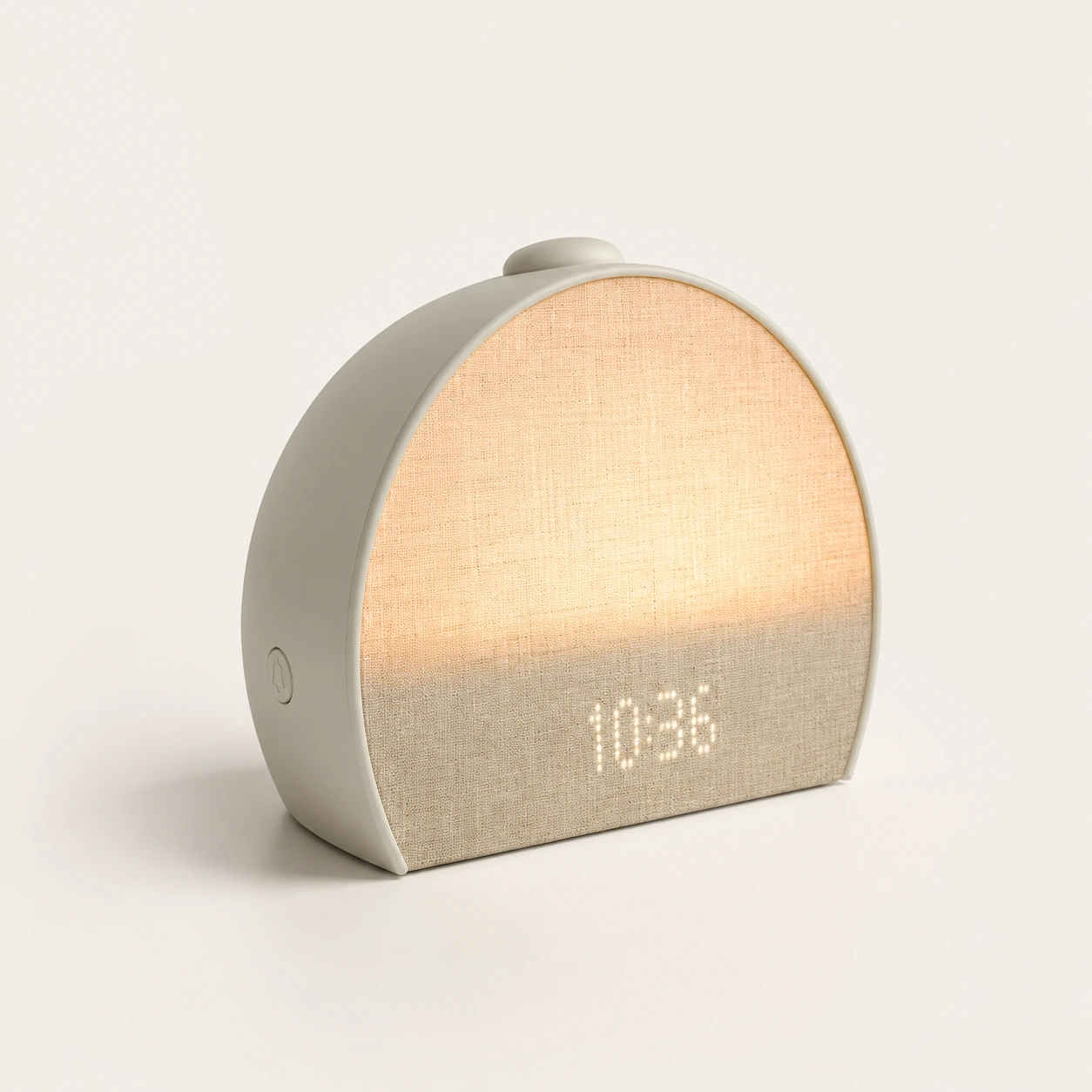
Lumie Bodyclock Rise100 wake-up light on a bedside table in a bright morning bedroom scene as a woman wakes up and stretches.
Model-check sunrise pick
Fit reviewfor app-free light-first buyers
Lumie Wake-up Light Sunrise Alarm Clock30-minute sunrise and sunsetNo app requiredPublished June 3, 2026
Current price variesVerify model, price, and seller before buying.
  • Check the exact Lumie model before buying.
  • Best for light sleepers, small bedrooms, dark winter mornings, and phone-free nightstands.
  • Not a SAD lamp, heavy-sleeper alarm, or Hatch-style smart routine system.

Model check

Verify exact Lumie nameAffiliate listings may mix Sunrise Alarm with Bodyclock Rise, Glow, and Shine models.Check current price

Comparison path

Light-first vs routinesLumie is cleaner if you want less tech. Hatch is stronger if you want app-based routines.Compare alternatives

Heavy sleeper note

Use a backupDo not trust a gentle sunrise alarm alone until it has passed a real backup test.Read limits

Related Products

Product Overview

Lumie Sunrise Alarm as a Simple Light-First Clock

1

Review Type

Model-check buying review for app-free sunrise alarm shoppers

2

Best Fit

Light sleepers, small bedrooms, guest rooms, and phone-free nightstands

3

Main Limit

Basic controls and gentle wake behavior limit heavy-sleeper and flexible-schedule use

4

Product Role

Simple light-first alarm, not a smart sleep hub or SAD therapy lamp

5

Published

June 3, 2026

The Lumie Sunrise Alarm is best judged as a simple light-first bedside alarm. It gives you the core sunrise and sunset routine without asking for an app, account, Wi-Fi setup, or subscription.

The important buying step is model verification. Lumie listings can mix the basic Sunrise Alarm with Bodyclock Rise 100, Glow 150, and Shine 300. Those are different products with different controls, sounds, scheduling, and light behavior.

Choose Lumie when simplicity is the main feature. Choose Hatch or a stronger Bodyclock model when routines, richer audio, or deeper scheduling matter more.
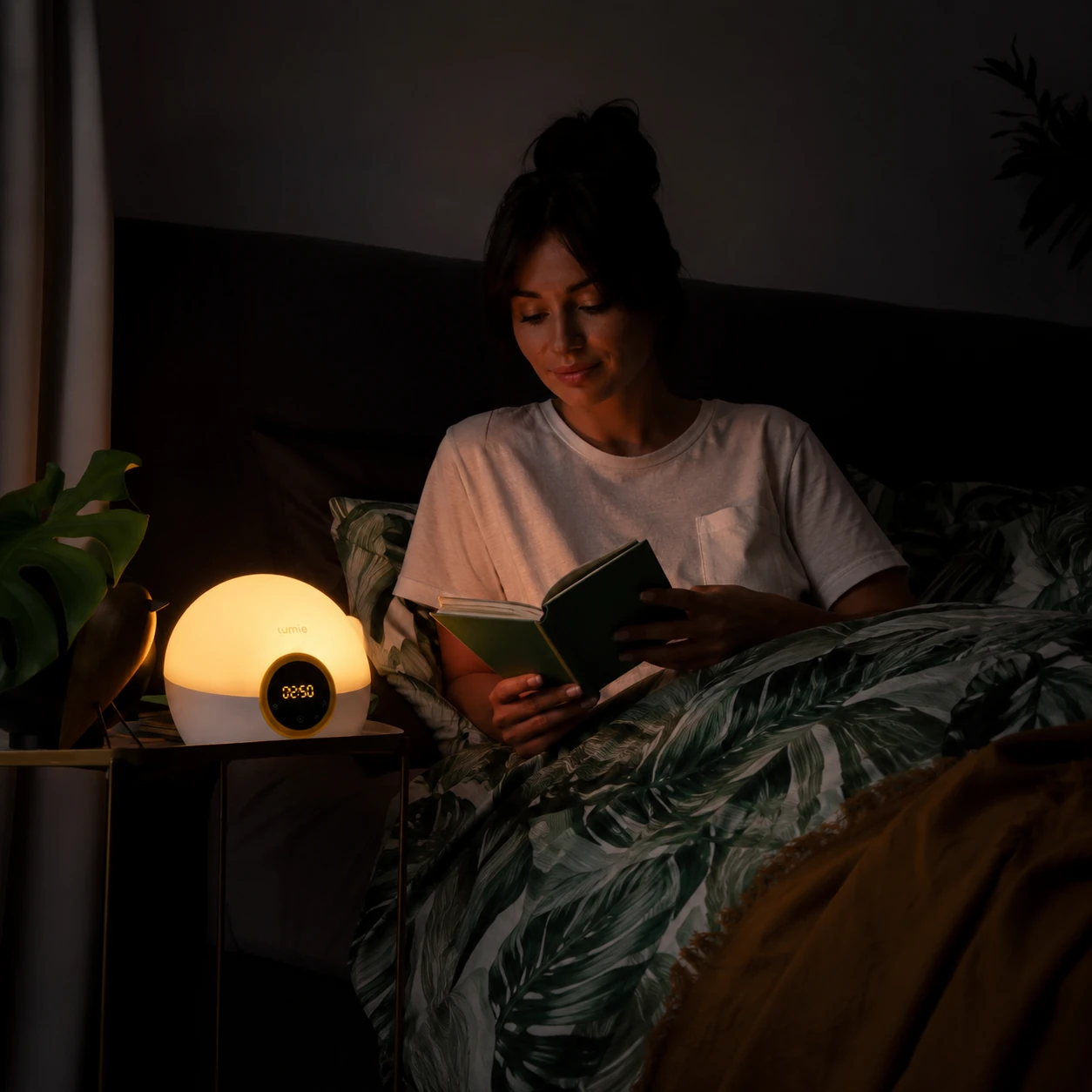
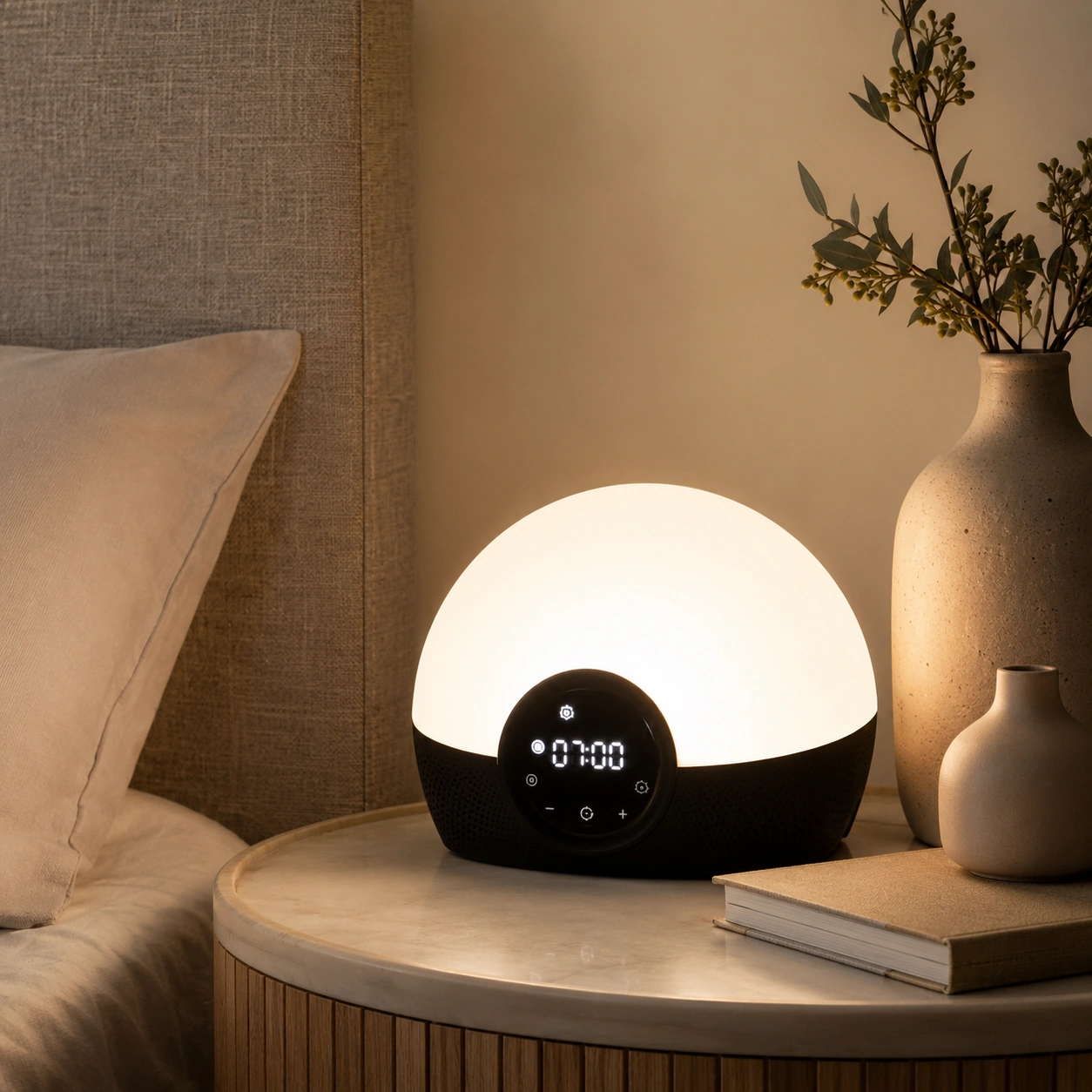
Lumie Bodyclock Rise100 sunrise alarm clock on a bedside table while a woman reads in bed under warm evening light.
A bedside reading scene fits the Lumie use case: simple warm light before sleep, then a light-first alarm in the morning.

Product Card

Lumie Wake-up Light Sunrise Alarm ClockQuick details
Product categoryApp-free sunrise alarm clock and bedside light
Best fitLight sleepers, small bedrooms, dark winter mornings, guest rooms, and phone-free bedrooms
Weakest fitHeavy sleepers, couples with different wake times, flexible schedules, and SAD therapy buyers
Sunrise duration30 minutes
Sunset duration30 minutes
White light levels10
Mood colors6
Wake sounds6
App required?No
Main warningDo not confuse the basic Sunrise Alarm with Bodyclock Rise 100, Glow 150, or Shine 300
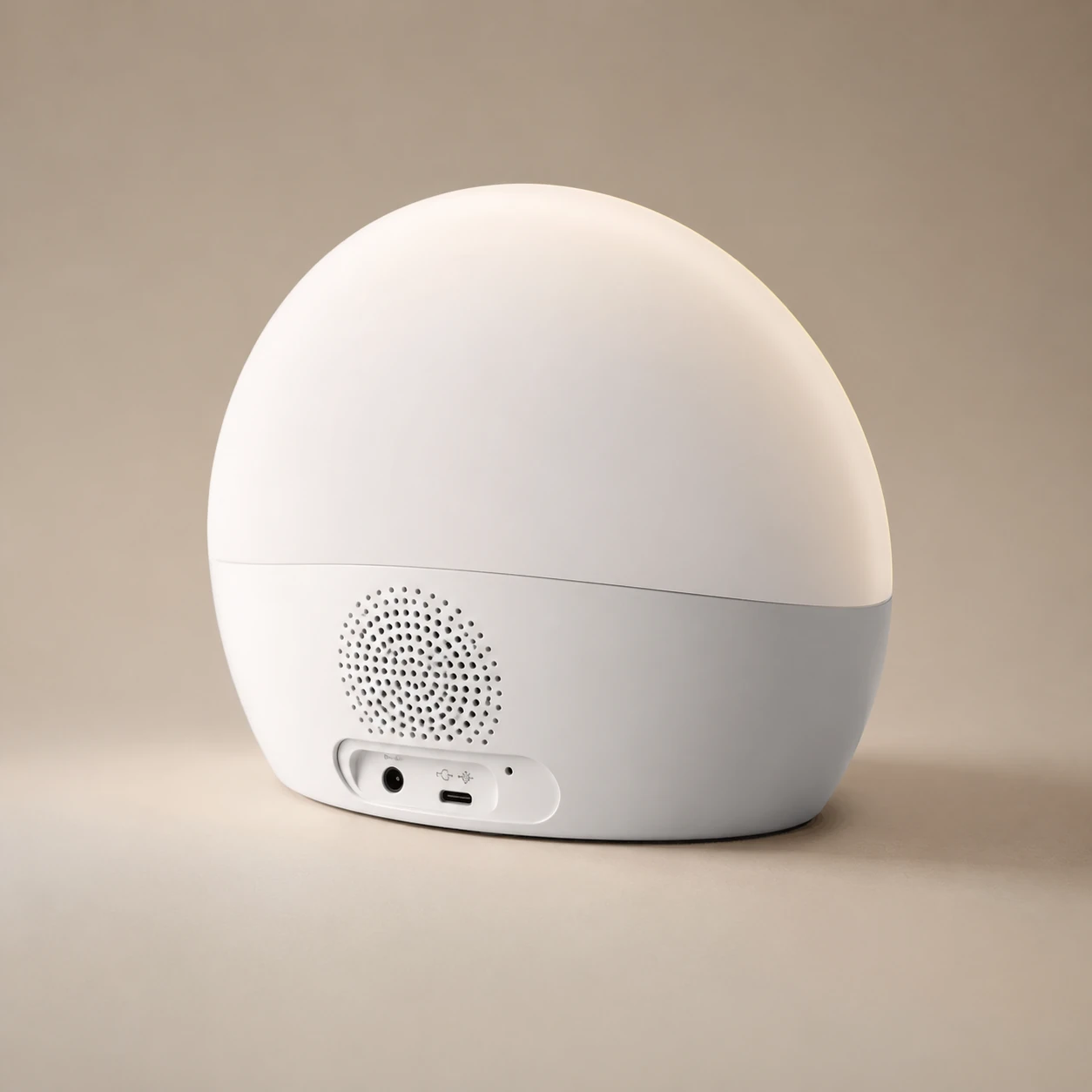
Rear product image of the Lumie Bodyclock Rise100 showing the back panel, speaker area, and connection ports.
Rear details and physical controls matter more on Lumie because this is a device-first clock, not an app-first routine system.

Overview

Before comparing prices, check the exact Lumie model name. The Lumie Sunrise Alarm is the simple, app-free option, but U.S. shoppers often see Bodyclock Rise, Glow, and Shine models in the same wake-up light category. Those models are not interchangeable. They have different specs, pricing, light behavior, alarm controls, and scheduling options.

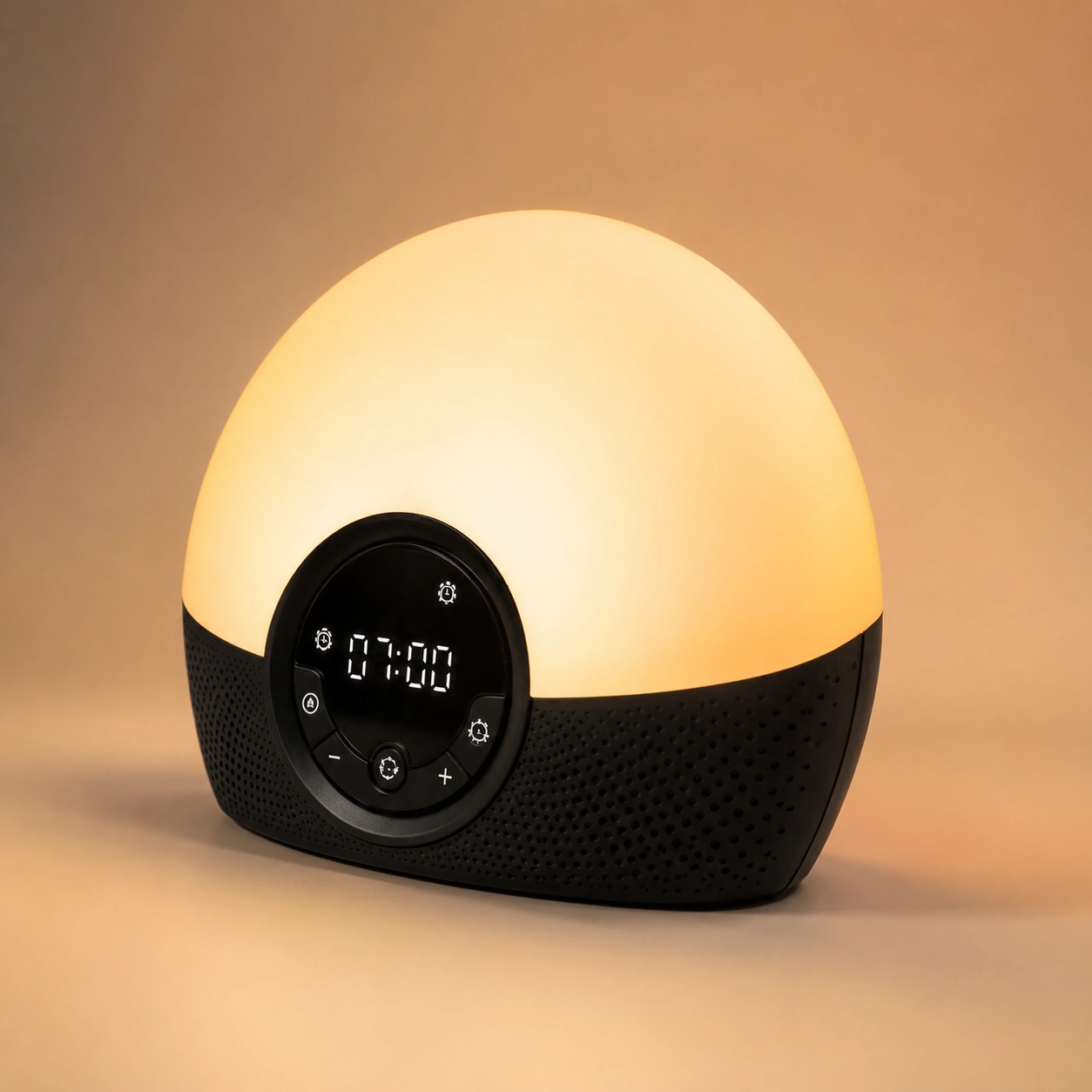
The basic Sunrise Alarm still has a clear job. It gives you a 30-minute sunrise, a 30-minute sunset, 10 levels of white light, six wake sounds, six mood lighting options, and dimmable bedside lighting. That makes it a practical fit if you want a small light-first alarm for a darker bedroom. It is not the strongest Lumie for flexible schedules, rich audio, colored sunrise realism, or heavy sleepers.
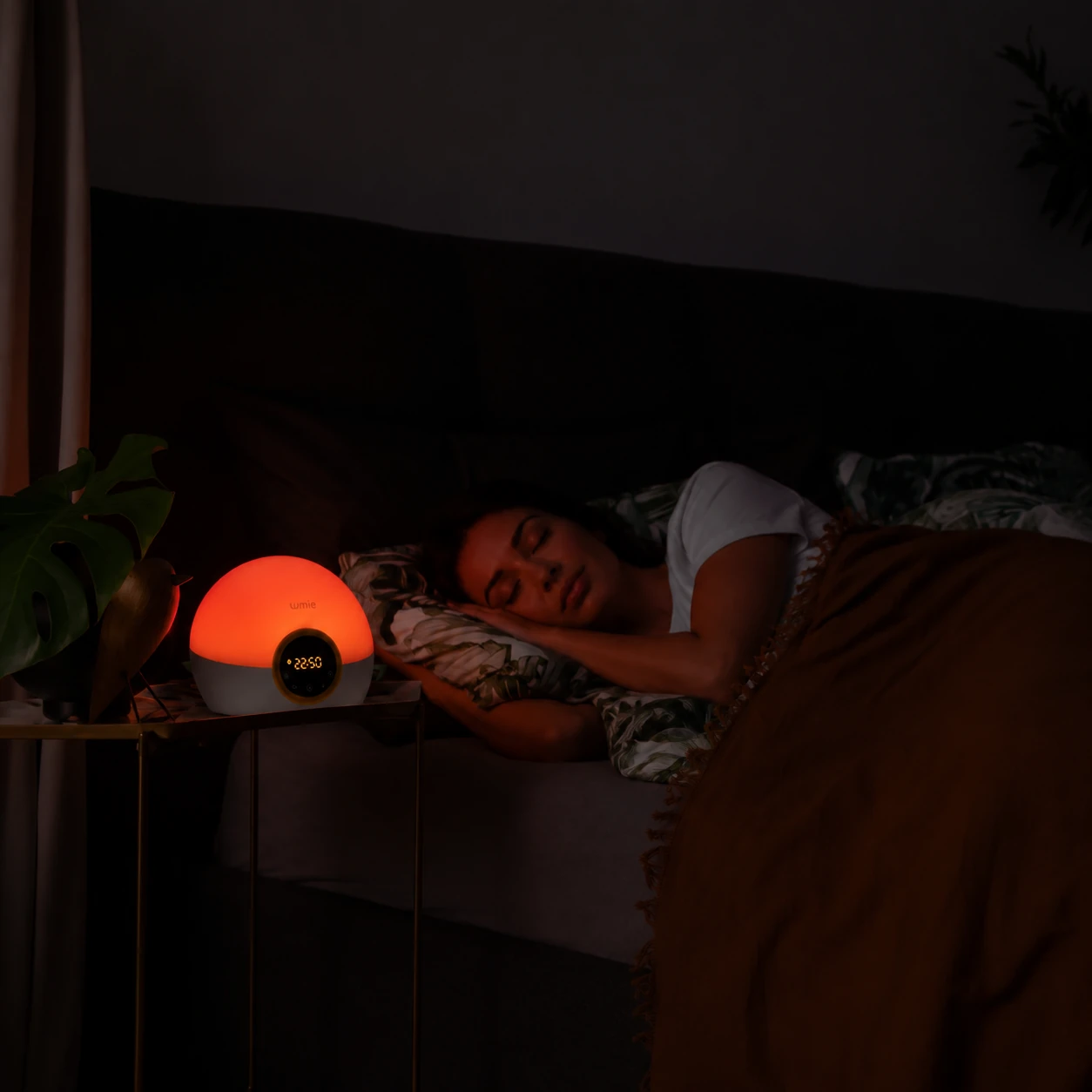
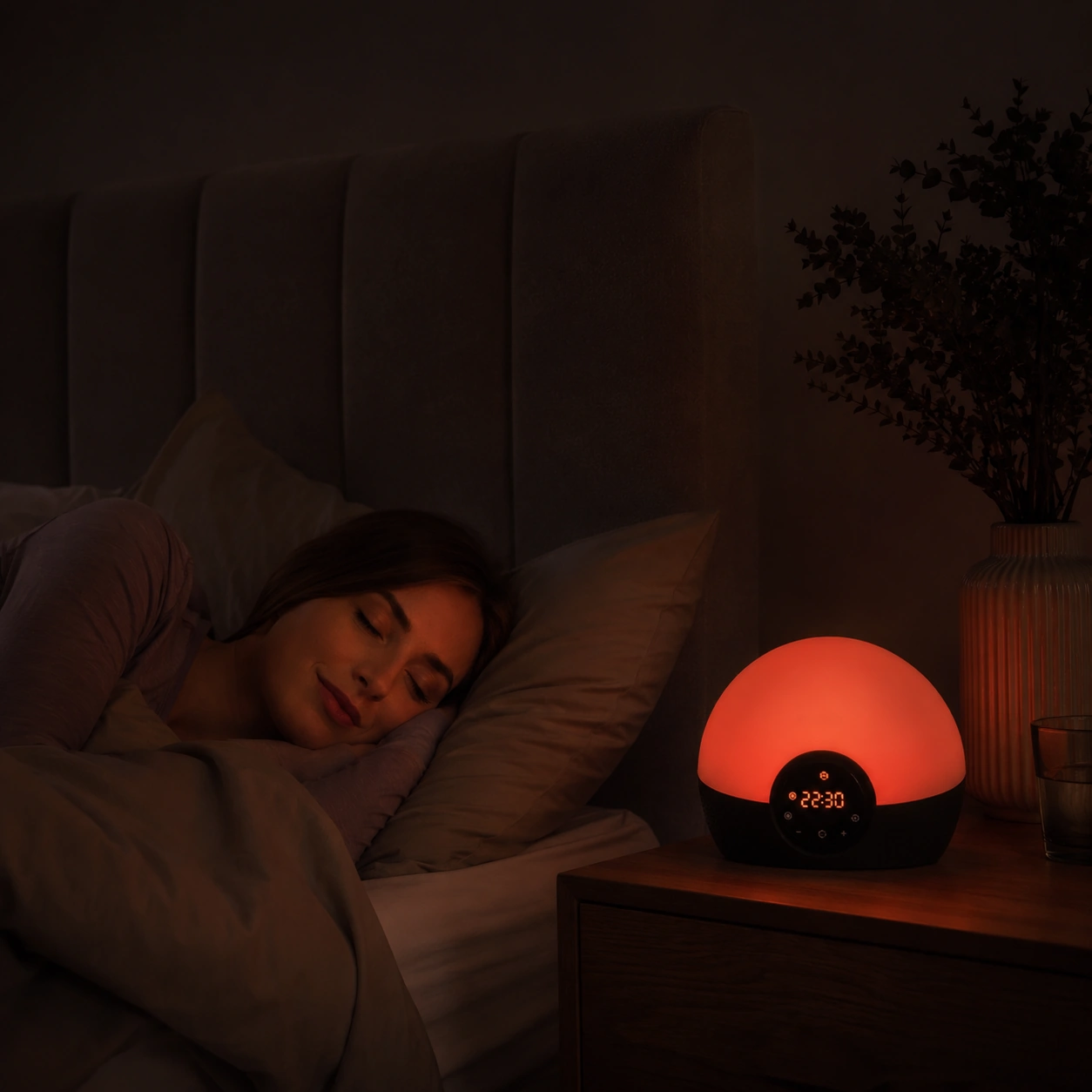
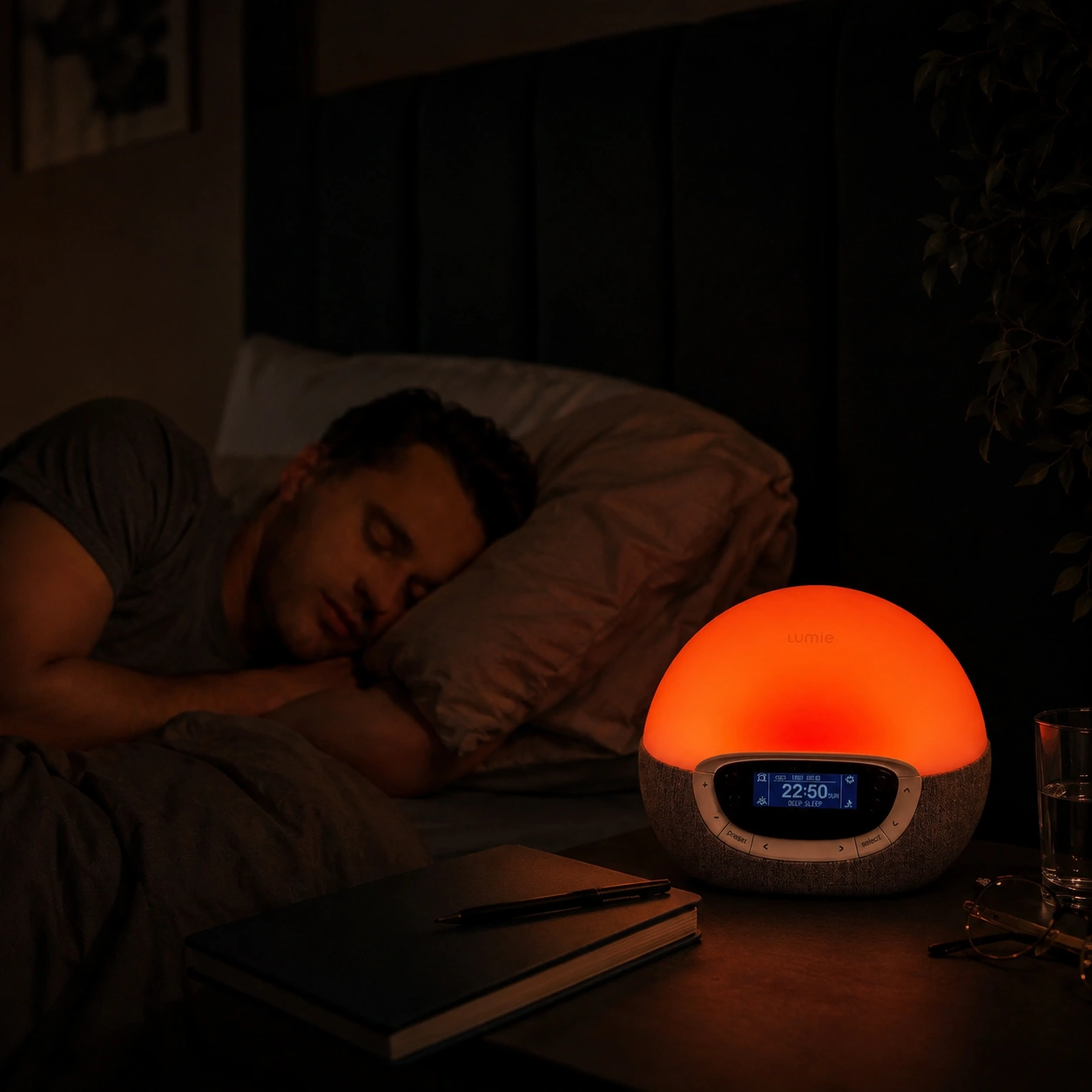
Lumie Bodyclock Rise100 alarm clock glowing red in a dark bedroom while a woman sleeps beside it.
Night-light behavior is useful when you want a low bedtime cue, but it should not be confused with a full smart routine.

Quick Verdict

The Lumie Sunrise Alarm is worth considering if you want the simplest Lumie-style wake-up light and do not want your alarm clock tied to an app. It gives you the core sunrise/sunset routine without turning the bedside table into another smart device.

Buy Lumie Sunrise Alarm if

  • light sleepers;
  • small bedrooms;
  • dark winter mornings;
  • phone-free bedrooms;
  • a guest room;
  • a lower-cost Lumie option.

Skip it if

  • heavy sleepers;
  • couples with different wake times;
  • buyers who want multiple alarm schedules;
  • users expecting a SAD lamp;
  • anyone who wants a more realistic red/orange sunrise fade;
  • users who want Hatch-style routines, sounds, and app control.

The main decision is not whether Lumie makes good wake-up lights. The better question is whether this is the right Lumie model for your bedroom.
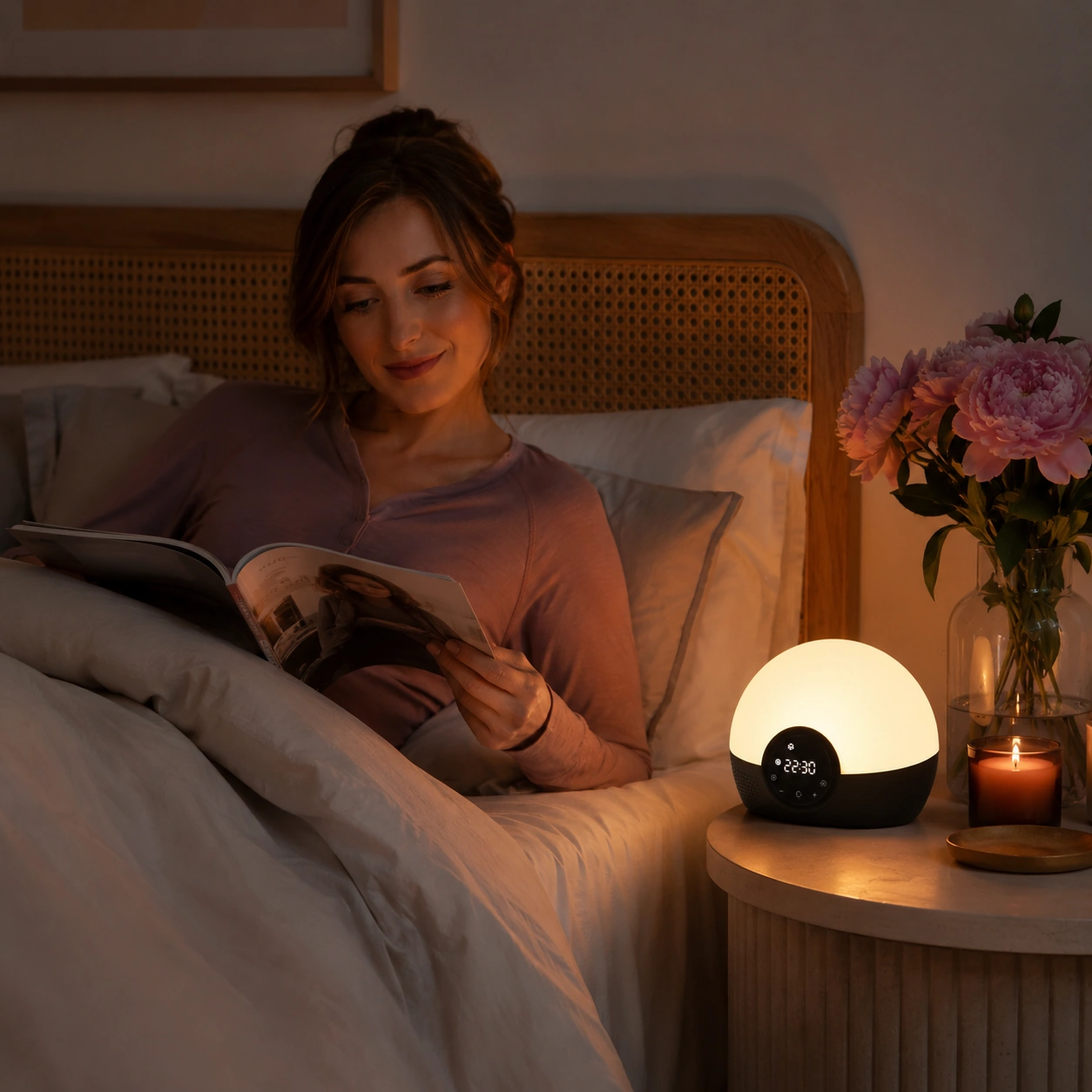
Lumie Bodyclock Rise150 Alarm Clock glowing on a bedside table while a woman reads in bed at night.
Lumie makes the most sense when the night routine stays physical, quiet, and phone-free.

Model Check for U.S. Buyers

Verify the model before you compare reviews or click a deal.

1

Basic Sunrise Alarm

Lumie Sunrise Alarm is the simple model: fixed 30-minute sunrise/sunset, 10 white light levels, six wake sounds, six mood lighting options, and dimmable bedside lighting.

2

Bodyclock Rise 100

Rise 100 is the closest entry Lumie Bodyclock option for U.S. buyers. It is not automatically the same product as the basic Sunrise Alarm, so compare the exact listing name.

3

Bodyclock Glow 150

Glow 150 adds more sunrise/sunset duration choices and more sleep/wake sounds. Choose it when you want more control without moving to the top Bodyclock tier.

4

Bodyclock Shine 300

Shine 300 is the stronger model for scheduling and sound, with a broader sunrise/sunset range, more sounds, FM radio, and daily/weekly alarm support.

5

Listing Check

Before buying, check plug and voltage compatibility, return policy, warranty coverage, sunrise duration, sound count, alarm scheduling, and light source.

The expensive mistake: reading a review for one Lumie model and buying another.
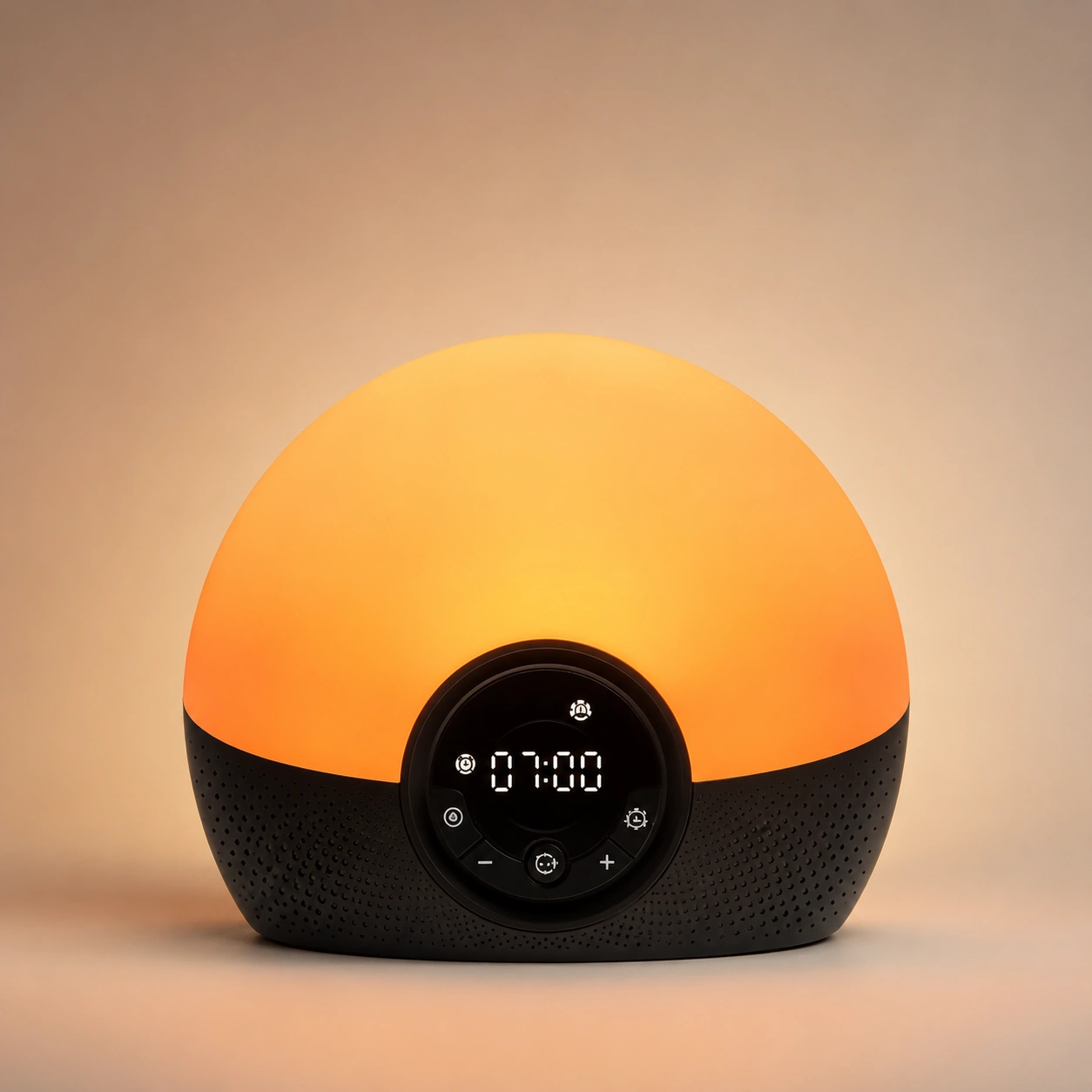
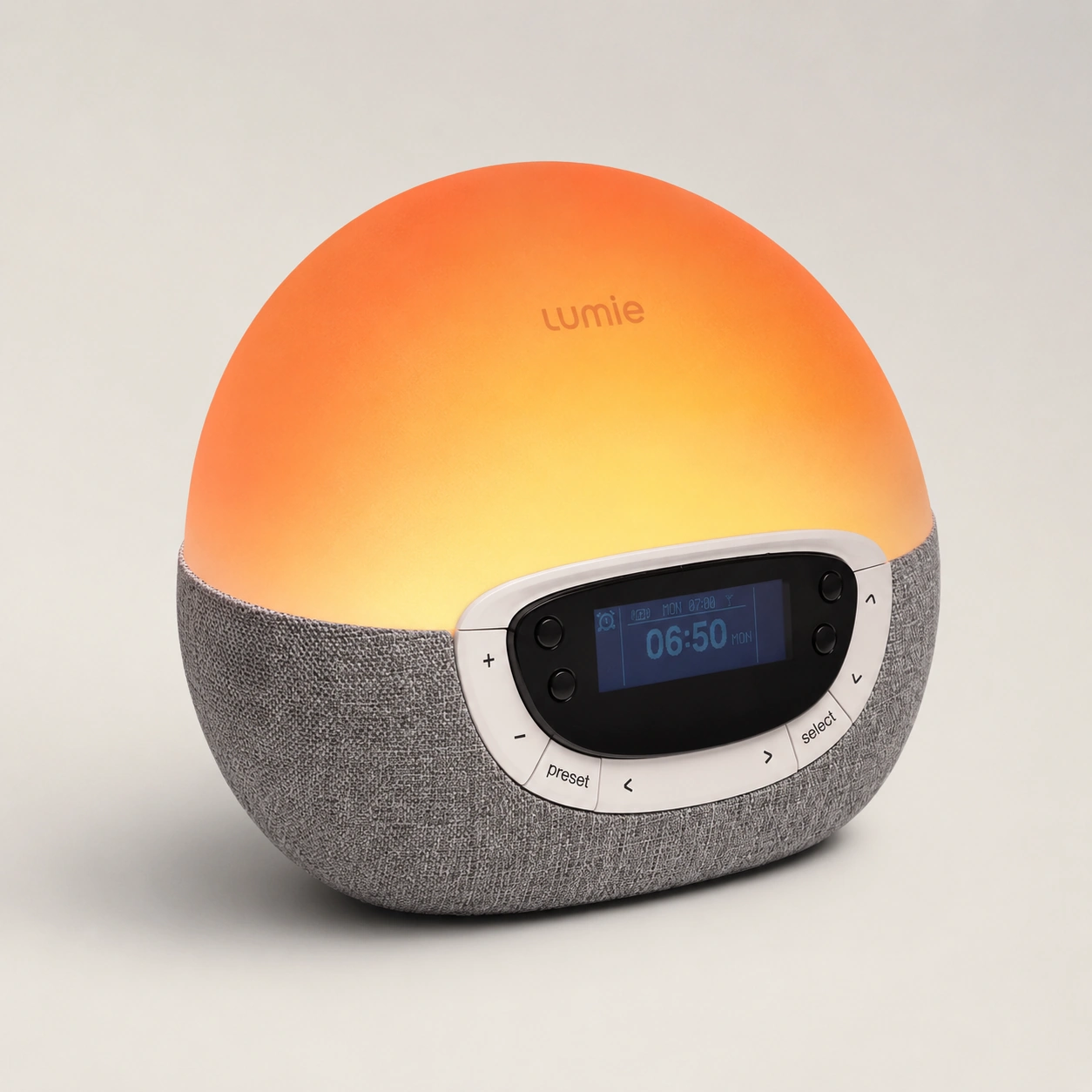
Front product view of the Lumie Bodyclock Rise150 Alarm Clock with a bright orange wake-up light.
Glow 150-style sunset light: more control than the basic Sunrise path.
Lumie Bodyclock Rise300 wake-up light in a studio product shot
Shine 300-style studio view: the stronger Lumie path for fuller routines.
Lumie Bodyclock Rise300 alarm clock with sunrise effect on a clean background
A cleaner sunrise-effect view for buyers comparing light behavior, not app features.

Who Should Buy It — and Who Should Skip It

Buy Lumie Sunrise Alarm if

  • You want a simple light-first alarm. The Sunrise Alarm works best when light is the main feature. It is not trying to be a smart speaker, sleep coach, meditation app, or premium radio alarm. If your current problem is a harsh phone alarm, this is enough of a change to matter.
  • You want no app in the bedroom. This is the strongest reason to choose Lumie over Hatch. Hatch is better for routines and sound content, but it still lives in an app ecosystem. Lumie Sunrise Alarm is more limited, but also less intrusive.
  • You need a small room or guest-room clock. The compact body makes sense on a crowded nightstand. It is also easier to justify for a guest room than a more expensive sunrise clock.

Skip Lumie Sunrise Alarm if

  • You sleep through normal alarms. A gentle light alarm is not the same as a heavy-sleeper alarm. If you regularly miss phone alarms, the Lumie Sunrise Alarm should not be your only wake-up system. Use a stronger audio alarm, vibration backup, or a brighter wake-up light.
  • You need different weekday and weekend routines. The basic Sunrise Alarm is built around simplicity. If your schedule changes often, Bodyclock Shine 300 or Hatch Restore is easier to recommend because both give you more routine control.
  • You want medical light therapy. The Sunrise Alarm is not a SAD lamp. A dedicated SAD light box is a different product category from a small bedside sunrise alarm. Treat Lumie Sunrise Alarm as a wake-up light, not as treatment for seasonal depression.

Clean decision: buy Lumie when simple, app-free light is the feature. Skip it when you need heavy-sleeper force, flexible routines, or medical light therapy.
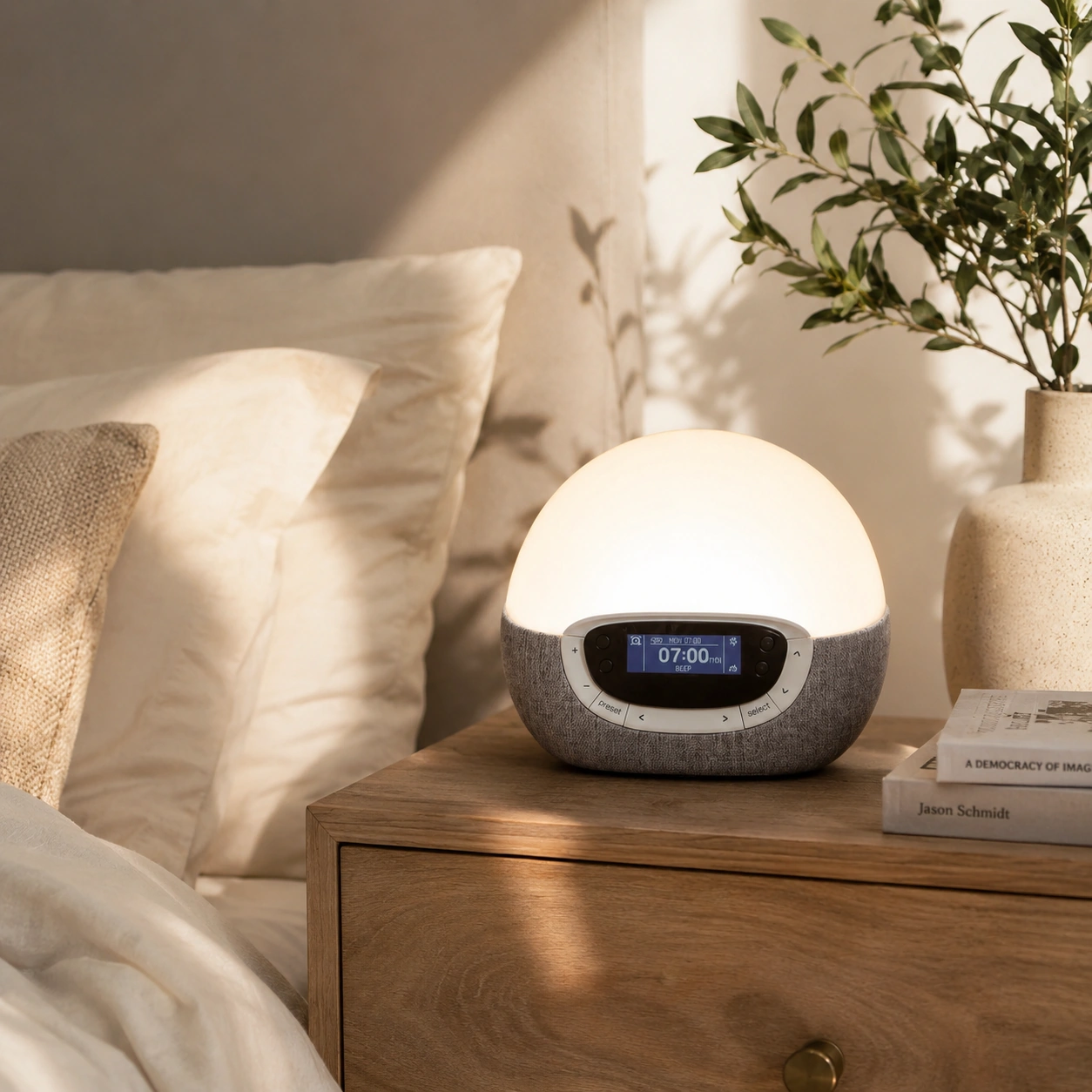
Lumie Bodyclock Rise150 Alarm Clock styled on a bedside table with books and decorative vases.
A compact nightstand setup is the best Lumie buyer fit: simple light, simple controls, and no phone dependency.

Key Specs That Actually Matter

FeatureLumie Sunrise AlarmWhy it matters
Sunrise duration30 minutesSimple routine, but not adjustable
Sunset duration30 minutesUseful for a basic wind-down light
White light levels10Fine for bedside use, not a premium light engine
Mood colors6Nice extra, not the main buying reason
Wake sounds6Backup audio, not a sound-machine replacement
DisplayManually dimmableGood, but not automatic
Backup power3 AAA batteriesHelps during power failure
AppNoCleaner bedroom setup
Best roleLight-first alarmNot a smart sleep hub

The practical detail to check before the first night is the display. The Sunrise Alarm display can be set to high, low, or off manually. If bedside light bothers you, set this before sleeping rather than trying to learn the buttons in the dark.
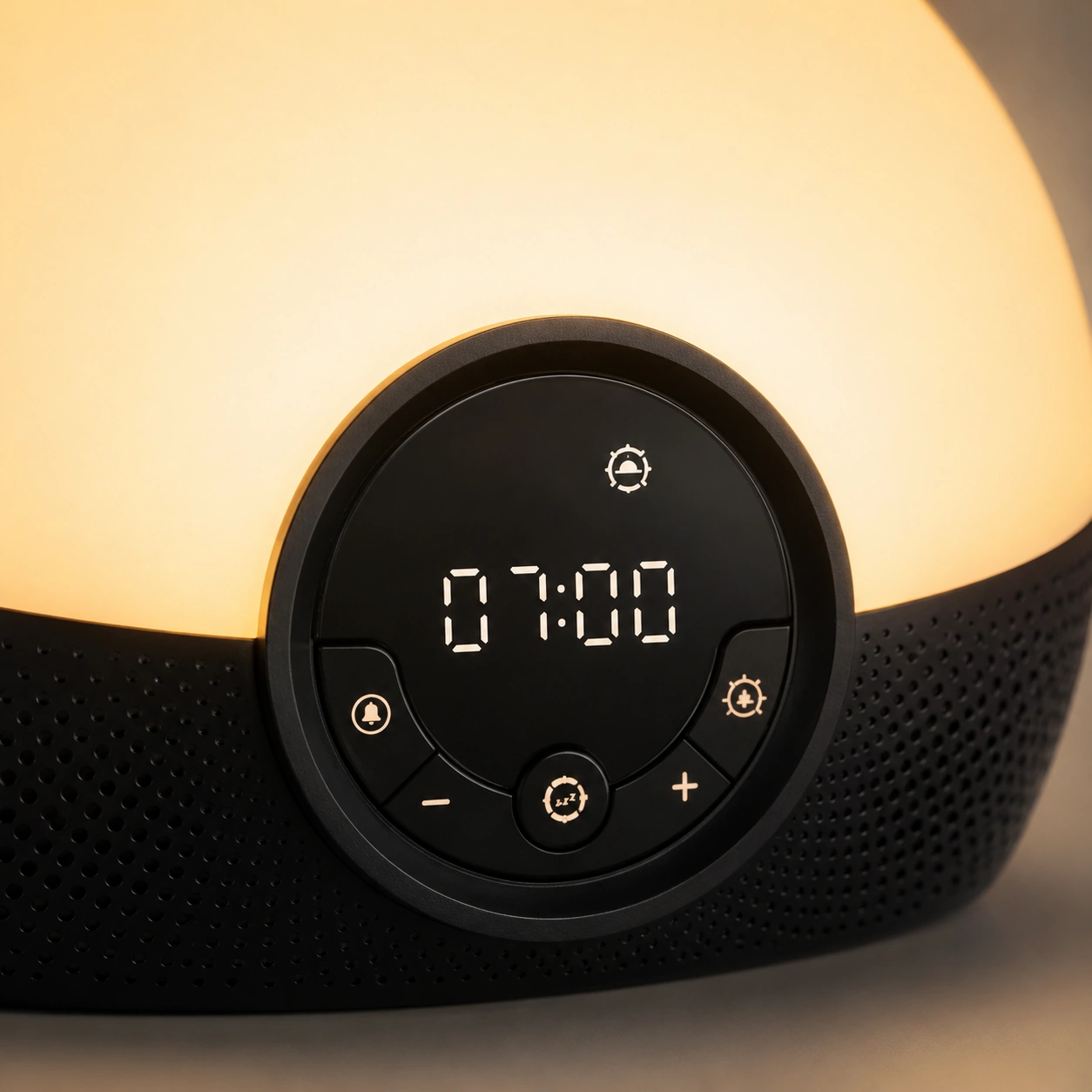
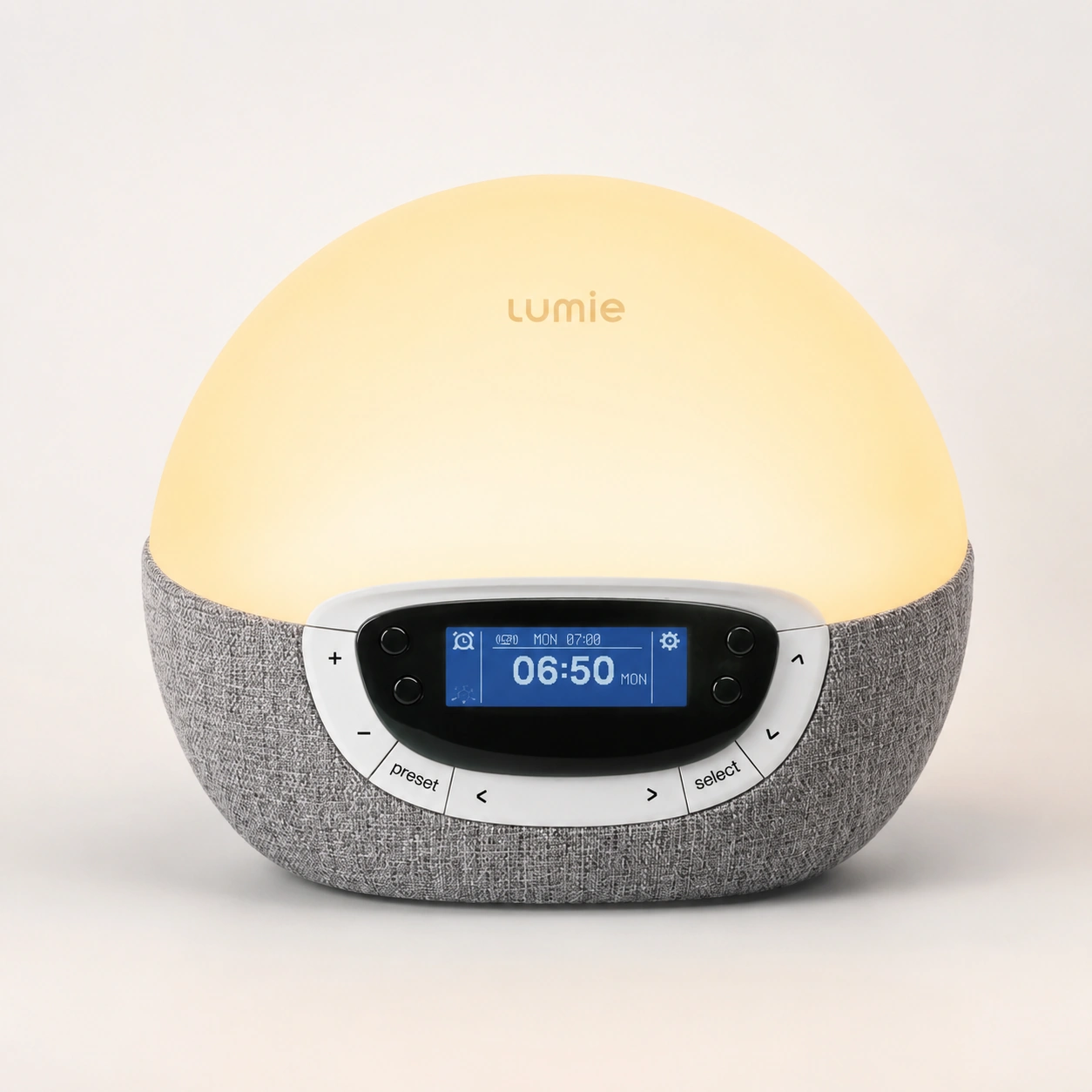
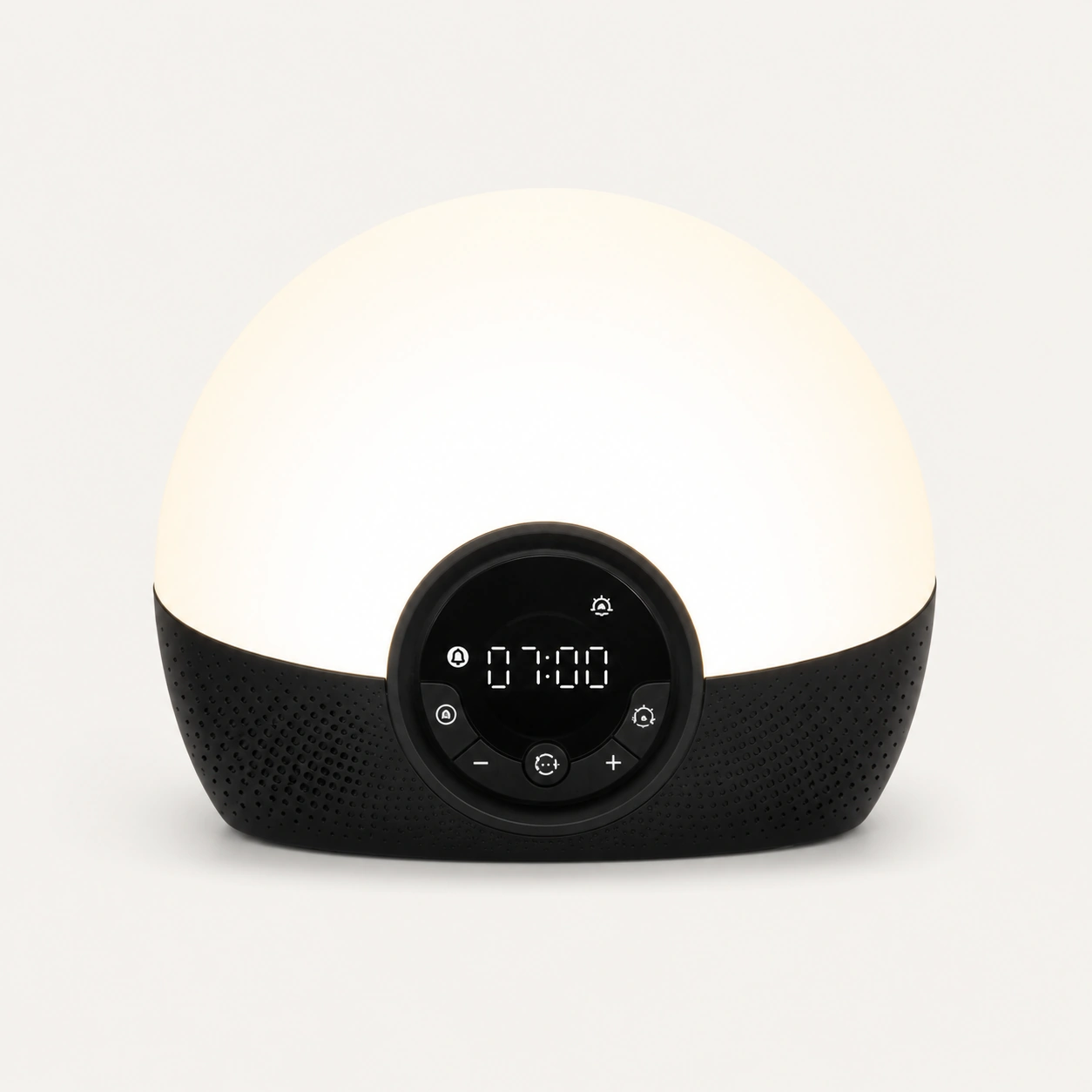
Front product view of the Lumie Bodyclock Rise150 Alarm Clock with a soft warm yellow glow.
The warm front-view light is the feature to judge first; sound and scheduling are secondary on this kind of clock.

What Lumie Sunrise Alarm Actually Does

Lumie Sunrise Alarm works best when you judge it by the few jobs it is actually built to handle.

1

Light quality

The fixed 30-minute light routine suits buyers who want fewer settings. The white fade can still cue a dark-room wake-up, but it does not feel as natural as a warmer red/orange transition.

2

Wake sound

The six wake sounds are backup audio, not the reason to buy this clock. If sound quality matters as much as light, Hatch or a sound-machine-style sunrise clock is a better fit.

3

Display and nightstand comfort

The display can be set to high, low, or off manually. Set it before the first night if bedside light bothers you.

4

Setup and controls

No app means no Bluetooth, Wi-Fi, account, or subscription. The trade-off is that small physical-button clocks take a few nights to learn.

Use Lumie when you want a simple light-first alarm. Do not use it as a smart sleep hub.
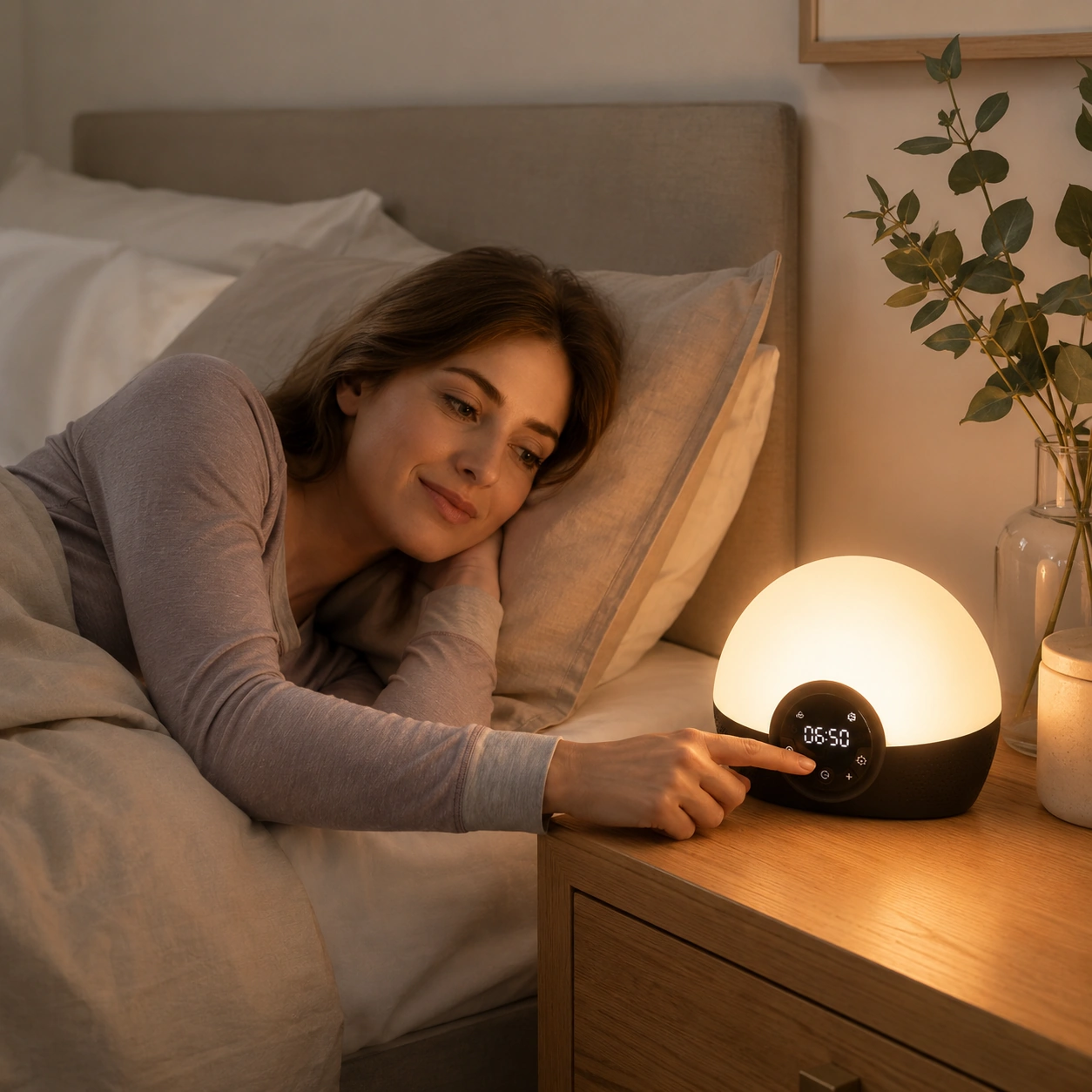
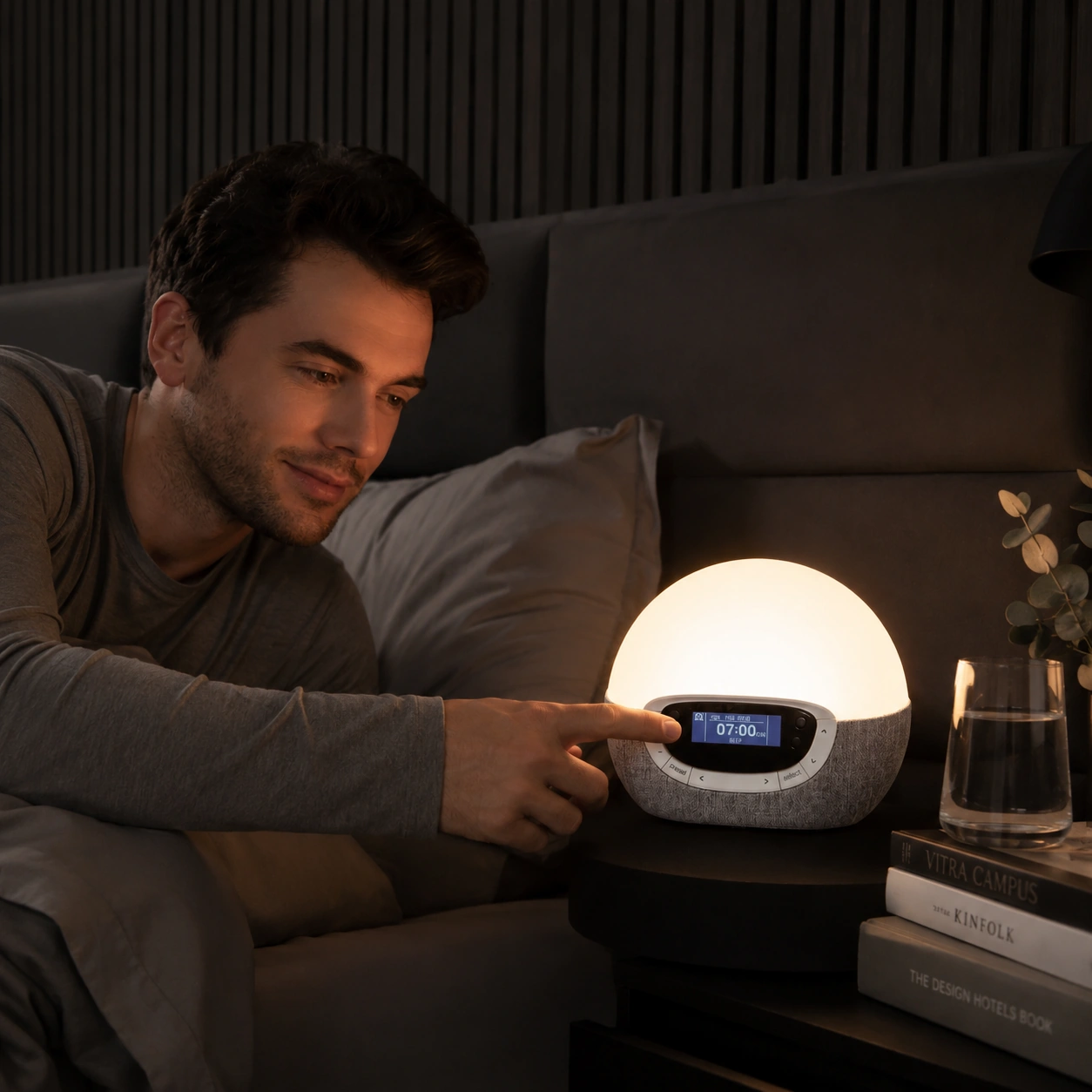
Lumie Bodyclock Rise150 Alarm Clock beside a bed as a woman reaches over to adjust the bedside controls.
Physical controls are part of the appeal for buyers avoiding app setup.
Lumie Bodyclock Rise150 Alarm Clock in a cozy bedroom morning scene with warm wake-up light.
A morning scene shows the strongest use case: dark-room wake-up support.
Lumie Bodyclock Rise150 Alarm Clock in red night light sleep mode beside a sleeping woman in a dark bedroom.
Red night-light mode works as a simple low-light bedtime cue.
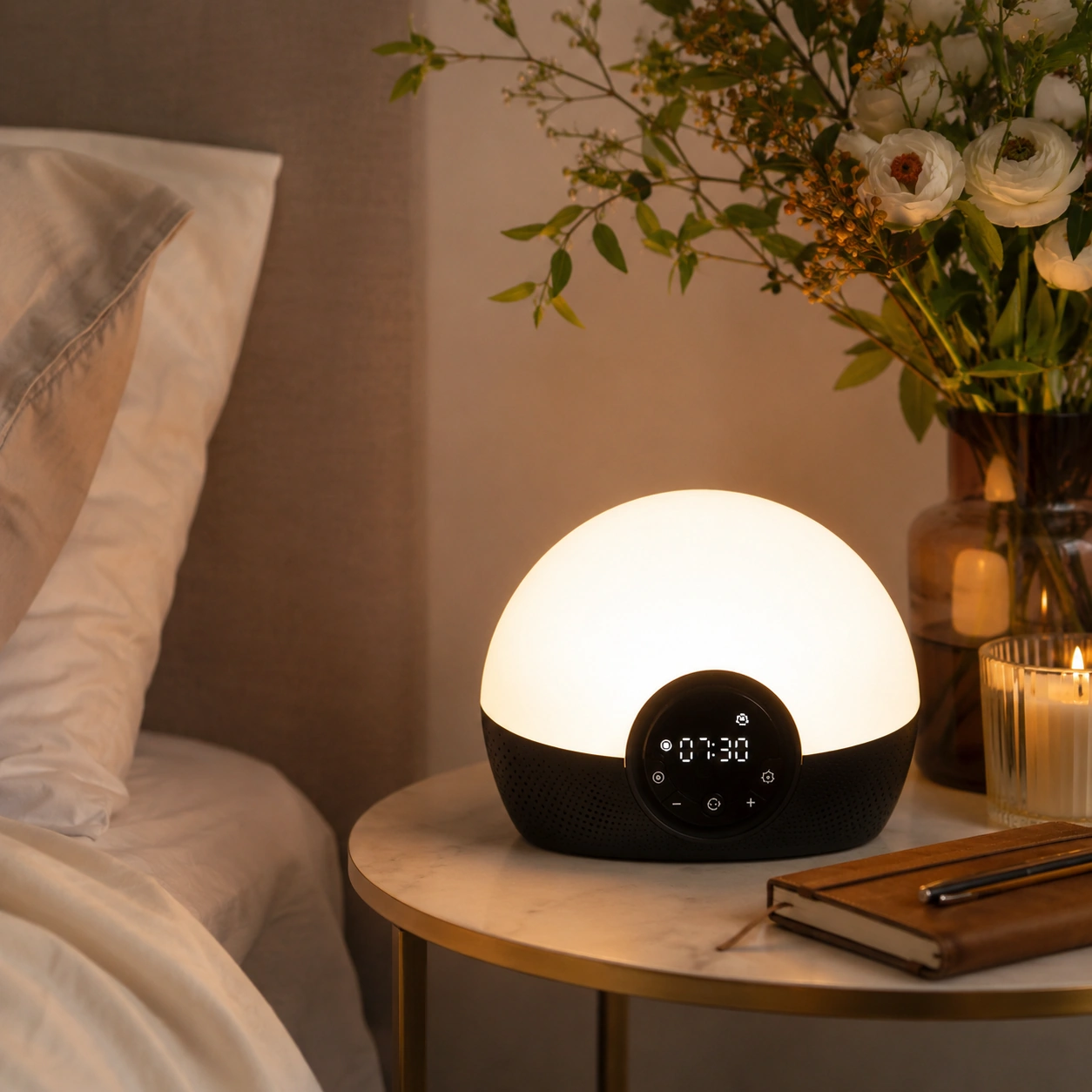
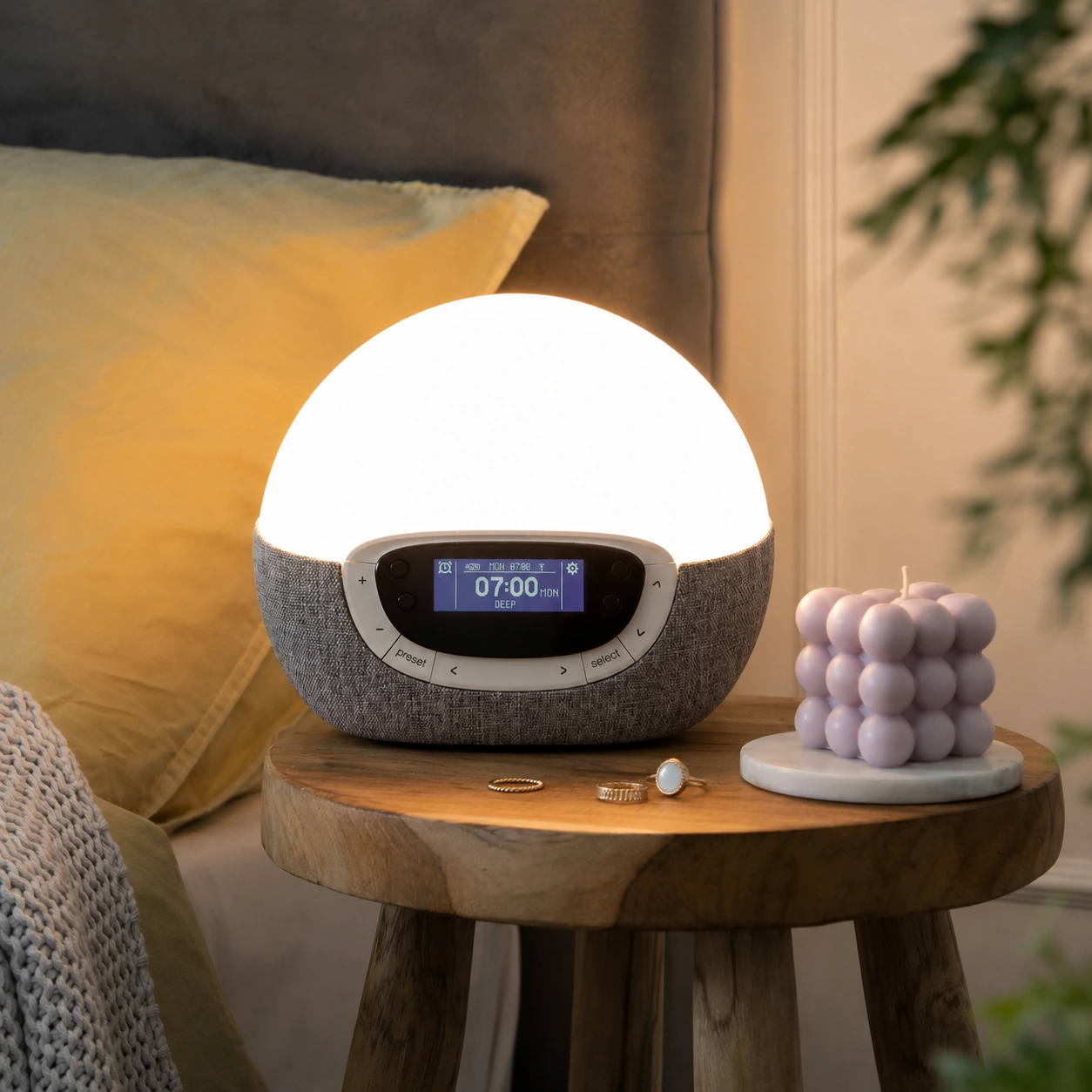
Lumie Bodyclock Rise150 Alarm Clock creating a cozy evening bedroom ambience on a bedside table.
Evening ambience is useful, but it does not turn Lumie into a Hatch-style routine hub.

What I Like

  • The bedroom setup stays clean. No phone, app, account, subscription, or content library is needed.
  • The product has one clear job. It gives you sunrise and sunset cues without pretending to be a full smart sleep system.
  • The size suits small rooms. The compact body makes sense on a crowded nightstand or in a guest room.
  • The bedside light control is useful. It gives enough soft light control for basic nightstand use.
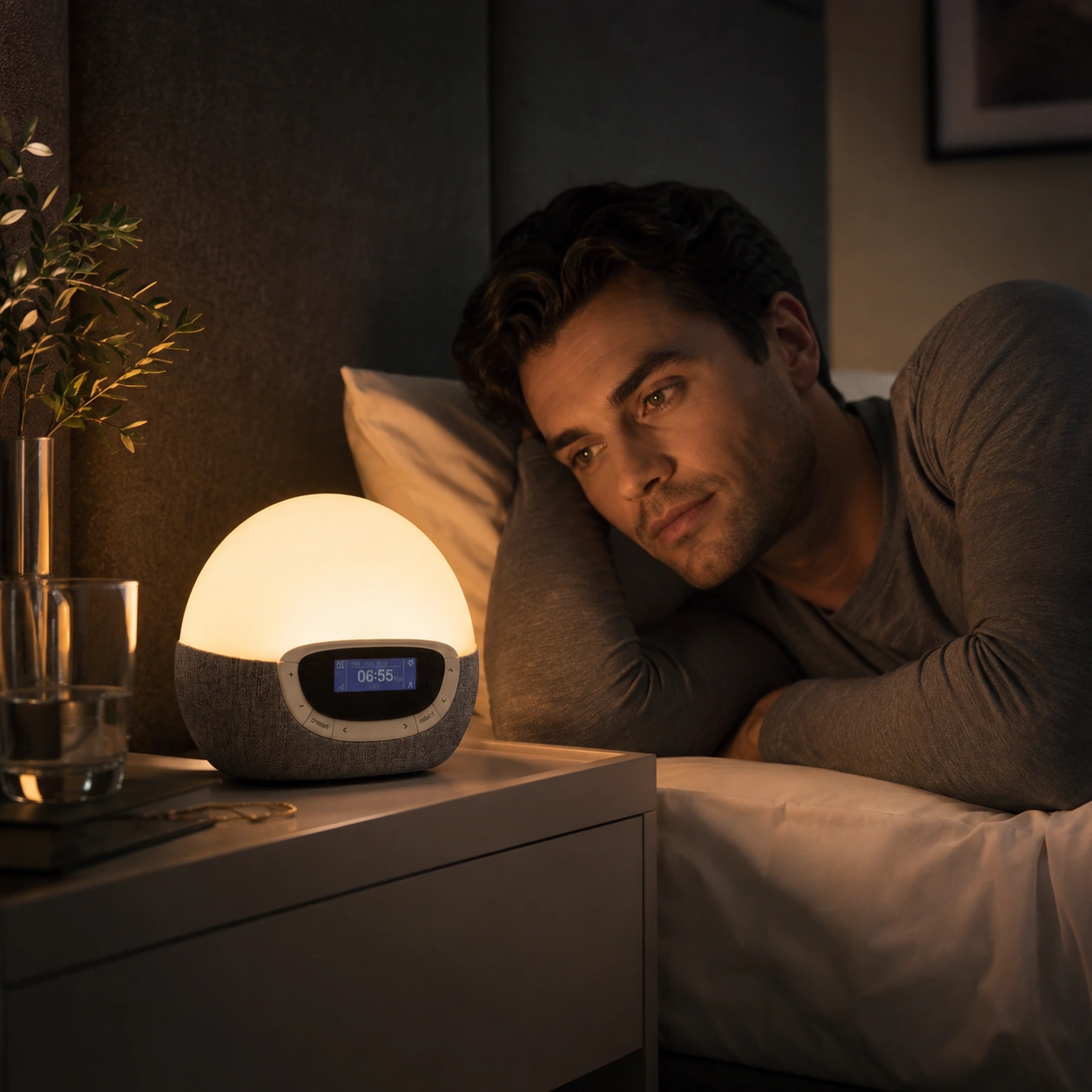
  • The morning feels less abrupt. In a dark room, gradual light can make a phone alarm feel less harsh.
Lumie Bodyclock Rise150 Alarm Clock casting a warm glow while a woman relaxes in bed before sleep.
The strongest daily benefit is a calmer bedside setup without another screen in the routine.

What I Don't Like

  • Scheduling is basic. If your wake time changes often, Bodyclock Shine 300 or Hatch is easier to recommend.
  • The sunrise color is limited. You give up the richer red/orange light behavior found on stronger wake-up lights.
  • The sound-machine side is thin. The sounds are useful as backup, but they do not replace a richer sound machine.
  • There is no Hatch-style routine system. If you want app-based bedtime steps, Lumie is intentionally too simple.
  • Model certainty is weaker in mixed listings. U.S. shoppers must check whether they are buying Sunrise Alarm, Rise 100, Glow 150, or Shine 300.
Angled studio product image of the Lumie Bodyclock Rise150 Alarm Clock with orange sunrise lighting.
The simple orange glow looks friendly, but richer sunrise color control belongs to stronger wake-up lights.

Lumie Sunrise Alarm vs the Alternatives That Matter

AlternativeChoose Lumie Sunrise Alarm ifChoose the alternative if
Lumie Bodyclock Rise 100You find the exact Sunrise Alarm at a good price and want the basic model.You are buying in the U.S. and want the safer current entry Bodyclock path.
Lumie Bodyclock Glow 150You want lower cost and fewer settings.You want more sunrise duration control and more sleep/wake sounds.
Lumie Bodyclock Shine 300You do not need weekly routines, FM radio, or broader sound options.You want one Lumie clock to handle weekday and weekend routines.
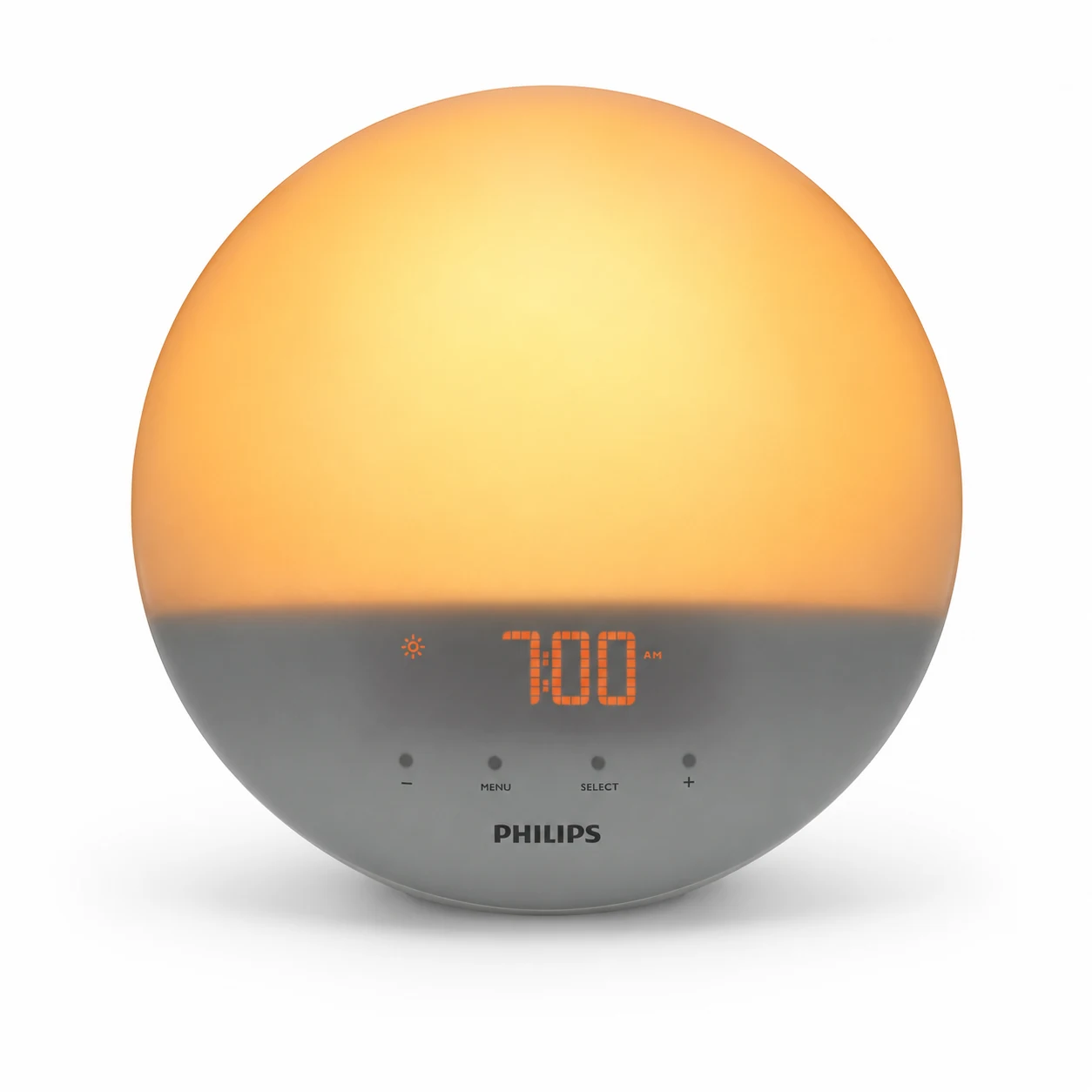
Philips SmartSleepYou want a smaller, simpler, less app-like light alarm.You care most about sunrise realism, brightness, and FM radio.
Hatch RestoreYou want less tech on the nightstand.You want app-based routines, richer sounds, and a fuller bedtime system.
Budget sunrise clocksYou trust the Lumie light-clock positioning and want the brand.Low price and white-noise features matter more than the Lumie name.

Choose Lumie if simplicity is the feature. Choose another model if scheduling, audio, or routine control is the feature.
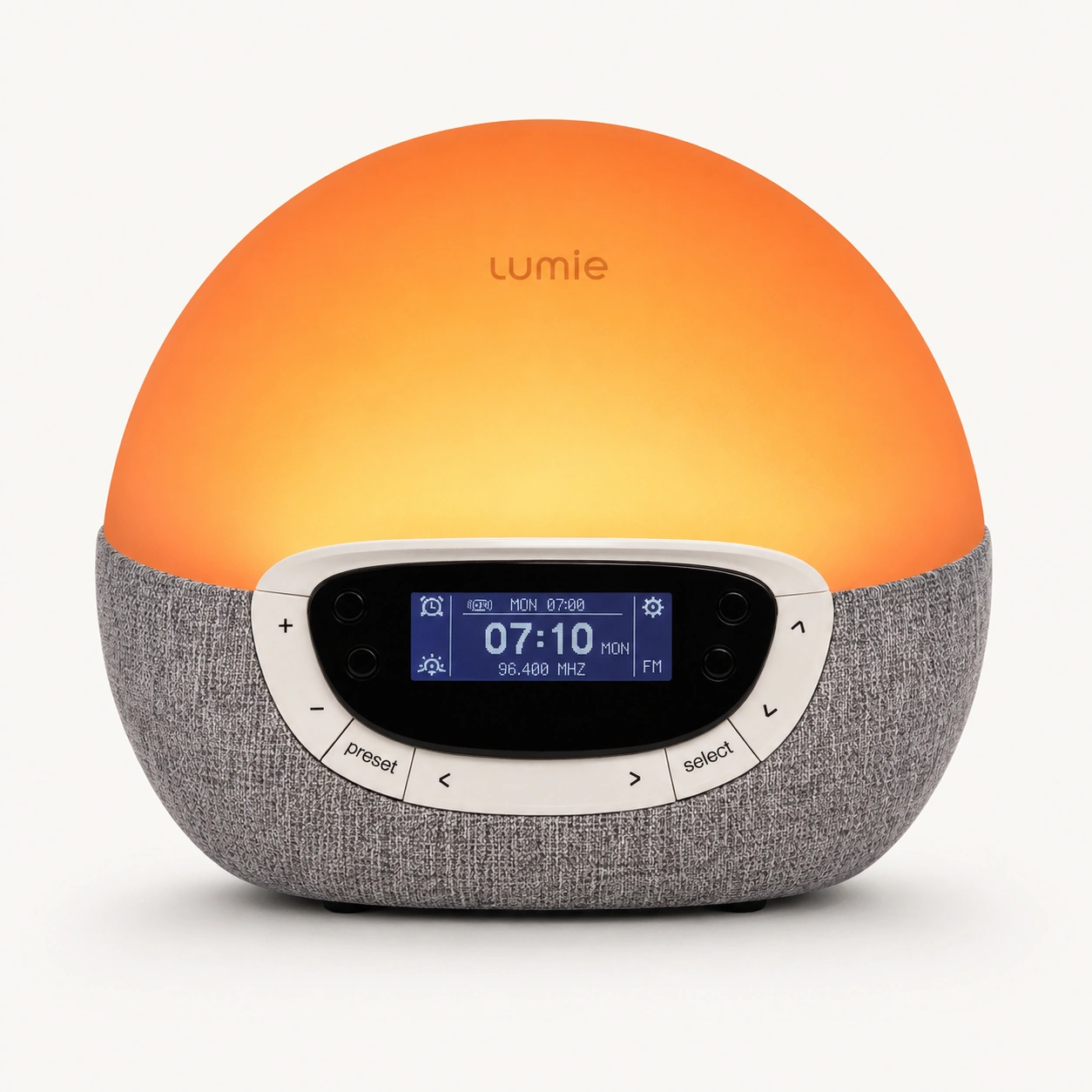
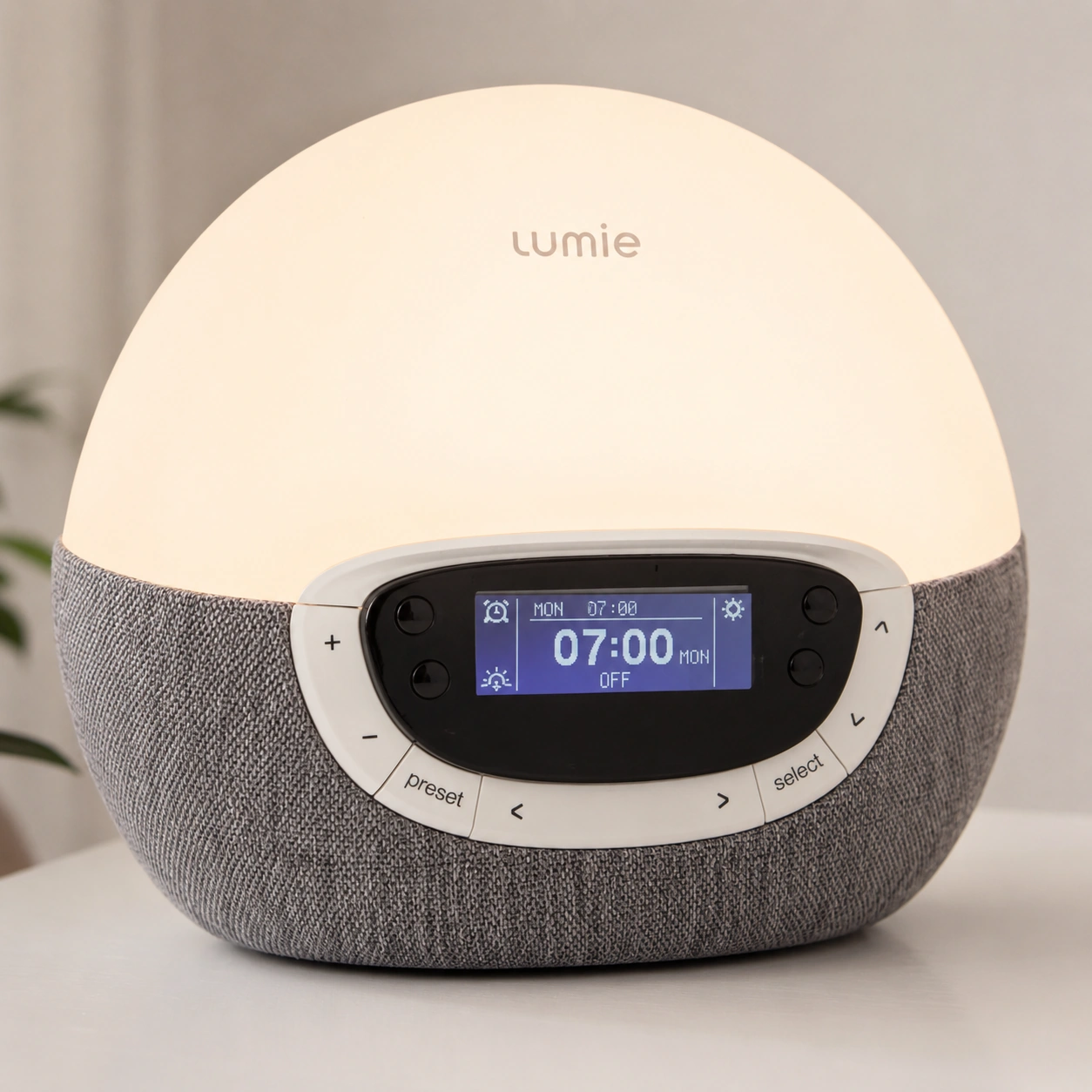
Lumie Bodyclock Rise300 alarm clock with sunrise simulation glowing warmly on a bedside surface
Rise300-style sunrise simulation is the better Lumie direction when light quality is the priority.
Lumie Bodyclock Rise300 modern alarm clock on a bedside table
A modern bedside product setup suits buyers comparing Lumie against Philips and Hatch.
Lumie Bodyclock Rise300 in a warm bedroom with morning light
Morning light behavior is the comparison point that matters most against budget sunrise clocks.

Limits You Should Not Ignore

  • It is not a SAD lamp. Treat it as a wake-up light, not as medical light therapy.
  • It may not be enough for heavy sleepers. Use stronger audio, vibration backup, or a brighter wake-up light until Lumie proves reliable.
  • It can wake the room. A light alarm affects a partner too, especially if that person wakes later.
  • It is not the best Lumie for flexible routines. Glow 150 and Shine 300 exist because some buyers need more control.
Lumie Bodyclock Rise300 casting a soft glow in a quiet night bedroom
A gentle light alarm affects the whole room, so shared-bedroom buyers should test it before relying on it.

Buying Advice

Before buying, check five things.

  1. Exact model name. Confirm whether the listing is Sunrise Alarm, Bodyclock Rise 100, Glow 150, or Shine 300.
  2. Wake-up reliability. Use a backup alarm for the first week, especially if you sleep through normal alarms.
  3. Bedroom setup. Place the light close enough and high enough to reach your face without disturbing a partner too much.
  4. Return policy and warranty. Mixed listings make return terms more important than usual.
  5. Real buying reason. Buy Lumie for simple light-first waking. Do not buy it for app routines, rich audio, or SAD therapy.
Lumie Bodyclock Rise300 used as a night lamp with bedside accessories
Before buying, verify the exact Lumie model and picture in the listing rather than trusting search-page names.

Best Fit

The Lumie Sunrise Alarm fits a specific buyer: someone who wants a small, app-free wake-up light and does not want to pay for the more capable Bodyclock models.

It is a good fit for a person who wakes from normal alarms but dislikes the jolt. It is a good fit for a darker bedroom where a gradual light cue has a clear job. It is a good fit for someone trying to remove the phone from the nightstand.

It is not the best pick for someone who wants a full sleep system. It is not the best pick for heavy sleepers. It is not the best pick for a couple with different schedules. It is not the best pick for SAD light therapy.

Buying verdict: choose the Lumie Sunrise Alarm only if simplicity is the feature you want most. If you want stronger control, choose Bodyclock Glow 150 or Shine 300. If you want smart routines, choose Hatch.
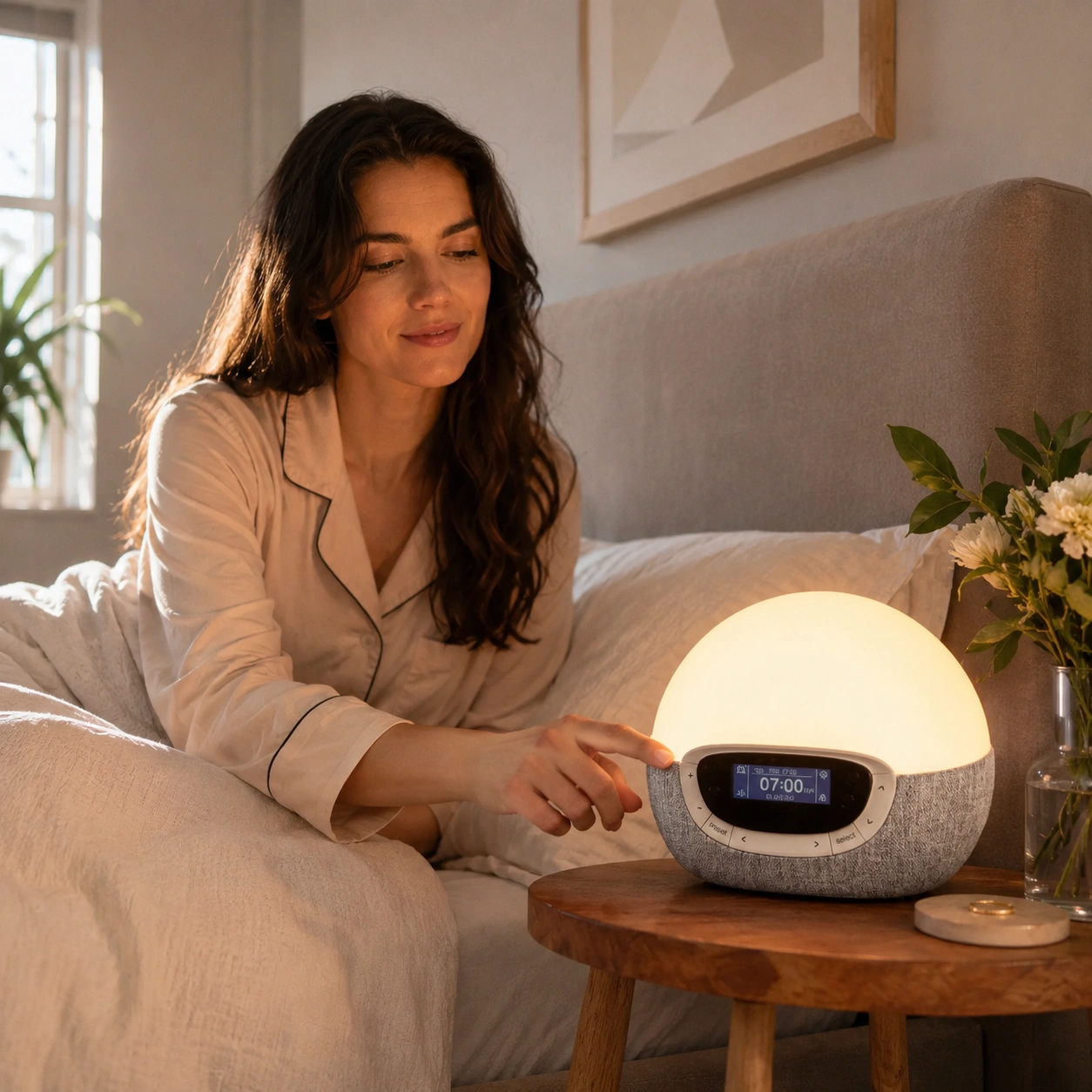
Lumie Bodyclock Rise300 in a cozy bedroom morning routine scene
The best-fit buyer wants a repeated morning cue, not a full smart routine system.

Reviews

Buyer Notes for Lumie Sunrise Alarm

Lumie Bodyclock Rise300 wake-up light in a cozy morning bedroom scene
Buyer notes are strongest when you treat Lumie as a room-specific wake-up aid rather than a universal alarm solution.
7.6out of 10 for simple light-first buyers
Light-sleeper fitStrong
Heavy-sleeper fitWeak
Routine-control fitBasic
★★★★☆

Best buyer fit

Light sleepers who want a simple app-free sunrise light are the strongest fit.

★★★☆☆

Main limitation

It is intentionally basic. Flexible schedules and heavy sleepers should look at stronger options.

★★★★☆

Model warning

Check the exact Lumie model name before buying; Bodyclock Rise, Glow, and Shine are different products.

Add a Review

FAQ

Lumie Sunrise Alarm FAQ

Lumie Bodyclock Rise300 with a soft night glow on a bedside table
The common FAQ answers all lead back to the same point: Lumie is a wake-up light, not a medical lamp or smart speaker.
Is the Lumie Sunrise Alarm the same as Lumie Bodyclock?

No. Lumie uses Bodyclock for several wake-up light models with different features. The Sunrise Alarm is the simpler model. Always check the exact listing name before buying.

Does it work without an app?

Yes. That is one of the main reasons to consider it. It is an app-free wake-up light.

Can the sound be turned off?

Yes. The sunrise can be used as the main wake cue, and sound can be treated as optional backup.

Does the display turn off at night?

The display can be manually set to high, low, or off. Set it before the first night if you are sensitive to bedside light.

Is it good for heavy sleepers?

Not as a single alarm. It may help, but heavy sleepers should use stronger audio, vibration backup, or a more forceful alarm system.

Is it a SAD lamp?

No. Treat it as a wake-up light, not a medical light therapy box.

Should I buy this or Hatch Restore?

Buy Lumie if you want a simpler app-free light alarm. Buy Hatch Restore if you want app-based routines, richer sound options, and a more complete sleep routine system.